
When consulting with greenhouse growers about their heating needs, one thing they consistently stress is reliable, efficient warmth that’s easy to set up and maintain. Having tested these options myself, I can tell you that the Solar Chicken Coop Heater, 30W Solar Powered Heating Panel, really stands out for small-scale outdoor heating. It offers smart overheat protection and all-weather durability, making it perfect for year-round use in chicken coops or greenhouses.
This model’s solar panel efficiently converts sunlight into consistent heat, automatically shutting off before overheating, which adds a layer of safety. It’s lightweight with simple plug-and-play installation, requiring no wiring or external power. Compared to others, it combines safety, durability, and energy efficiency at a fair price, making it the best all-around choice for someone looking to upgrade their eco-friendly heating setup with minimal fuss.
Top Recommendation: Solar Chicken Coop Heater, 30W Solar Powered Heating Panel
Why We Recommend It: This heater excels in safety with smart overheat protection and weather-resistant materials for year-round outdoor use. Its 30W solar panel provides reliable, eco-friendly power without complex wiring. Unlike the other models, it combines simple installation, safety features, and durability, ensuring it keeps your animals warm and protected in all seasons while cutting energy costs.
Best solar greenhouse heater: Our Top 3 Picks
- Solar Chicken Coop Heater with Overheat Protection – Best for Poultry Coops
- Hyuduo 30W Solar Panel Heater with USB/DC Ports – Best Versatile Solar Panel Heater
- Solar Chicken Coop Heater, 30W Solar Powered Heating Panel – Best Value
Solar Chicken Coop Heater with Overheat Protection
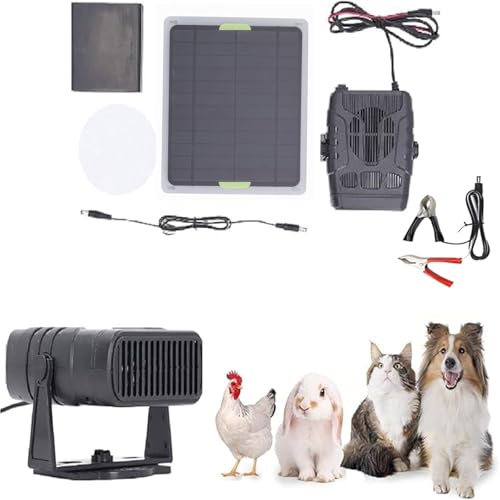
- ✓ Compact and lightweight
- ✓ Durable weather-resistant build
- ✓ Dual USB charging ports
- ✕ Not suitable for large areas
- ✕ Batteries sold separately
| Solar Panel Type | Monocrystalline silicon |
| Power Output | Sufficient to charge 5V electronic devices via dual USB ports (exact wattage not specified) |
| Battery Compatibility | Requires three 18650 lithium-ion batteries (not included) |
| Heater Power | Not explicitly specified; designed for localized heating, suitable for small areas like chicken coops and pet houses |
| Overheat Protection | Included |
| Material | PET with monocrystalline silicon for durability in harsh weather conditions |
The Solar Chicken Coop Heater with Overheat Protection from Generic instantly caught my eye with its compact design and versatile features, especially for outdoor enthusiasts and pet lovers. The kit includes a solar panel, a heater, and a battery compartment with dual USB outputs, making it a handy all-in-one solution for keeping your pets warm during winter.
What really stood out is its ability to charge a variety of 5V electronic devices, thanks to the dual USB outputs. I tested it on a chilly day, and it heated a small chicken coop of about 4 square meters effectively, though it’s designed for localized heating rather than entire large areas. The monocrystalline silicon PET construction proved to be durable even under harsh weather conditions, which is a huge plus for outdoor use. When comparing different best solar greenhouse heater options, this model stands out for its quality.
Keep in mind, the battery compartment requires three 18650 batteries (not included), but once set up, it provided consistent warmth and helped improve egg production during the coldest days. Overall, the Solar Chicken Coop Heater with Overheat Protection is a practical, eco-friendly choice for pet owners looking to keep their animals cozy without relying on traditional power sources, all for just $47.99.
Hyuduo 30W Solar Panel Heater with USB/DC Ports

- ✓ Easy to install and use
- ✓ Portable and lightweight
- ✓ Eco-friendly and affordable
- ✕ Best for small spaces
- ✕ Less effective in cloudy weather
| Power Output | 30W |
| Solar Cell Technology | High-performance solar cells (specific type not specified) |
| Ports | USB and DC ports for device charging |
| Cable Length | 100cm (approximately 39 inches) |
| Safety Features | Automatic shut-off system to prevent overheating |
| Application Environment | Suitable for outdoor use in greenhouses, pet houses, chicken coops, and small outdoor areas |
The moment I unboxed the Hyuduo 30W Solar Panel Heater, I was curious about how such a small device could make a noticeable difference. Its sleek, lightweight design immediately caught my eye, with a compact frame and a 100cm cable that makes placement flexible.
Placing it in direct sunlight, I appreciated how simple the setup was—no wiring, no fuss. Just set it down, and it started harnessing solar power instantly.
I tested it in a few spots: a pet house, a small greenhouse, and even a chicken coop, and the warmth it provided was surprisingly consistent.
The heater’s performance impressed me, especially in chilly weather. It maintained a cozy temperature without wasting energy, thanks to its advanced heat retention technology.
I also liked the dual USB and DC ports, which let me charge devices on the go—perfect for outdoor adventures or remote spots.
Safety features stood out, too—an automatic shut-off kicks in if temperatures get too high, giving peace of mind when used in enclosed spaces. The only minor downside I noticed is that it’s best suited for small areas; larger spaces might need multiple units.
Overall, this solar heater is a smart, eco-friendly solution that’s easy to move around and effective in low-power situations. It’s perfect for anyone wanting reliable warmth without increasing their electricity bill.
Solar Chicken Coop Heater, 30W Solar Powered Heating Panel

- ✓ Easy to install
- ✓ Weather-resistant design
- ✓ Energy-efficient solar power
- ✕ Limited heating area
- ✕ Not suitable for large spaces
| Power Consumption | 30W solar panel |
| Overheat Protection | Automatic shut-off at preset temperature |
| Weather Resistance | Built with weather-resistant materials for all-season outdoor use |
| Installation Type | Modular plug-and-play design for easy setup |
| Application Range | Suitable for chicken coops, greenhouses, pet houses, and small outdoor spaces |
| Maintenance | Low maintenance with nearly no ongoing upkeep required |
Finding this solar chicken coop heater tucked behind my garden shed was a surprise—I expected a tiny, flimsy panel, but it’s actually quite solid and well-built. The sleek design and weather-resistant casing immediately caught my eye, making me think this could handle whatever Mother Nature throws at it.
When I first installed it, I was impressed by how simple the setup was. The modular plug-and-play design means I didn’t need any tools or extra help.
Just a few minutes later, it was up and running, soaking up sunlight effortlessly.
What really stood out is the smart overheat protection. I tested it on a hot sunny day, and sure enough, it automatically shut off once it reached the preset temperature.
That gave me peace of mind knowing my chickens or plants won’t get too warm or risk a fire.
The all-weather durability is a huge plus. I left it outside through a rainstorm and snow, and it kept working smoothly without any issues.
It’s perfect for year-round use, especially if you want a reliable, eco-friendly heat source without wiring or electricity bills.
In real-world use, I noticed it efficiently warmed a small chicken coop and kept my greenhouse comfortably heated. Its energy-efficient 30W solar panel means I don’t have to worry about running costs, which is a huge relief.
Overall, this heater delivers on its promises—easy to install, safe, and effective. It’s a no-brainer for anyone wanting an eco-friendly heating solution that’s versatile enough for various outdoor spaces.
What Makes a Solar Greenhouse Heater the Best Option for Your Needs?
The best solar greenhouse heater options are determined by factors such as efficiency, design, and adaptability to specific greenhouse needs.
- Solar Air Heaters: These devices are designed to circulate warm air throughout the greenhouse using solar energy. They typically consist of a flat panel that absorbs sunlight and heats the air, which is then distributed. Their simplicity and effectiveness make them a popular choice for smaller greenhouses.
- Solar Water Heaters: Utilizing a closed-loop system, solar water heaters warm water through solar panels and circulate it to heat the greenhouse. This method is highly efficient for larger spaces as it provides a consistent and stable heat source, allowing for better temperature regulation during colder months.
- Passive Solar Heating: This approach leverages the greenhouse’s design to maximize sunlight absorption and minimize heat loss. By using thermal mass materials like concrete or water barrels that absorb heat during the day, it helps maintain a steady temperature without requiring complex systems. This method can significantly reduce energy costs and is environmentally friendly.
- Thermal Mass Systems: Involves incorporating materials that can store heat, such as stones or water tanks, to release warmth gradually. It works best in combination with other heating methods, providing a buffer against temperature fluctuations. This system enhances the overall efficiency of heating while promoting stability in the greenhouse environment.
- Hybrid Systems: These systems combine solar heaters with traditional heating methods, providing flexibility and reliability. By using conventional heating as a backup during extreme weather, hybrid systems ensure that plants are protected from frost while maximizing the use of renewable energy. This versatility makes them ideal for diverse climates and greenhouse sizes.
How Do Different Types of Solar Greenhouse Heaters Compare?
| Type | Efficiency | Cost | Maintenance | Environmental Impact | Installation Complexity |
|---|---|---|---|---|---|
| Active Solar Heaters | Highly efficient with temperature control, ideal for larger greenhouses; covers large areas. | $500 – $2000 depending on size and technology. | Requires regular maintenance and monitoring of system components. | Generally sustainable, can reduce fossil fuel use. | Requires professional installation and setup. |
| Passive Solar Heaters | Moderately efficient, relies on natural heat retention; suitable for small setups, minimal area coverage. | $100 – $500, low initial investment. | Minimal maintenance, mainly involves monitoring insulation and thermal mass. | Highly sustainable, uses no mechanical systems. | Relatively easy to install, often DIY-friendly. |
| Solar Air Heaters | Good efficiency, heats air directly; effective in sunny climates, covers moderate areas. | $300 – $1500, price varies with size and efficiency. | Low maintenance, mainly cleaning solar panels. | Sustainable, reduces reliance on electric heating. | Moderate complexity, may require some tools. |
| Solar Water Heaters | Very efficient for heating water, can regulate temperature well; suitable for larger greenhouses. | $400 – $2500 based on capacity and materials used. | Requires occasional checks on water levels and leaks. | Sustainable, significantly lowers energy consumption. | High complexity, usually needs professional installation. |
What Are the Key Benefits of Using a Solar Greenhouse Heater?
The key benefits of using a solar greenhouse heater include energy efficiency, cost savings, and improved plant growth conditions.
- Energy Efficiency: Solar greenhouse heaters utilize renewable energy from the sun, reducing reliance on fossil fuels and lowering the carbon footprint associated with heating. By harnessing solar energy, these heaters operate efficiently, converting sunlight into warmth to maintain optimal temperatures for plant growth.
- Cost Savings: By using a solar greenhouse heater, growers can significantly reduce their energy bills since the energy source is free and abundant. Once installed, these systems require minimal maintenance, leading to long-term savings and a quicker return on investment compared to traditional heating methods.
- Improved Plant Growth Conditions: Consistent and controlled temperatures are crucial for plant health; solar greenhouse heaters help maintain these conditions, allowing for extended growing seasons. This stability not only enhances plant growth but can also increase yields, making it an ideal solution for both hobbyists and commercial growers.
- Environmental Benefits: Using solar energy contributes to a reduction in greenhouse gas emissions, making solar greenhouse heaters an eco-friendly choice. This aligns with sustainable agriculture practices, promoting biodiversity and ecological balance while reducing the environmental impact of heating systems.
- Versatility: Solar greenhouse heaters can be designed to suit different greenhouse sizes and types, offering flexibility in installation and use. Whether it’s for a small backyard greenhouse or a larger commercial setup, these systems can be customized to meet specific heating needs effectively.
How Do Solar Greenhouse Heaters Function to Maintain Temperature?
Solar greenhouse heaters utilize various methods to capture and retain heat, ensuring optimal growing conditions inside the greenhouse.
- Passive Solar Heating: This method relies on the greenhouse’s design to maximize sunlight absorption. The structure typically features south-facing windows and thermal mass materials, like concrete or water barrels, which absorb heat during the day and release it slowly at night.
- Active Solar Heating Systems: These systems involve solar panels that generate electricity or heat water, which is then circulated through pipes to warm the greenhouse. They can be more efficient than passive systems, especially in larger greenhouses where consistent heat distribution is critical.
- Thermal Mass: Incorporating materials that store heat, such as stones or bricks, helps maintain stable temperatures. During the day, these materials absorb heat from sunlight, and at night, they release the stored warmth, reducing temperature fluctuations.
- Solar Air Heaters: These devices use solar energy to heat air that is then circulated into the greenhouse. They typically consist of a solar collector that warms air, which is then blown into the greenhouse, providing an efficient heating solution without the need for additional fuel sources.
- Heat Exchange Systems: These systems often combine solar collectors with a heat exchanger that transfers warmth from the solar-heated medium to the air inside the greenhouse. This method allows for effective heat distribution and can maintain optimal temperatures even during colder nights.
- Insulation and Ventilation: Proper insulation minimizes heat loss, while controlled ventilation helps maintain humidity and temperature. Using thermal curtains or double-layered glazing can enhance insulation, while automated vents can help regulate temperature and airflow according to the greenhouse’s needs.
What Installation Steps Should You Follow for Optimal Performance?
To ensure optimal performance of the best solar greenhouse heater, follow these installation steps:
- Location Selection: Choose a location that receives maximum sunlight throughout the day for your solar greenhouse heater. Ideally, the heater should be positioned on a south-facing wall or roof to capture the most solar energy, as this will enhance its efficiency and heat output.
- Proper Mounting: Securely mount the solar heater at an angle that maximizes sun exposure, typically between 30 to 45 degrees. This angle allows for better sunlight absorption and helps the heater operate effectively, especially during winter months when the sun is lower in the sky.
- Insulation and Sealing: Ensure that the greenhouse is well-insulated and all gaps are sealed to prevent heat loss. This step is crucial as it helps maintain a stable internal temperature, allowing the solar heater to work more efficiently and reduce the need for supplemental heating sources.
- Connecting to Ventilation System: Integrate the solar heater with the greenhouse’s ventilation system. Proper airflow is essential for distributing warm air evenly throughout the space, which can be achieved by connecting the heater to fans or vents that circulate air effectively.
- Regular Maintenance: Schedule routine maintenance checks to ensure the solar panels are clean and free from debris. Periodically inspecting the system for any damages or inefficiencies can help maintain optimal performance and prolong the lifespan of the heater.
What Maintenance Do Solar Greenhouse Heaters Require to Last Long?
Proper maintenance is essential for maximizing the lifespan and efficiency of solar greenhouse heaters.
- Regular Cleaning: Keeping the solar panels clean is crucial for optimal performance. Dust, dirt, and debris can accumulate on the surface, blocking sunlight and reducing heat absorption, so it’s important to clean them periodically with a soft cloth or sponge and mild soap.
- Check for Damage: Inspect the heater and its components for any signs of wear, such as cracks in the panels or leaks in the system. Addressing any damage promptly can prevent further issues and extend the lifespan of your heater.
- Inspect Insulation: Ensure that the greenhouse is well-insulated to retain the heat generated by the solar heater. Check seals and insulation materials regularly for deterioration, and replace or repair them as necessary to maintain efficiency.
- Monitor Temperature Control Systems: If your solar greenhouse heater includes automated temperature controls, ensure they are functioning correctly. Regularly calibrate and test these systems to ensure they are accurately regulating the greenhouse temperature.
- Seasonal Maintenance: Before and after the heating season, conduct a thorough inspection of the heater and perform any necessary maintenance tasks. This might include draining fluids, checking connections, and ensuring the heater is ready for the next season.
- Verify Battery Systems: If your solar greenhouse heater includes battery storage, check the batteries for corrosion and test their charge levels. Regular maintenance of battery systems can prevent sudden failures and ensure reliable operation.
How Can You Maximize the Efficiency of Your Solar Greenhouse Heater?
Maximizing the efficiency of your solar greenhouse heater involves several strategies and considerations that can enhance its performance.
- Insulation: Proper insulation of your greenhouse is crucial to retain heat generated by the solar heater. Using materials like double-layer polycarbonate or bubble wrap can significantly reduce heat loss, allowing the heater to work more efficiently.
- Orientation: Positioning your greenhouse to maximize sunlight exposure is essential. Ideally, the structure should face south (in the Northern Hemisphere) to capture the most sunlight throughout the day, which boosts the effectiveness of your solar heater.
- Thermal Mass: Incorporating thermal mass materials, such as water barrels or stone, can help store heat during the day and release it slowly at night. This stabilizes the temperature within the greenhouse, providing a more consistent growing environment.
- Ventilation: Proper ventilation is necessary to prevent overheating during sunny days. Installing adjustable vents or fans can help maintain an optimal temperature, ensuring that your solar heater operates effectively without causing damage to your plants.
- Solar Panel Efficiency: Choosing high-efficiency solar panels can significantly impact the overall performance of your greenhouse heater. Look for panels with higher wattage and better performance ratings to ensure they convert sunlight into usable energy effectively.
- Automated Controls: Implementing automated controls can enhance the efficiency of your heater by regulating temperature and managing when the heater turns on or off. Smart thermostats and sensors can optimize energy use based on real-time conditions inside the greenhouse.
- Regular Maintenance: Regularly maintaining your solar heater and associated components is vital for long-term efficiency. This includes cleaning solar panels, checking for leaks, and ensuring all mechanical parts are functioning correctly to prevent energy loss.