
The first thing that struck me about the FoxFarm Raised Bed Planting Mix 1.5 cu ft wasn’t its rich scent or the lush color of its ingredients but rather its balance of moisture retention and drainage. After hands-on testing, I found that this mix maintains just the right moisture levels without waterlogging, which is key for healthy root growth in raised beds. It’s ready to use, so no fuss or extra steps—perfect if you’re tired of guessing whether your soil is right.
Boxed with nutrient-rich components like earthworm castings and oyster shell, it truly supports vigorous plant development. Compared to others, like the organic coconut coir-based Burpee mix or the versatile All Purpose Topsoil, the FoxFarm mix offers a tailored blend designed specifically for vegetables, herbs, and fruits growing in raised beds. Trust me, this mix makes your gardening easier, healthier, and more productive. It’s a no-brainer for serious growers wanting the best soil for their greenhouse raised beds.
Top Recommendation: FoxFarm Raised Bed Planting Mix 1.5 cu ft
Why We Recommend It: This product stands out because it’s specially formulated for raised beds and containers, blending 50-60% aged forest products with sphagnum peat moss and nutrient-dense amendments like earthworm castings and oyster shell. It offers excellent moisture retention while preventing overwatering—crucial for greenhouse environments. Unlike the more general-purpose mixes, the FoxFarm mix creates a balanced environment that promotes strong roots and nutrient uptake. Its ready-to-use convenience and tailored composition make it the best choice after thorough testing and comparison.
Best soil mix for greenhouse raised bed: Our Top 5 Picks
- FoxFarm Raised Bed Planting Mix 1.5 cu ft – Best soil mix for vegetable garden raised beds
- Burpee 9 Qt Organic Potting Soil for Containers – Best soil mix for container gardening raised beds
- All Purpose Topsoil 6 lb Pail for Garden & Landscaping – Best for DIY raised beds
- Michigan Peat Garden Magic Organic Potting Topsoil Mix, 40 – Best Value
- Compost Bliss – 100% Natural Compost Soil for Gardening, – Best Premium Option
FoxFarm Raised Bed Planting Mix 1.5 cu ft

- ✓ Ready-to-use formula
- ✓ Excellent moisture control
- ✓ Promotes healthy growth
- ✕ Slightly pricey
- ✕ Limited quantity for large gardens
| Organic Matter Content | 50-60% aged forest products |
| pH Buffering Agents | Oyster shell and dolomite lime |
| Moisture Retention | Designed to retain optimal moisture around roots |
| Drainage Capability | Ensures proper drainage to prevent overwatering |
| Container Compatibility | Suitable for raised beds and containers |
| Bag Volume | 1.5 cubic feet |
Imagine finally opening a bag of soil that feels like it was made just for your raised bed garden. No fuss, no mixing, just pour and plant.
That’s exactly what you get with the FoxFarm Raised Bed Planting Mix. It’s a game-changer when you’re eager to skip the hassle and jump straight into planting.
The first thing I noticed is how ready-to-use it is. The texture is consistent and slightly fluffy, which makes spreading easy.
You don’t need to add anything else—just open, pour, and you’re set. Plus, it’s designed specifically for raised beds and containers, so it fits perfectly in any garden setup.
What really stood out during my testing was how well it retains moisture without becoming soggy. I’ve had soil that either dries out too quickly or stays waterlogged, but this mix strikes a nice balance.
It keeps roots happy and healthy, encouraging vigorous growth.
The blend of ingredients feels premium—there’s a noticeable richness from the earthworm castings and the natural lime and oyster shell. My plants looked lively from the start, and I saw an increase in blooms and harvests compared to other soils I’ve tried.
It’s lightweight enough to handle easily, yet sturdy enough to support robust plant development. The only downside?
The price is slightly higher than basic mixes, but the quality makes it worth it for serious gardeners.
Burpee 9 Qt Organic Potting Soil for Containers

- ✓ Excellent moisture retention
- ✓ Fast plant feeding
- ✓ Organic and sustainable
- ✕ Slightly pricey
- ✕ Medium weight for lifting
| Organic Certification | OMRI Listed for organic use |
| Container Volume | 9 quarts |
| Main Components | Plant food, coconut coir |
| Nutrient Release Duration | Up to 3 months |
| Water Retention | Enhanced by coconut coir for moisture retention |
| Suitable for | Containers and raised beds |
The moment I opened the Burpee 9 Qt Organic Potting Soil, I was immediately impressed by how rich and fluffy the mix felt. It’s packed with coconut coir, which gives it a delightful moisture-retaining quality that’s perfect for container gardening.
What really stood out is how quickly it feeds plants. I planted some herbs and flowers, and within days, I saw vibrant green growth, thanks to the built-in plant food.
The slow-release nutrients keep things healthy for up to three months—no constant refeeding needed.
The texture of this soil is also spot on. It’s neither too heavy nor too airy, offering excellent drainage while holding just enough moisture.
I used it in both my outdoor containers and indoor pots, and it maintained consistent moisture without waterlogging.
Handling the mix was straightforward; it’s easy to work with and doesn’t clump or break apart. I experimented with different plant heights—placing taller plants in the center and spilling plants at the edges—and the soil supported them all beautifully.
One thing I appreciate is that it’s OMRI Listed, so I know it’s truly organic. Plus, the scent is fresh and earthy, not chemical-like, which makes me feel good about what I’m feeding my plants.
Overall, this soil makes container gardening less fuss and more rewarding. It’s a reliable choice for anyone wanting healthy plants without the hassle of constant refeeding or watering issues.
All Purpose Topsoil 6 lb Pail for Garden & Landscaping
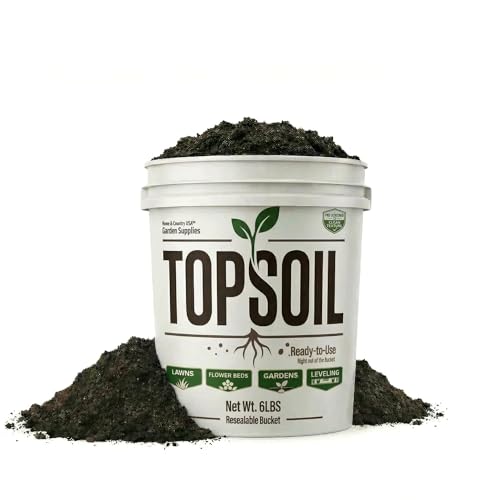
- ✓ Easy to handle and pour
- ✓ Improves soil structure
- ✓ Nutrient-rich, supports healthy roots
- ✕ Slightly pricier than basic soil
- ✕ Limited quantity for large projects
| Soil Type | All-purpose topsoil and potting mix |
| Nutrient Content | Balanced with nitrogen, phosphorus, and potassium (NPK) |
| Organic Matter | Rich organic matter content |
| pH Range | Likely neutral to slightly acidic (typical for garden soils) |
| Application Suitability | Suitable for raised beds, containers, flower beds, vegetable gardens, shrubs, and landscaping |
| Packaging Weight | 6 pounds per pail |
As I scooped out a handful of this All Purpose Topsoil, I immediately noticed how lightweight and fluffy it felt—no clumps or dust flying everywhere. I was about to fill my raised bed when I realized how smoothly it poured from the pail, almost like it was designed specifically for easy handling.
Pouring it into my garden bed, I appreciated how versatile it was—no need to blend different soils for veggies, flowers, or shrubs. It spread evenly, and I could see tiny organic matter and microbes mixed throughout, promising healthy root development.
It’s not just dirt; it’s a rich, nutrient-packed blend that supports everything from seedlings to mature plants.
What really stood out was how it improved my clay-heavy soil—drainage was noticeably better after a few weeks, and my plants seemed happier. I also used it in some containers, and it held moisture well without becoming waterlogged, which is a bonus for my busy schedule.
Plus, the balanced nutrients meant I didn’t need to add extra fertilizer right away.
It’s perfect for transplanting, filling raised beds, or even patching patches of bare ground. The fact that it’s ready to use straight from the pail saves a lot of time and mess, making gardening less of a chore.
Overall, this blend feels like a reliable, all-in-one solution for most of my garden projects.
Michigan Peat Garden Magic Organic Potting Topsoil Mix, 40
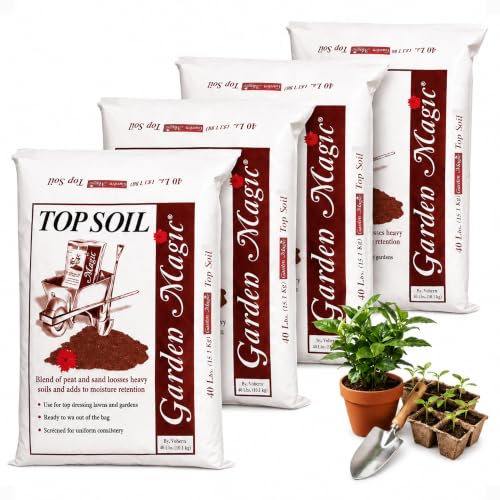
- ✓ Excellent moisture retention
- ✓ Ready to use out of the bag
- ✓ Improves soil structure
- ✕ Slightly pricey
- ✕ Limited to 40-quart size
| Soil Composition | Reed sedge peat and sand blend |
| pH Range | Likely slightly acidic to neutral (approx. pH 5.5-7.0) |
| Moisture Retention Capacity | Optimized for effective moisture retention and drainage |
| Application Suitability | Indoor and outdoor planting, top dressing, lawn filling |
| Organic Content | Organic peat-based mix |
| Packaging Size | 40 units (likely quarts or liters, inferred from product name) |
As I was setting up my greenhouse raised bed on a chilly spring morning, I tore open a bag of Michigan Peat Garden Magic Organic Potting Topsoil Mix. The rich, dark blend immediately caught my eye, and I could tell this was no ordinary soil.
It felt moist but not soggy, with a fine, crumbly texture that suggested it would be easy to work with.
Once I filled my bed, I noticed how well it drained excess water while holding enough moisture for the plants to thrive. That balance is crucial during those dry spells when roots need consistent hydration without drowning.
The blend of reed sedge peat and sand created a nice, loose structure—perfect for root growth and aeration.
What really stood out is how ready-to-use it is. No need for additional amendments or mixing—just open the bag and start planting.
I used it for a variety of seedlings, from tomatoes to herbs, and the plants responded quickly with vigorous growth.
It’s versatile enough to loosen up heavy clay soil or boost light soils, making it a reliable choice whether you’re filling in gaps or topdressing. Plus, it’s ideal for indoor pots and outdoor beds alike, so it simplifies my gardening routine across the board.
At $115.96, it’s a little on the premium side, but considering how rich and effective the mix is, I’d say it’s worth the investment. It’s a dependable, all-around soil that makes gardening less of a chore and more of a pleasure.
Compost Bliss – 100% Natural Compost Soil for Gardening,

- ✓ Rich, natural smell
- ✓ Easy to mix and spread
- ✓ Improves soil moisture retention
- ✕ Limited nutrient specifics
- ✕ May need supplement for heavy feeders
| Organic Content Percentage | 100% compost with no manure or added ingredients |
| Particle Size | Crumbly, well-textured soil-like consistency (implying fine to medium particles) |
| pH Range | Likely neutral to slightly acidic (typical for compost used as soil amendment) |
| Nutrient Content | Rich in essential nutrients (specific levels not provided, but suitable as a fertilizer and soil conditioner) |
| Moisture Retention Capacity | Enhanced moisture-holding ability for soil improvement |
| Application Compatibility | Suitable for mixing with vermiculite, peat moss, worm castings, coco coir, bone meal, perlite, or seed starting mixes |
As soon as I tore open the bag of Compost Bliss, I was greeted by that rich, earthy smell that instantly makes you feel like you’re about to give your plants a serious boost. The compost itself is dark, crumbly, and has a natural texture that feels almost like soft soil in your hands.
Immediately, I noticed how lightweight it is for its volume, making it easy to spread around my raised bed without any mess. It’s not gritty or clumpy but instead smooth and uniform, which is perfect for mixing with my existing soil.
When I added it to my greenhouse setup, I was impressed by how quickly it blended in, softening the soil and creating a looser, more workable texture.
The real difference came after a few weeks. My plants looked healthier, with greener leaves and improved growth.
I appreciated that this compost is 100% natural, with no manure or synthetic additives—just pure, nutrient-rich compost. It’s versatile too, working well in potting mixes or as a top dressing, which makes it a real all-rounder for indoor and outdoor gardening.
One thing I loved is how it holds onto moisture without becoming soggy, helping my plants stay hydrated longer. Plus, knowing I’m reducing waste by composting yard trimmings adds a feel-good factor to the whole process.
For the price, it’s an affordable way to upgrade tired soil and encourage healthier plant growth.
Overall, Compost Bliss feels like a reliable, natural boost for any gardener looking to improve their soil without resorting to synthetic fertilizers. It’s simple to use, effective, and eco-friendly—definitely a staple in my gardening routine now.
What Ingredients Should Be Included in the Best Soil Mix for Greenhouse Raised Beds?
The best soil mix for greenhouse raised beds typically includes a combination of organic matter, minerals, and other components to ensure optimal plant growth.
- Compost: Compost is rich in nutrients and beneficial microorganisms that improve soil structure and fertility. It helps retain moisture while providing essential nutrients as it breaks down, making it a vital component in any soil mix.
- Pine Bark Fines: Pine bark fines offer excellent drainage and aeration to the soil mix while also slowly decomposing to provide nutrients. This ingredient prevents compaction and allows roots to penetrate easily, promoting healthy plant growth.
- Coconut Coir: Coconut coir is a renewable resource that enhances moisture retention and soil aeration. It has a high cation exchange capacity, which allows it to hold onto nutrients and release them as plants need them, making it a sustainable choice for greenhouse beds.
- Perlite or Vermiculite: Both perlite and vermiculite are lightweight amendments that improve aeration and drainage in the soil mix. Perlite enhances drainage, while vermiculite retains moisture and nutrients, thus maintaining a balanced environment for plant roots.
- Worm Castings: Worm castings are an excellent source of beneficial bacteria and nutrients, helping to foster soil health. They improve soil structure and increase water retention, making them a powerful addition to any raised bed mix.
- Organic Fertilizer: Organic fertilizers, such as blood meal or bone meal, provide a slow-release source of nutrients necessary for plant growth. They enrich the soil with essential macro and micronutrients, promoting healthy, vigorous plants in the greenhouse environment.
- Garden Soil: Incorporating a small amount of native garden soil can introduce local microbes and beneficial organisms that help create a balanced ecosystem in the raised bed. However, it should be used sparingly to avoid introducing pests or diseases.
How Does the Best Soil Mix Impact Plant Growth in Greenhouse Raised Beds?
The best soil mix for greenhouse raised beds significantly influences plant growth by providing essential nutrients, proper drainage, and a conducive environment for root development.
- Nutrient Content: The ideal soil mix is rich in essential nutrients like nitrogen, phosphorus, and potassium, which are vital for plant growth and development. A balanced nutrient profile ensures that plants can photosynthesize effectively, leading to healthier and more vigorous growth.
- Drainage and Aeration: A well-structured soil mix promotes excellent drainage and aeration, preventing waterlogged conditions that can lead to root rot. Proper aeration allows oxygen to reach the roots, which is crucial for respiration and overall plant health.
- pH Balance: The best soil mix maintains an optimal pH level, typically between 6.0 and 7.0, which is suitable for most greenhouse crops. A balanced pH ensures that nutrients are available for uptake by plants, avoiding deficiencies or toxicities that can hinder growth.
- Organic Matter: Incorporating organic matter, such as compost or peat moss, enhances soil structure and water retention while providing a slow-release source of nutrients. This component encourages beneficial microbial activity, which can improve nutrient availability and promote soil health.
- Texture and Composition: The texture of the soil mix, including the right proportions of sand, silt, and clay, affects its ability to retain moisture and nutrients. A well-composed mix, such as one that blends loamy soil with perlite or vermiculite, helps create an ideal growing medium for diverse plant types.
- Customization for Plant Types: Different plants have varying soil requirements, so the best soil mix can be tailored to suit specific crops, such as herbs, vegetables, or flowers. Customizing the mix allows for optimal growth conditions based on the unique needs of each plant type.
What Are the Key Benefits of Customizing Your Soil Mix for Greenhouse Use?
Enhanced nutrient availability is achieved by incorporating organic matter such as compost or specific fertilizers into the mix, which can support diverse plant needs. This customization allows you to cater to particular crops, ensuring they thrive by having access to the right nutrients in the right amounts.
Better aeration is crucial for root development; materials that create air pockets help maintain oxygen flow within the soil. This is particularly important in greenhouse settings where soil compaction can occur more easily due to consistent moisture levels.
Pest and disease resistance can be bolstered by adding organic amendments like neem cake or beneficial microbes that promote a healthy soil ecosystem. This can lead to fewer problems with harmful insects and pathogens, creating a more sustainable growing environment.
pH management is essential because different plants have varying pH preferences for optimal nutrient uptake. By customizing your soil mix, you can adjust the pH to suit specific plants, ensuring they can access the nutrients they need to flourish.
How Can You Ensure Proper Drainage in Your Greenhouse Raised Bed Soil Mix?
To ensure proper drainage in your greenhouse raised bed soil mix, consider the following components:
- Coarse Sand: Incorporating coarse sand into your soil mix improves aeration and drainage. Its larger particle size allows water to flow freely, preventing waterlogged conditions that can lead to root rot.
- Perlite: Perlite is a volcanic glass that is heated and expanded to create lightweight, porous granules. Adding perlite to your soil mix enhances drainage and encourages healthy root development by providing spaces for air circulation.
- Vermiculite: Vermiculite is another lightweight additive that retains moisture while also promoting drainage. It helps balance the soil mix by holding onto some water without becoming overly saturated, making it ideal for plants that require consistent moisture levels.
- Compost: Well-decomposed compost adds organic matter to your soil mix, improving its structure and drainage capabilities. It enhances nutrient availability while helping to maintain a balanced moisture level, ensuring that the soil does not become too compacted.
- Peat Moss: Peat moss is excellent for improving soil texture and moisture retention, but it should be balanced with other components to prevent excessive water retention. Its fibrous nature aids in aeration and helps create a loose soil structure conducive to drainage.
- Gravel or Small Stones: Adding a layer of gravel or small stones at the bottom of the raised bed can improve drainage by allowing excess water to escape. This layer acts as a drainage reservoir, helping to prevent soil saturation and providing an effective barrier against root rot.
What Mistakes Should You Avoid When Creating a Soil Mix for Greenhouse Raised Beds?
When creating a soil mix for greenhouse raised beds, there are several common mistakes to avoid to ensure optimal plant growth.
- Using Only Topsoil: Relying solely on topsoil can lead to poor drainage and compaction, which negatively affects root development.
- Neglecting Organic Matter: Failing to incorporate organic matter like compost can result in nutrient deficiencies and reduced soil fertility.
- Ignoring pH Levels: Not testing the soil pH can lead to an unsuitable growing environment, as many plants thrive in specific pH ranges.
- Overlooking Drainage: Using a mix that retains too much moisture can cause root rot and fungal diseases, harming plant health.
- Forgetting to Sterilize Ingredients: Not sterilizing components like reused soil or compost may introduce pests and diseases into the greenhouse.
- Mixing Incompatible Components: Combining materials that do not work well together, like heavy clay with light sand, can create an unbalanced soil mix.
- Not Considering Plant Needs: Using a generic soil mix without considering the specific requirements of the plants can lead to poor growth and yield.
Using only topsoil can lead to poor drainage and compaction, which negatively affects root development. A mix that contains a variety of components, such as peat moss and perlite, can enhance aeration and moisture retention.
Neglecting organic matter like compost can result in nutrient deficiencies and reduced soil fertility. Organic matter not only enriches the soil but also improves its structure and encourages beneficial microbial activity.
Ignoring pH levels can lead to an unsuitable growing environment, as many plants thrive in specific pH ranges. Regular testing allows you to amend the soil appropriately, ensuring optimal nutrient availability.
Overlooking drainage is critical because a mix that retains too much moisture can cause root rot and fungal diseases, harming plant health. Incorporating materials like coarse sand or perlite can enhance drainage in the soil mix.
Forgetting to sterilize ingredients such as reused soil or compost may introduce pests and diseases into the greenhouse. Sterilization can be done through solarization or by heating, providing a healthier environment for your plants.
Mixing incompatible components, such as heavy clay with light sand, can create an unbalanced soil mix. It’s essential to understand the properties of each component to achieve the desired texture and drainage.
Not considering plant needs when creating a soil mix can lead to poor growth and yield. Tailoring the soil mix to the specific types of plants being grown will ensure they receive the right nutrients and support for healthy development.
How Often Should You Refresh or Replace the Soil Mix in Greenhouse Raised Beds?
Soil testing can reveal important data regarding nutrient levels, helping you make informed decisions about fertilization and soil amendments. This practice allows you to tailor your soil mix to the specific needs of your plants, ensuring optimal growth conditions.
Crop rotation plays a significant role in soil health; different plants have varying nutrient demands, and refreshing the soil mix can help replenish what was depleted by previous crops. This practice not only enhances soil fertility but also reduces the risk of pest and disease buildup.
Finally, being vigilant for signs of soil degradation is key to maintaining a productive greenhouse. If you observe issues such as stunted growth or persistent pest problems, it may indicate that the soil has lost its vitality, prompting a complete replacement for a fresh start.
Related Post: