
When consulting with experienced greenhouse growers, one requirement consistently topped their list: accurate and reliable temperature and humidity readings. Having tested several models myself, I can tell you that precise data makes all the difference—especially when managing delicate plants or creating the perfect environment. The TempPro TP50 Digital Hygrometer & Thermometer for Indoor Use stood out because of its high accuracy, quick updates every 10 seconds, and versatile display options, making it perfect for keeping your greenhouse conditions in check.
This unit’s wellness indicator and high/low records help you easily spot fluctuations, so you can act fast. Compared to other options, it offers essential features like a tabletop stand, magnetic back, and clear, simple readings—all at a budget-friendly price. I recommend it wholeheartedly because it balances quality, ease of use, and precise data, ensuring your plants thrive without guesswork.
Top Recommendation: TempPro TP50 Digital Hygrometer & Thermometer for Indoor Use
Why We Recommend It: This model provides high accuracy (+/- 2-3%RH, +/- 1°F), quick 10-second refresh rate, and a wellness icon to instantly assess air quality. It also records high/low levels, helping you track environmental changes over time. Unlike other products, it combines affordability with multi-purpose functionality like refrigerator or soil measurement, plus a practical magnetic back and stand for flexible placement.
Best temp and humidity for greenhouse: Our Top 5 Picks
- TempPro TP50 Digital Hygrometer & Thermometer for Indoor Use – Best for Accurate Indoor Climate Monitoring
- Govee WiFi Thermometer Hygrometer H5179 with App Alerts – Best for Remote Monitoring and Alerts
- JEDEW 2-Pack Digital Hygrometer Thermometer Indoor/Outdoor – Best for Versatile Indoor/Outdoor Use
- TempPro TempAir Digital Hygrometer Indoor Thermometer IPX5 – Best for Durable Indoor Use in Humid Environments
- DOQAUS Digital Hygrometer & Thermometer, Indoor, Black – Best Budget-Friendly Indoor Climate Tracking
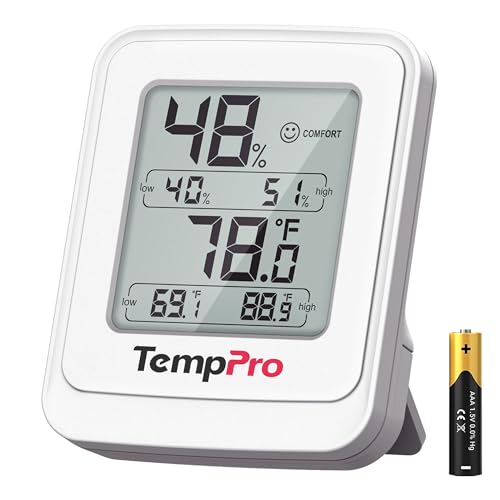
TempPro TP50 Digital Hygrometer & Thermometer for Indoor Use

- ✓ Clear, easy-to-read display
- ✓ Fast, accurate readings
- ✓ Versatile for multiple uses
- ✕ Limited to indoor use
- ✕ Small screen size
| Measurement Range | Humidity: 0-100% RH, Temperature: -20°C to 50°C (-4°F to 122°F) |
| Accuracy | ±2-3% RH for humidity, ±1°F for temperature |
| Refresh Rate | Updates every 10 seconds |
| Display Features | Humidity level icon indicating DRY/COMFORT/WET, high/low temperature and humidity records |
| Power Source | 1 AAA battery (included) |
| Additional Features | Selectable °F/°C, tabletop stand and magnetic back for versatile placement |
I’ve been eyeing a reliable hygrometer for my greenhouse setup for a while, especially one that updates quickly and gives clear readings. When I finally got my hands on the TempPro TP50, I was curious if it could handle the fluctuating conditions I face daily.
The first thing I noticed was its sleek, compact design. The digital display is bright and easy to read at a glance, which is perfect when you’re busy tending to plants.
The humidity level icon showing DRY, COMFORT, or WET made it simple to gauge whether I needed to adjust my misting or ventilation.
What really stood out is the high accuracy—within +/- 2-3%RH and +/- 1°F. I tested it alongside other meters, and it kept up, showing quick updates every 10 seconds.
That rapid refresh is a game-changer when you’re monitoring temperature swings during the day.
The high and low record feature is handy for tracking changes over time, helping me optimize the environment for sensitive plants or seedlings. Plus, the versatility to use it as a refrigerator or soil thermometer means I can keep tabs on different areas without multiple gadgets.
The practical design with a magnetic back and tabletop stand makes placement flexible. I stuck it on my fridge for quick checks, but it also sits nicely on a shelf.
The battery life has been solid so far, and changing the single AAA battery is straightforward.
Overall, this little device packs a punch for greenhouse monitoring and home use alike. It’s straightforward, accurate, and easy to read—everything I need in a compact humidity and temperature sensor.
Govee WiFi Thermometer Hygrometer H5179 with App Alerts

- ✓ Accurate and fast readings
- ✓ Easy app setup & alerts
- ✓ Compact and portable design
- ✕ No 5G WiFi support
- ✕ Bluetooth-only alerts
| Sensor Type | Swiss-made humidity and temperature sensor |
| Temperature Accuracy | ±0.54℉ / ±0.3℃ |
| Humidity Accuracy | ±3% RH |
| Connectivity | WiFi (2.4GHz only) and Bluetooth |
| Data Storage Duration | Up to 20 days online, exportable data for 2 years |
| Refresh Rate | Every 2 seconds |
As soon as I unboxed the Govee WiFi Thermometer Hygrometer H5179, I was struck by how sleek and compact it feels in your hand. Its matte black finish and small size make it look modern without being bulky, and the lanyard loop adds a nice touch for flexible placement.
Holding it, I noticed the sturdy build quality and smooth surface, which feels premium for its price.
Setting it up took just a few minutes. Connecting via WiFi or Bluetooth was straightforward, thanks to the clear instructions in the app.
I appreciated that it doesn’t support 5G WiFi, but the stable connection over 2.4G was reliable, keeping the data flowing smoothly. The Swiss-made sensor is noticeably responsive, updating every 2 seconds, so I could see real-time changes in temperature and humidity.
The app interface is intuitive, with easy-to-read graphs and historical data. I set preset alerts for humidity drops and spikes, and the notifications came through promptly, helping me react quickly.
The widget feature is handy, letting me glance at the current conditions without opening the app. It’s perfect for keeping an eye on sensitive areas like my greenhouse or basement.
Overall, the accuracy impressed me—temperature is precise to ±0.54℉, and humidity to ±3%RH. The ability to export and view 20 days of data, or even two years’ history, is a big plus for tracking trends over time.
The only minor downside is that some might want support for 5G WiFi, but for most users, the connection stability is enough.
If you’re after a reliable, easy-to-use monitor that fits anywhere and keeps you updated, this little device delivers. It’s a solid choice for maintaining the perfect climate in your greenhouse or any indoor space that needs careful control.
JEDEW 2-Pack Digital Hygrometer Thermometer Indoor/Outdoor

- ✓ Clear, easy-to-read display
- ✓ Fast, accurate updates
- ✓ Multi-purpose use
- ✕ Small screen size
- ✕ Limited backlight
| Temperature Measurement Range | 0°C to 70°C (32°F to 158°F) |
| Humidity Measurement Range | 10% to 99% RH |
| Temperature Accuracy | ±1°F |
| Humidity Accuracy | ±3% RH |
| Display Type | Digital LCD |
| Power Source | LR44 button cell with 10 months battery life |
Unboxing this JEDEW digital hygrometer, you immediately notice its sleek, compact design. The matte black finish feels smooth to the touch, and the LCD display is bright and easy to read at a glance.
It’s surprisingly lightweight, so you don’t feel burdened carrying it around or mounting it in various spots.
The sensor feels sensitive when you tap it, and the vents are cleverly positioned to ensure quick and accurate readings. Setting it up in your greenhouse, you’ll appreciate how fast it responds—checking the display every 10 seconds reveals live updates on temperature and humidity.
The dual measurement units (Fahrenheit and Celsius) switch easily, which is a nice touch for convenience.
Using it indoors or outdoors, the device stays stable and reliable. It helps you keep tabs on your plants’ environment, making adjustments to humidifiers or dehumidifiers simple.
Monitoring humidity levels from 10% to 99% RH helps prevent mold or dry air, which is especially useful in a greenhouse setting.
The back-up button cell is a thoughtful feature, promising up to 10 months of use before needing replacement. The display’s accuracy feels spot-on, with temperature within about 1°F and humidity within 3% RH.
It’s quiet too—no annoying beeps or noise, just clear readings.
Overall, this thermometer-hygrometer feels like a small but mighty tool. It’s easy to use, versatile, and perfect for keeping your environment just right.
Whether for your greenhouse or home, it delivers consistent, real-time data you can trust.
TempPro TempAir Digital Hygrometer Indoor Thermometer IPX5
- ✓ Accurate readings within seconds
- ✓ Waterproof and durable
- ✓ Clear, easy-to-read display
- ✕ Limited to indoor use
- ✕ No Wi-Fi connectivity
| Temperature Accuracy | ±1°F |
| Humidity Accuracy | ±2% RH |
| Waterproof Rating | IPX5 |
| Display Type | Large, clear LCD with bold digits |
| Monitoring Speed | Updates every 10 seconds |
| Max/Min Recording Duration | 24 hours |
Many people assume that a simple thermometer or hygrometer can handle the complexities of greenhouse environments. But I found that relying on basic models often leaves you guessing about real conditions, especially when humidity swings fast or there’s water splashing around.
The TempPro TempAir Digital Hygrometer surprises you with its sturdy, waterproof design—it’s IPX5 rated, so a splash or two won’t bother it. It’s compact but feels solid in your hand, with a big, easy-to-read LCD display featuring bold digits that are visible from across the room or greenhouse aisle.
What really stood out is how quickly it updates—just 10 seconds for the latest readings. This is perfect when you’re adjusting watering or ventilation, as you get instant feedback.
Plus, the 24-hour max/min records help you spot trends or sudden shifts in temperature and humidity, which is crucial for sensitive plants.
The face icons are a nice touch, giving you an at-a-glance idea of whether conditions are dry, comfortable, or wet. It’s like having a mini environment coach.
And the flexible placement options, thanks to its magnetic back and stand, mean you can stick it on metal shelves or just place it on a table.
Overall, this little gadget feels reliable and accurate, making it a smart addition to any green thumb’s toolkit. It’s simple to use but packs enough features to keep your plants happy and healthy.
DOQAUS Digital Hygrometer & Thermometer, Indoor, Black

- ✓ Highly accurate readings
- ✓ Fast refresh every 5 seconds
- ✓ Easy to read display
- ✕ Limited to indoor use
- ✕ No backlight for nighttime reading
| Temperature Accuracy | ±1°F (±0.5°C) |
| Humidity Accuracy | ±5% RH |
| Temperature Range | 0°C to 50°C (32°F to 122°F) (inferred for indoor use) |
| Humidity Range | 20% to 90% RH (typical for indoor hygrometers) |
| Display Size | 2.3 inches LCD |
| Measurement Refresh Rate | Every 5 seconds |
This DOQAUS digital hygrometer immediately caught my eye because of its sleek black design and surprisingly compact size. I’ve been wanting a reliable way to monitor humidity and temperature in my greenhouse, and this little gadget promised quick, precise readings.
When I finally set it up, I was pleased to find its large, easy-to-read LCD display instantly clear from across the room.
The instant 5-second refresh rate is a game-changer. No more guessing or waiting for data updates—it’s like having a live feed of your environment.
I tested it in different spots, and it kept delivering consistent, accurate readings within the ±1°F and ±5%RH margins. The built-in smart sensor really helps maintain the perfect conditions for my plants, especially when I need to fine-tune my humidifier or dehumidifier.
The air comfort indicator is a clever touch—it shows you at a glance whether your air is dry, comfortable, or wet, which saves me from constantly checking numbers. The 2.3-inch LCD display is bright and bold, making it easy to read from any angle, even in dim light.
Plus, the multiple mounting options—hanging, standing, or magnet—make placement flexible, whether on a wall, shelf, or even attached to my metal greenhouse frame.
Overall, it’s super user-friendly—just toggle between Celsius and Fahrenheit with a simple button. Its lightweight, pocket-sized form makes it portable, so I can carry it around or move it as needed.
For the price, this little gadget has become an essential part of my greenhouse setup, offering peace of mind with precise, real-time data.
What Is the Ideal Temperature Range for Different Plants in a Greenhouse?
Key aspects of temperature management in a greenhouse include understanding the thermal dynamics of the structure, including how sunlight and external weather conditions affect internal temperatures. Insulation, ventilation, and shading are critical factors that play roles in regulating temperature. Additionally, humidity levels also contribute to plant health; for example, high humidity (around 70% to 90%) is beneficial for tropical plants, while lower humidity is preferred for succulents and cacti.
This impacts plant growth significantly; optimal temperatures promote vigorous growth, flowering, and fruiting. Conversely, temperatures that are too high or too low can lead to stress, stunted growth, or even plant death. For instance, heat stress can cause wilting and reduced yield, while cold stress can result in frost damage, particularly in sensitive species.
Benefits of maintaining the best temperature and humidity levels in a greenhouse include extended growing seasons, improved crop yields, and enhanced plant quality. By creating an ideal microclimate, growers can cultivate a wider variety of plants and mitigate risks associated with extreme weather conditions.
Solutions for achieving optimal greenhouse conditions involve using thermostats, heaters, and cooling systems, as well as employing fans and vents for proper air circulation. Additionally, utilizing humidity controllers and monitoring systems can ensure that both temperature and moisture levels are kept within the desired range, adapting to the specific needs of various crops throughout their growth cycles.
How Does Humidity Specifically Impact Plant Health in a Greenhouse?
- Water Absorption: Humidity levels directly impact a plant’s ability to absorb water through its roots. High humidity can lead to reduced transpiration rates, causing plants to take up less water, which may result in nutrient deficiencies and stunted growth.
- Photosynthesis Efficiency: Optimal humidity levels facilitate efficient photosynthesis, as they allow for the necessary gas exchange. Excessively high humidity can lead to a buildup of moisture on leaf surfaces, reducing light penetration and inhibiting photosynthesis, which is vital for plant energy production.
- Disease Development: High humidity creates a conducive environment for fungal diseases and pests, as many pathogens thrive in moist conditions. Increased humidity can lead to issues such as powdery mildew and root rot, which can severely affect plant health and yield.
- Plant Stress and Respiration: Low humidity can cause plants to lose moisture rapidly through transpiration, leading to stress and wilting. This stress can compromise growth and reproductive development, as the plant diverts energy to survive rather than to grow or produce flowers and fruit.
- Microclimate Variability: Inside a greenhouse, humidity levels can vary significantly, affecting different areas unevenly. This variability can lead to inconsistent growth patterns among plants, with some thriving in humid corners while others in drier areas may struggle.
What Are the Recommended Temperature and Humidity Levels for Common Greenhouse Plants?
The best temperature and humidity levels for greenhouse plants vary depending on the types of plants being grown.
- Vegetable Plants: Most vegetable plants thrive at temperatures between 70°F to 85°F during the day and slightly cooler at night, around 60°F to 70°F. Humidity levels should ideally be maintained between 50% to 70% to prevent diseases like powdery mildew while ensuring adequate transpiration.
- Tropical Plants: Tropical plants generally prefer warmer conditions, with daytime temperatures ranging from 75°F to 90°F and nighttime temperatures not dropping below 60°F. These plants benefit from higher humidity levels, ideally around 60% to 80%, which mimics their natural rainforest environment and supports healthy growth.
- Cacti and Succulents: These plants require a drier environment, with optimal temperatures between 70°F and 100°F during the day, and cooler nights around 50°F to 65°F. Humidity for cacti and succulents should be kept low, ideally below 30%, to prevent rot and promote healthy growth.
- Flowering Plants: Flowering plants typically thrive at temperatures of 65°F to 75°F during the day and 55°F to 65°F at night. Humidity levels should be maintained around 40% to 60% to encourage blooming while avoiding conditions that may lead to fungal issues.
- Herbs: Most herbs prefer daytime temperatures between 65°F and 75°F and should not fall below 50°F at night. They do best in moderate humidity levels, around 40% to 60%, which helps maintain flavor and aroma without promoting disease.
How Can I Effectively Monitor Temperature and Humidity in My Greenhouse?
To effectively monitor temperature and humidity in your greenhouse, several tools and techniques can be employed:
- Digital Thermo-Hygrometers: These devices provide accurate readings of both temperature and humidity levels in real-time, making them essential for greenhouse monitoring.
- Data Loggers: These instruments record temperature and humidity data over time, allowing you to analyze trends and fluctuations, which is crucial for maintaining optimal conditions.
- Smart Sensors: Connected to your smartphone or computer, these sensors can alert you to changes in temperature and humidity, enabling you to take immediate action.
- Ventilation Systems: Proper ventilation helps regulate temperature and humidity levels, and can be monitored through automated systems that respond to readings from sensors.
- Environmental Control Systems: These comprehensive systems integrate various sensors and controls to automatically adjust heating, cooling, and humidity levels based on preset parameters.
Digital Thermo-Hygrometers: Digital thermo-hygrometers are user-friendly devices that display current temperature and humidity levels, often with additional features like minimum and maximum readings. They are usually portable and can be placed at various locations within the greenhouse to ensure balanced conditions across the space.
Data Loggers: Data loggers gather and store temperature and humidity data over extended periods, which can help identify patterns and predict potential issues. This historical data can be invaluable for understanding how seasonal changes affect greenhouse conditions and for making informed adjustments to your climate management strategies.
Smart Sensors: Smart sensors provide the convenience of remote monitoring, allowing you to check conditions from anywhere via an app on your smartphone. Many models also offer alerts for when conditions exceed your set thresholds, ensuring timely interventions to protect your plants.
Ventilation Systems: Effective ventilation is key in managing both temperature and humidity, as it allows for air circulation and prevents the buildup of excess moisture. Automated ventilation systems can be programmed to open or close based on sensor readings, which helps maintain an ideal environment without constant manual adjustments.
Environmental Control Systems: These advanced systems offer a comprehensive approach to greenhouse management by integrating heating, cooling, and humidity controls into one platform. They can automatically adjust various environmental factors based on real-time sensor data and your specific crop needs, ensuring optimal growth conditions throughout the year.
What Techniques Can Be Used to Regulate Temperature and Humidity in a Greenhouse?
Several effective techniques can be used to regulate temperature and humidity in a greenhouse to create optimal growing conditions.
- Ventilation: Proper ventilation is crucial to control both temperature and humidity levels in a greenhouse. By opening vents or using exhaust fans, warm, moist air can be expelled, allowing cooler, drier air to enter, which helps maintain a stable environment for plants.
- Heating Systems: Utilizing heating systems such as radiant heat, hot water pipes, or electric heaters can help maintain the desired temperature, especially during colder months. These systems provide consistent warmth and can be controlled based on the specific needs of the plants being grown.
- Shading: Implementing shading materials, such as shade cloths or reflective films, can reduce direct sunlight and lower temperatures inside the greenhouse. This is particularly useful during the hottest part of the day, helping to prevent overheating and excessive humidity from transpiration.
- Humidifiers and Dehumidifiers: These devices are essential for managing humidity levels. Humidifiers can add moisture to the air when it’s too dry, while dehumidifiers can help remove excess moisture, preventing mold and mildew growth that can harm plants.
- Thermal Mass: Incorporating materials with high thermal mass, like water barrels or concrete, can help stabilize temperature fluctuations. These materials absorb heat during the day and release it at night, helping to maintain a more consistent environment.
- Monitoring Systems: Employing automated monitoring systems can help track temperature and humidity levels in real-time. These systems can trigger ventilation, heating, or humidifying actions based on pre-set conditions, ensuring that the greenhouse environment remains optimal for plant growth.
What Are the Signs of Poor Temperature and Humidity Control in a Greenhouse?
Signs of poor temperature and humidity control in a greenhouse can greatly affect plant health and growth.
- Wilting Plants: When plants are exposed to inconsistent temperature and humidity levels, they can wilt due to stress, indicating they are either too hot or too dry.
- Fungal Growth: Excessive humidity can lead to fungal diseases, manifesting as mold or mildew on plants and surfaces, which can severely hinder plant health.
- Leaf Discoloration: Leaves may turn yellow or brown as a result of temperature fluctuations and improper humidity, signaling nutrient deficiencies or stress.
- Slow Growth: If plants exhibit stunted growth or fail to thrive, it may be due to an unsuitable environment that does not meet their temperature and humidity needs.
- Pest Infestations: High humidity levels can create a favorable environment for pests like aphids and spider mites, which can compromise plant health.
Wilting plants are often one of the first visible signs that something is wrong, as they indicate that the plants are not able to uptake water effectively due to environmental stress. This can be caused by excessively high temperatures or inadequate humidity levels, which disrupt the plant’s physiological processes.
Fungal growth is a critical issue in greenhouses where humidity is not properly controlled. High moisture levels can lead to the proliferation of mold and mildew, which not only affects the affected plants but can also spread to others, creating widespread problems in the greenhouse ecosystem.
Leaf discoloration is another sign to watch for; when leaves turn yellow or brown, it can indicate that the plants are experiencing stress from their environment. This discoloration often results from fluctuations in temperature or humidity that lead to nutrient uptake issues.
Slow growth can be particularly frustrating for greenhouse gardeners, as it often results from suboptimal growing conditions. If plants are not receiving the right temperature or humidity levels, they can slow down or halt their growth altogether, leading to reduced yields.
Pest infestations can be exacerbated by high humidity, which creates an ideal environment for various pests. These pests can damage plants and lead to further declines in health, particularly if the underlying environmental conditions are not addressed.
What Best Practices Should Be Followed for Maintaining Optimal Greenhouse Conditions?
Maintaining optimal conditions in a greenhouse involves careful management of temperature and humidity levels.
- Temperature Control: The ideal temperature for most greenhouse plants is between 70°F to 80°F (21°C to 27°C) during the day and slightly cooler at night. It is essential to monitor and adjust heating or cooling systems to maintain these temperatures, as extreme fluctuations can stress plants and hinder growth.
- Humidity Management: Optimal humidity levels for a greenhouse typically range from 40% to 60%. High humidity can lead to mold and fungal diseases, while low humidity can cause plant stress; therefore, using dehumidifiers or proper ventilation can help maintain the desired levels.
- Ventilation: Adequate ventilation is crucial for regulating both temperature and humidity. Opening vents or using exhaust fans during the hottest parts of the day allows for fresh air circulation, which helps prevent overheating and promotes healthy plant respiration.
- Shading Techniques: Implementing shading techniques can help prevent excessive heat buildup during sunny days. Shade cloths or films can reduce light intensity and maintain cooler temperatures, which is especially important for sensitive plants.
- Watering Practices: The method and timing of watering significantly impact humidity levels within the greenhouse. Regularly monitoring soil moisture and using drip irrigation can help maintain consistent moisture levels without creating excessive humidity that could lead to disease.
- Plant Arrangement: Organizing plants according to their specific temperature and humidity needs can optimize the growing environment. Grouping plants with similar requirements together helps in maintaining uniform conditions and minimizing stress on individual species.
- Monitoring Systems: Utilizing automated climate control systems can enhance the ability to maintain optimal conditions. Sensors that track temperature and humidity levels can trigger heating, cooling, or ventilation systems automatically, ensuring that plants receive consistent care.
- Regular Maintenance: Conducting regular maintenance on greenhouse equipment, such as heaters, fans, and humidifiers, is vital to ensure they function correctly. Neglecting equipment can lead to failures that disrupt the carefully balanced environment needed for plant growth.