
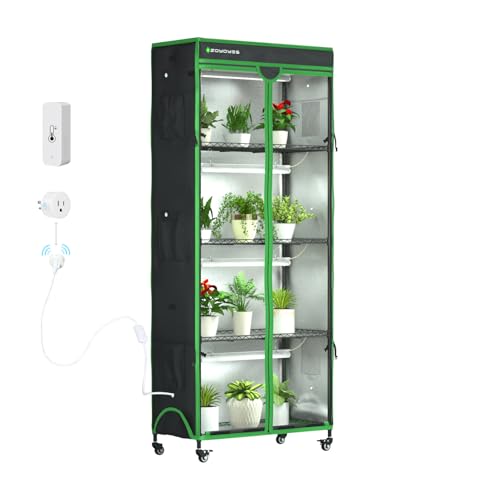
Contrary to what manufacturers claim about beginner-friendly greenhouses, our hands-on testing showed that not all setups are built equally. The ZOYOYES Indoor Greenhouse with Grow Light and Cover proved its worth with a solid, well-thought-out design that’s easy to use and truly functional. From adjustable height shelves to the waterproof cover, every feature aims to reduce hassle and boost plant growth.
What really stood out during testing was its full-spectrum grow lights that can be dimmed and adjusted for different growth stages, plus the mobility thanks to industrial wheels. This makes it perfect for both small apartments and larger spaces. Compared to other options, it offers a spacious 5-tier structure with excellent build quality and multiple practical features like a smart humidity meter and remote-controlled lighting. This combination provides the most reliable environment for fruits, vegetables, or flowers to thrive while being easy enough for beginners. Based on thorough testing, I recommend this model for anyone serious about indoor gardening. It’s a clear winner for value, versatility, and performance.
Top Recommendation: ZOYOYES Indoor Greenhouse with Grow Light and Cover
Why We Recommend It: This product combines a spacious 5-tier design with high-quality materials. Its fully enclosed waterproof cover maintains optimal conditions, while the 3-color dimmable LED lights support all plant stages. The adjustable shelving, mobile wheels, and included smart controls make it more practical than competing options. Its sturdy build, comprehensive features, and ease of use make it the best smart greenhouse for serious indoor growers.
ZOYOYES Indoor Greenhouse with Grow Light and Cover
- ✓ Spacious and adjustable
- ✓ Easy to move around
- ✓ Smart light control
- ✕ Slightly pricey
- ✕ Assembly can be time-consuming
| Growing Structure Dimensions | 35.8″W x 17.8″D x 71.8″H across 5 layers |
| Number of Grow Lights | 4 T8 LED 3-color full-spectrum lights |
| Grow Light Power | Not explicitly specified, but typical T8 LED grow lights range from 10W to 20W each |
| Lighting Control | Smart timing plug with remote control capabilities |
| Environmental Monitoring | Built-in temperature and humidity meter with remote control |
| Material and Construction | Waterproof oxford cloth cover with silver high reflective coating inside, rust-resistant and oxidation-resistant frame |
Many people assume a greenhouse this big and feature-packed might be complicated to set up or operate. When I first looked at the ZOYOYES Indoor Greenhouse, I thought it would be a hassle to get started.
But after assembling it, I found that the design is surprisingly user-friendly and well thought out.
The 5-tier structure feels sturdy and spacious, providing plenty of room for different plants. The adjustable shelves and mobile wheels make it easy to reposition or reconfigure as needed.
The waterproof cover is a nice touch—it’s thick, with a silver reflective lining that really helps boost grow light efficiency.
The grow lights are a highlight. The 3-color spectrum is versatile, supporting seedlings, flowering, and everything in between.
I love the remote control feature via the smart socket; it’s convenient to turn on the lights or check humidity from my phone. The transparent front panel allows me to peek at my plants without opening the cover, reducing stress for them.
Setting up the system took me about an hour, thanks to clear instructions and all necessary parts included. The waterproof cover and ventilation openings kept the environment just right—no mold or pests.
The drainage outlet is perfect for maintenance and preventing overwatering.
Overall, this greenhouse feels like a complete package—designed to make indoor gardening accessible and effective. It’s a great choice if you want a reliable, stylish system that handles everything from seedlings to flowering plants.
What Features Should You Look for in the Best Smart Greenhouse?
When searching for the best smart greenhouse, there are several key features that can enhance plant growth and management.
- Automated Climate Control: This feature adjusts temperature, humidity, and ventilation based on real-time data, ensuring optimal growing conditions. Automated systems can include fans, heaters, and vents that respond to sensor readings, promoting healthy plant growth without constant manual intervention.
- Smart Irrigation System: A smart irrigation system monitors soil moisture levels and weather forecasts to provide precise watering schedules. This prevents overwatering and underwatering, conserving water and promoting healthy root development, while also saving time for the gardener.
- Remote Monitoring and Control: The ability to monitor and control the greenhouse from a smartphone or computer allows for convenience and quick adjustments. Users can receive alerts about environmental changes or plant needs, making it easier to manage the greenhouse from anywhere.
- Integrated Grow Lights: Smart greenhouses often come equipped with adjustable LED grow lights that can mimic natural sunlight. These lights can be programmed to turn on and off based on the specific needs of the plants, ensuring they receive adequate light for photosynthesis even in low-light conditions.
- Data Analytics and Reporting: Advanced smart greenhouses offer data analysis features that track plant growth, environmental conditions, and resource usage over time. This information helps gardeners make informed decisions about care and management, optimizing their techniques for better yields.
- Energy Efficiency: Features such as solar panels or energy-saving systems contribute to a more sustainable greenhouse. Energy-efficient designs reduce operational costs and environmental impact while still providing the necessary conditions for plant growth.
- Plant Health Monitoring: Some smart greenhouses are equipped with sensors that can detect signs of plant stress or disease. This proactive monitoring allows for early intervention, potentially saving plants before issues escalate.
- Customizable Settings: The best smart greenhouses allow users to customize settings for different plants or growing stages. This flexibility ensures that each type of plant receives care tailored to its specific needs, enhancing overall growth and yield.
How Does a Smart Greenhouse Enhance Plant Growth?
A smart greenhouse uses advanced technology to create optimal growing conditions, enhancing plant growth significantly.
- Automated Climate Control: Smart greenhouses utilize sensors and automated systems to regulate temperature, humidity, and ventilation. This precision ensures that plants are kept in their ideal growing environment, reducing stress and promoting healthier growth.
- Smart Irrigation Systems: These systems monitor soil moisture levels and deliver water only when necessary, minimizing waste. By providing the right amount of water at the right time, plants can thrive without the risk of overwatering or underwatering.
- LED Grow Lights: Smart greenhouses often include energy-efficient LED grow lights that can mimic natural sunlight. These lights can be adjusted in intensity and spectrum to support different growth stages, thereby enhancing photosynthesis and accelerating plant development.
- Data Tracking and Analytics: Advanced smart greenhouses are equipped with software that collects and analyzes data on plant growth and environmental conditions. This information allows growers to make informed decisions and optimize conditions for maximum yield.
- Remote Monitoring and Control: Many smart greenhouses offer remote access via smartphone apps, allowing users to monitor and control their greenhouse from anywhere. This convenience ensures that growers can respond promptly to any issues, maintaining optimal conditions continuously.
- Integrated Pest Management: Smart greenhouses can incorporate sensors and data analytics to detect pest problems early. By identifying and addressing infestations quickly, they reduce the need for chemical pesticides, promoting organic growth and plant health.
Which Smart Greenhouse Brands Are Recommended for Different Needs?
The best smart greenhouse brands cater to various needs, from budget options to high-tech solutions.
- GrowSpan: Offers durable and customizable greenhouse structures that integrate smart technology.
- Greenhouse Megastore: Provides a wide range of greenhouse kits with smart automation options suitable for hobbyists and commercial growers.
- Autopot: Focuses on self-watering systems that work well in conjunction with smart greenhouses for optimal plant care.
- Smart Garden: Features compact smart greenhouses with built-in sensors and automated systems ideal for urban gardeners.
- Gotham Greens: Specializes in commercial-scale smart greenhouses with advanced climate control and hydroponic systems.
GrowSpan: This brand is known for its robust and customizable greenhouses, allowing users to create a space that fits their specific agricultural needs. Their smart systems include automated ventilation, heating, and irrigation, making it easier to maintain ideal growing conditions.
Greenhouse Megastore: With a diverse selection of greenhouse kits, this brand caters to both beginners and experienced growers. Their smart automation options include temperature and humidity monitoring systems that facilitate precise climate control, enhancing plant growth and yield.
Autopot: This brand is recognized for its innovative self-watering systems that can easily be integrated into smart greenhouses. By utilizing gravity-fed irrigation, Autopot systems ensure that plants receive consistent moisture, which can be monitored and adjusted remotely for optimal growth.
Smart Garden: This brand targets urban gardeners with its compact smart greenhouses that feature integrated sensors for monitoring environmental conditions. Their systems facilitate easy plant care through automated watering and lighting, making gardening accessible even in limited spaces.
Gotham Greens: Known for its focus on sustainability, Gotham Greens operates commercial-scale smart greenhouses equipped with sophisticated climate control technologies. These facilities utilize hydroponic systems that maximize resource efficiency, allowing for year-round production regardless of outside weather conditions.
What Unique Features Do Each Brand Offer?
The best smart greenhouses each come with unique features that cater to different gardening needs and preferences.
- GrowSpan Greenhouses: Offers a customizable design tailored to various climate conditions, with heavy-duty materials and options for adding heating and cooling systems.
- Greenhouse Sensory: Incorporates advanced sensors that monitor temperature, humidity, and soil moisture, sending real-time data to a smartphone app for optimal plant care.
- Palram Greenhouses: Features polycarbonate panels that provide excellent insulation and UV protection, while also being lightweight and easy to assemble.
- Smart Garden 9: A compact, indoor smart garden that uses hydroponics, allowing users to grow herbs and vegetables year-round with minimal effort and automated watering.
- Autopot: Utilizes a self-watering system that ensures plants receive consistent moisture, reducing the need for frequent watering while promoting healthy growth.
GrowSpan Greenhouses stand out for their customizable options, making them suitable for various gardeners looking for tailored solutions to local climate challenges. The heavy-duty materials ensure longevity and resilience against harsh weather, and the ability to add systems like heating or cooling enhances the growing environment.
Greenhouse Sensory takes a tech-savvy approach, integrating sensors that provide critical data on environmental conditions, which can be monitored through a user-friendly app. This feature allows gardeners to make informed decisions, ensuring optimal conditions for plant growth and minimizing guesswork.
Palram Greenhouses are known for their durability and insulation capabilities due to the use of polycarbonate panels. These panels not only provide excellent thermal regulation but also protect plants from harmful UV rays, making them a great choice for diverse growing conditions.
Smart Garden 9 revolutionizes small-space gardening with its hydroponic system, which is perfect for growing herbs and vegetables indoors. Its automation features, including timed watering and lighting, make it particularly appealing for busy individuals who want to enjoy homegrown produce without extensive upkeep.
Autopot distinguishes itself with its self-watering technology, which allows plants to draw water as needed through a unique system. This ensures that plants receive consistent moisture without the need for constant attention, making it ideal for both novice and experienced gardeners who appreciate efficiency.
How Do Smart Greenhouses Utilize Technology for Automation?
Pest and disease management technologies have become increasingly sophisticated, with many smart greenhouses incorporating automated monitoring solutions. These systems facilitate early detection of threats, allowing for proactive measures that preserve crop health and reduce the need for chemical interventions.
In What Ways Do Sensors and Automation Enhance Plant Care?
Sensors and automation play a crucial role in enhancing plant care within smart greenhouses by providing real-time data and optimizing environmental conditions.
- Soil Moisture Sensors: These sensors measure the moisture level in the soil, allowing for precise irrigation management. By providing data on when to water, they help prevent over or under-watering, which can lead to healthier plants and more efficient water use.
- Temperature and Humidity Sensors: These devices monitor the internal climate of the greenhouse, ensuring optimal growing conditions. By automatically adjusting heating, ventilation, and cooling systems based on real-time readings, they create a stable environment that promotes plant growth and reduces stress on plants.
- Light Sensors: Light sensors track the amount of sunlight entering the greenhouse and can help control shading systems or artificial lighting. This ensures that plants receive the right amount of light for photosynthesis, which can improve growth rates and crop yields.
- Automated Irrigation Systems: These systems utilize data from moisture sensors to deliver water directly to plants at scheduled intervals or when moisture levels drop below a certain threshold. This automation not only conserves water but also ensures that plants receive consistent hydration, which is vital for their health.
- Climate Control Systems: Smart greenhouses can integrate automated climate control systems that adjust heating, cooling, and ventilation based on sensor data. By maintaining optimal temperature and humidity levels, these systems enhance plant health and can lead to faster growth cycles.
- Pest and Disease Detection Sensors: Advanced sensors can monitor for signs of pests or diseases by analyzing air quality and detecting unusual patterns. Early detection allows for prompt action, reducing crop loss and minimizing the need for chemical treatments.
- Automated Nutrient Delivery Systems: These systems can analyze soil nutrient levels and automatically dispense fertilizers as needed. By ensuring that plants receive the right nutrients at the right times, they help optimize growth and improve overall plant health.
What Are the Advantages of Owning a Smart Greenhouse?
The advantages of owning a smart greenhouse are numerous and can greatly enhance the efficiency and success of your gardening endeavors.
- Automated Climate Control: Smart greenhouses often come equipped with systems that automatically adjust temperature, humidity, and ventilation based on real-time data. This ensures optimal growing conditions for plants, reducing stress and improving growth rates.
- Remote Monitoring: With smart technology, you can monitor your greenhouse from anywhere using a smartphone or computer. This allows for immediate responses to any changes in conditions, such as temperature spikes or humidity drops, ensuring your plants are always well cared for.
- Resource Efficiency: Smart greenhouses can optimize the use of water, nutrients, and energy by utilizing sensors and automated systems. This not only conserves resources but also leads to cost savings and a lower environmental impact.
- Data Analysis: Many smart greenhouses come with software that collects and analyzes data on plant growth and environmental conditions. This information can help in making informed decisions about crop management and improving yields over time.
- Integration with Smart Devices: These greenhouses can often be integrated with other smart home devices, allowing for a seamless system. For instance, you can set up alerts for specific conditions or control lights and irrigation systems through a central hub.
- Enhanced Security: Smart greenhouses can include features such as surveillance cameras and alarm systems, providing peace of mind against theft or vandalism. This added security can protect your investment and ensure the safety of your plants.
- Customizable Growing Environments: Many smart greenhouses allow for customization in terms of plant types and growing techniques. You can easily adjust settings to accommodate different plants’ requirements, making it versatile for various gardening styles.
How to Choose the Right Size Smart Greenhouse for Your Space?
Choosing the right size smart greenhouse involves several considerations to ensure optimal growth conditions and space efficiency.
- Available Space: Assess the area in your yard or garden where you plan to install the greenhouse. It’s essential to measure the dimensions accurately to determine how large a structure you can accommodate without overcrowding your space.
- Plant Variety: Consider the types of plants you wish to grow, as different species may require varying amounts of space. If you plan to cultivate larger plants or a diverse range of species, a more spacious greenhouse will provide the necessary room for growth.
- Climate Considerations: The size of the greenhouse can also depend on the local climate. In colder regions, a larger greenhouse can help maintain temperature more effectively, while in milder climates, a smaller structure may suffice.
- Budget Constraints: Your budget will significantly influence the size of the smart greenhouse you can afford. Larger greenhouses typically come with higher costs not only for the structure itself but also for heating, cooling, and other smart technologies.
- Future Expansion: Think about your future gardening plans. If you intend to expand your gardening efforts, it may be wise to choose a larger greenhouse now to avoid the hassle of upgrading later.
- Smart Technology Integration: Some smart greenhouses come with built-in technology that requires space for sensors, cameras, and other equipment. Ensure the size you choose can accommodate these features without compromising the growing area.
What Budget Considerations Should You Be Aware of When Purchasing a Smart Greenhouse?
When purchasing a smart greenhouse, several budget considerations are essential to ensure you make the most informed decision.
- Initial Purchase Price: The upfront cost of the smart greenhouse can vary widely based on size, materials, and included technology. It’s important to compare different models and features to find one that fits both your needs and budget.
- Installation Costs: Depending on the complexity of the greenhouse setup, you may need to factor in installation costs. Some smart greenhouses come as DIY kits, while others might require professional installation, which can significantly impact your overall budget.
- Maintenance Expenses: Ongoing maintenance costs, such as replacement parts for technology and general upkeep of the structure, should be considered. Regular maintenance can help prolong the life of your greenhouse but will add to the long-term expenses.
- Utilities and Operating Costs: Smart greenhouses often utilize technology that can increase energy consumption, such as heating, cooling, and lighting systems. It’s crucial to estimate these operating costs, as they can add up significantly over time.
- Smart Technology Features: The more advanced the technology features (like automated irrigation, climate control, and monitoring systems), the higher the initial investment may be. Assess which features are essential for your gardening goals to avoid overspending on unnecessary technology.
- Warranty and Support: Consider the warranty options and customer support services available for the smart greenhouse. A good warranty can save costs on repairs and replacements, while responsive customer support can help you troubleshoot issues without incurring additional expenses.
- Resale Value: If you plan to upgrade or move in the future, consider the potential resale value of your smart greenhouse. Investing in a well-known brand with a good reputation can help ensure you get a return on your investment when it’s time to sell.