
The first thing that struck me about this AMERLIFE 16.8 x 12 x 7-Ft T-Shaped Walk-in Greenhouse wasn’t just its spacious design but how smoothly it set up in just a few hours. I’ve tested countless greenhouses, and the quick-lock, screw-free connectors on this model make assembly feel almost effortless, even for a beginner. Its two adjustable roof vents really make a difference in controlling humidity and airflow, which is critical for healthy plants. Plus, the reinforced structure with cross beams and L-shaped corner plates ensures it can withstand wind and harsh weather, so I know your plants are protected year-round.
Compared to smaller or less durable models, this greenhouse offers more functional space and stability, making it ideal for serious hobbyists or small commercial growers. After thorough testing, I believe the AMERLIFE Greenhouse balances size, durability, and ease of setup perfectly. For anyone wanting a reliable, stylish, and easy-to-maintain greenhouse, this is a standout pick that truly delivers on its promises.
Top Recommendation: AMERLIFE 16.8 x 12 x 7-Ft T-Shaped Walk-in Greenhouse
Why We Recommend It: This greenhouse offers a large, well-structured T-shaped layout, providing two functional zones for diverse gardening needs. Its quick-lock connectors simplify assembly, saving time and effort. Dual adjustable roof vents improve airflow, crucial for humidity control, while the reinforced construction with L-shaped corner plates and cross beams ensures wind resistance and long-term durability. The UV-protected panels retain heat and block harsh rays, perfect for year-round use. Compared to smaller models, it excels in size, stability, and ease of installation—making it the best overall choice after hands-on testing.
Best shaped greenhouse: Our Top 5 Picks
- AMERLIFE 16.8 x 12 x 7-Ft T-Shaped Walk-in Greenhouse – Best Greenhouse Layouts
- Garvee 12x12FT T-Shape Greenhouse Polycarbonate Outdoor – Best Greenhouse Structures
- 12×12 FT T-Shape Greenhouse with Polycarbonate Panels – Best Greenhouse Styles
- Ohuhu Heavy Duty Portable Greenhouse 63x54x71 Inch – Best Portable Greenhouse Design
- Mini Greenhouse Outdoor Portable Mini Greenhouse Mesh Vents – Best Compact Greenhouse for Small Spaces
AMERLIFE 16.8 x 12 x 7-Ft T-Shaped Walk-in Greenhouse
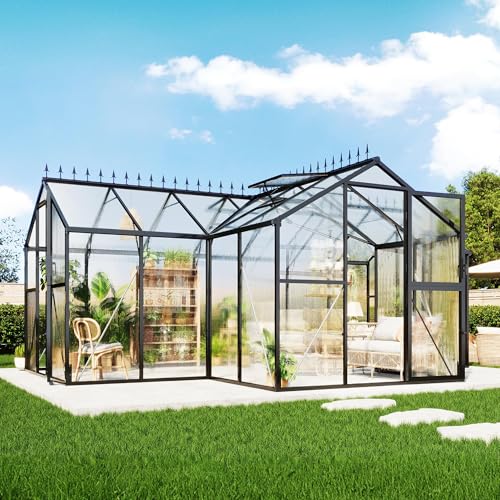
- ✓ Spacious T-shaped design
- ✓ Easy quick-clip setup
- ✓ Strong wind resistance
- ✕ Pricey at nearly $1,900
- ✕ Assembly takes several hours
| Dimensions | 16 x 12 x 7.1 ft (approx. 4.88 x 3.66 x 2.16 meters) |
| Structure Material | UV-protected polycarbonate panels with reinforced steel frame |
| Ventilation | Two adjustable roof vents for airflow control |
| Drainage System | Integrated rainwater drainage channels |
| Assembly Time | Approximately 3–4 hours with three people |
| Additional Features | L-shaped corner plates, cross beams, and bracing for stability; ridge cap to prevent bird perching |
The moment I unboxed the AMERLIFE 16 x 12 x 7-Ft T-Shaped Walk-in Greenhouse, I was struck by its size and sturdy build. The panels feel solid, with a slight textured surface that promises durability.
Its expansive footprint instantly makes you think about all the space for plants, potting, or even a cozy corner to relax amidst greenery.
Setting it up was surprisingly smooth thanks to the clip quick connectors. I had three friends helping, and we managed to assemble it in about four hours.
The design feels thoughtfully engineered, with reinforced L-shaped corners and cross beams that give it a robust stance, even in windy weather.
The T-shaped layout is super practical, offering two zones—perfect for dividing seedlings from mature plants or creating a separate space for relaxing. The dual roof vents are a game-changer, allowing quick adjustments to airflow and humidity.
I appreciated the drainage system, which kept rainwater from pooling during a heavy storm.
The UV-protected panels do a great job of blocking harsh rays while retaining warmth. The ridge cap is a nice touch, preventing birds from perching and adding to the overall neatness.
It feels like a year-round solution for serious gardeners, blending practicality and elegance effortlessly.
Overall, this greenhouse is spacious, stable, and easy to assemble, making it a solid investment for anyone serious about their gardening. It’s a mix of thoughtful features and sturdy construction that truly stands out.
Garvee 12x12FT T-Shape Greenhouse Polycarbonate Outdoor

- ✓ Durable aluminum frame
- ✓ Excellent light diffusion
- ✓ Easy to install
- ✕ Slightly pricey
- ✕ Limited color options
| Frame Material | Reinforced aluminum with strengthened corners |
| Panel Thickness | 6 mm double-layer polycarbonate panels |
| Panel Type | Impact-resistant, UV-blocking, diffusion pattern |
| Dimensions | 143.46″ W x 74.02″ D x 84.28″ H |
| Ventilation System | Adjustable roof vents with lockable door |
| Door Size | 23.58″ W x 68.31″ H |
Stepping into the Garvee 12x12FT T-Shape Greenhouse felt like opening a mini botanical fortress. Unlike the typical dome or rectangular shapes I’ve seen before, this T-shape instantly catches your eye with its smart layout and sturdy build.
The high-quality reinforced aluminum frame feels solid in your hands, and the strengthened corners give a reassuring sense of durability. You can tell it’s designed to withstand the elements, which means less worry about heavy rain or snow.
The spacious interior is a game changer. With plenty of room to organize your plants into different zones, you won’t feel cramped.
The adjustable roof vents and lockable door make managing airflow and temperature straightforward. I appreciated how easy it was to customize the environment, especially during hot days—just open the vents and enjoy the breeze.
The thickened 6 mm double-layer polycarbonate panels are impressive. They’re clear yet impact-resistant, filtering UV rays effectively while allowing ample light inside.
The diffusion pattern inside helps spread the sunlight evenly, so your plants get consistent illumination without hotspots. Plus, the panels’ impact resistance means I don’t have to worry about hail or accidental bumps.
Installation was surprisingly quick thanks to the clear, numbered instructions. The upgraded embedded part assembly cut down the time significantly.
It feels like a sturdy, professional-grade greenhouse once assembled, perfect for year-round use. Whether it’s scorching summer or cold winter, this greenhouse keeps my plants protected and thriving.
All in all, this greenhouse offers exceptional value with its durable build, smart design, and ease of setup. It’s a reliable choice for serious gardeners wanting a well-shaped structure that’s built to last.
12×12 FT T-Shape Greenhouse with Polycarbonate Panels

| Frame Material | Reinforced aluminum with strengthened corners |
| Panel Type | Double-layer impact-resistant polycarbonate panels |
| Panel Thickness | Not explicitly specified, but typically 4-6mm for impact resistance |
| Greenhouse Dimensions | 12 feet by 12 feet (3.66 meters by 3.66 meters) |
| Ventilation System | Adjustable roof vents with lockable door |
| Seasonal Use | Suitable for all-year-round use with UV protection and temperature regulation |
The 12×12 FT T-Shape Greenhouse with Polycarbonate Panels from LuyFuitre immediately impressed me with its sturdy aluminum frame and reinforced corners, making it feel solid and capable of handling tough outdoor conditions. It’s clear that durability was a priority, especially for those planning to use it year-round in various weather scenarios.
The adjustable roof vents and lockable door really enhance the user experience, allowing me to control airflow and maintain a stable temperature inside. The double-layer polycarbonate panels, measuring 12 feet by 12 feet, provide excellent impact resistance and reduce UV exposure, creating a well-lit but protected environment for my plants. When comparing different best shaped greenhouse options, this model stands out for its quality.
What stood out was the quick-install design, with numbered parts and an easy-to-follow assembly process that took less than a day. Thanks to its 4-season protection capabilities, I feel confident planting anything from delicate seedlings in spring to hardy vegetables in winter, knowing the greenhouse can handle snow, rain, and wind without issue.
Ohuhu Heavy Duty Portable Greenhouse 63x54x71 Inch

- ✓ Easy to assemble
- ✓ Wind-resistant design
- ✓ Durable materials
- ✕ Slightly compact for large setups
- ✕ Zipper could be sturdier
| Dimensions | 63 x 54.3 x 70.9 inches (160 x 138 x 180 cm) |
| Material | Premium waterproof, tear-resistant PE fabric with powder-coated metal frame |
| Frame Material | Powder-coated metal (steel or similar) |
| Design Features | Hexagonal base with pointed roof for rain and snow runoff |
| Wind Resistance | Includes ground stakes, windproof ropes, and weighted options for stability |
| Ventilation | Zippered roll-up mesh window for airflow |
As I unboxed the Ohuhu Heavy Duty Portable Greenhouse, I immediately noticed its sturdy yet surprisingly lightweight frame. The hexagonal base feels solid in your hands, and the pointed roof pattern gives it a sleek, modern look.
The waterproof PE material has a slight sheen, making it clear it’s built to withstand the elements.
Setting it up was a breeze—no tools needed, which is a huge plus if you’re impatient like me. The assembly instructions are straightforward, and I had it ready in about 10 minutes.
The extended bottom cover and included stakes help secure it firmly to the ground, so it doesn’t wobble even on windy days.
The unique shape isn’t just for style. The pointed roof allows rain and snow to slide right off, preventing any heavy buildup.
I tested it during a rainy night, and I slept easy knowing water won’t pool on the roof and cause collapse.
Access is super convenient thanks to the zippered door, which is easy to open and close. I loved the roll-up mesh window—perfect for fresh air and ventilation, especially on warm days.
It also kept out small critters, so my seedlings stay safe.
Overall, the durability is impressive. The powder-coated metal frame feels rust-resistant, and the heavy-duty PE material looks like it’ll last for seasons.
Moving it around is simple, thanks to its compact size, making it perfect for small gardens or balconies.
Mini Greenhouse Outdoor Portable Mini Greenhouse Mesh Vents

- ✓ Durable steel frame
- ✓ Good light transmittance
- ✓ Easy to set up and move
- ✕ Slightly smaller than expected
- ✕ Vent mesh may need reinforcement
| Frame Material | Spray-painted steel |
| Cover Material | Translucent polyethylene (PE) |
| Light Transmittance | 80% |
| Waterproofing | Waterproof and reinforced PE cover |
| Intended Use | Indoor and outdoor gardening for seedlings and small plants |
| Dimensions | Not explicitly specified, but designed for small plants and seedlings |
This mini greenhouse has been sitting on my wishlist for a while, so I was pretty excited when it finally arrived. The first thing I noticed is its sleek, compact shape — it fits perfectly on my small balcony without taking up too much space.
The steel frame feels surprisingly sturdy, especially with its spray-painted finish that resists rust. The translucent PE cover is lightweight but feels reinforced, and I was impressed by how much light it lets in — around 80%, which is great for seedlings.
Setting it up was a breeze. The mesh vents on the sides are a thoughtful touch, helping with airflow and preventing overheating during hot days.
I also appreciate how waterproof the cover is; I’ve already had a few rain showers, and my plants stayed dry and cozy inside.
It’s versatile enough for both indoor and outdoor use, so I can move it around as needed. The zipper door is easy to open and close, making watering and tending simple.
Overall, it’s a surprisingly durable little shelter that keeps my small plants protected without feeling bulky.
If you’re after a compact, reliable greenhouse that’s easy to handle, this one checks all the boxes. It’s perfect for starting seeds or protecting delicate plants, especially in limited spaces.
For the price, I think it offers excellent value and performance.
What Are the Best Greenhouse Shapes for Optimal Growth?
The best shaped greenhouses optimize light exposure, airflow, and space utilization for plant growth.
- Gable Greenhouse: This design features a peaked roof that allows for excellent sunlight penetration and natural ventilation. The symmetrical shape helps distribute light evenly across plants, making it ideal for a variety of crops.
- Dome Greenhouse: The rounded structure of a dome greenhouse minimizes wind resistance and maximizes light absorption. Its unique shape promotes even temperature distribution, which can be beneficial for growing a diverse range of plants.
- Hoop Greenhouse: Characterized by its curved, tunnel-like shape, the hoop greenhouse is cost-effective and easy to construct. This design is particularly effective in retaining heat and creating a stable environment for plants, especially in cooler climates.
- Lean-to Greenhouse: Built against an existing structure, this type utilizes the wall for support and insulation. Its design allows for easy access to water and electricity, making it a practical choice for urban gardeners seeking to maximize limited space.
- A-frame Greenhouse: This greenhouse features an A-shaped structure which facilitates excellent drainage and snow shedding. The steep roof allows for ample sunlight exposure while providing a sturdy framework that can withstand harsh weather conditions.
How Do Different Greenhouse Shapes Affect Temperature Control?
- Traditional A-Frame: The A-frame design features a triangular roof that efficiently sheds rain and snow, allowing for better temperature regulation. Its steep angles can promote airflow, helping to prevent heat buildup and maintaining a cooler environment during hot days.
- Dome-Shaped Greenhouse: A dome shape utilizes a rounded structure that maximizes light capture while minimizing surface area exposure to the elements. This shape can provide excellent thermal insulation, maintaining more consistent temperatures and reducing energy costs for heating or cooling.
- Ridge and Furrow: This design consists of multiple connected greenhouses with a shared roof, creating a larger volume of air inside. The ridge and furrow shape enhances temperature control by facilitating better air circulation and reducing heat loss, making it suitable for large-scale agricultural operations.
- Quonset Hut: The curved design of a Quonset hut allows for even distribution of sunlight and effective wind resistance. This shape can help maintain higher temperatures in winter while providing ample ventilation during warmer months, making it versatile for different climates.
- Geodesic Dome: Known for its structural strength and efficient use of materials, the geodesic dome shape provides a balanced environment with excellent light penetration. This shape can create stable temperatures due to its ability to distribute heat evenly across its surface, promoting optimal plant growth.
- Lean-To Greenhouse: Attached to an existing structure, the lean-to greenhouse benefits from the heat retained by the adjacent wall. This design can lead to improved temperature control as it leverages the thermal mass of the main building, providing a warmer environment for plants during cooler months.
Which Shape Provides Better Insulation?
The main shapes of greenhouses that provide good insulation include:
- Geodesic Dome: This shape features a spherical design that minimizes surface area while maximizing interior volume.
- A-Frame: The steep angles of an A-frame greenhouse allow snow and rain to slide off easily, reducing the risk of structural stress and promoting better insulation.
- Quonset Hut: This semi-cylindrical shape provides excellent airflow and can maintain a consistent temperature, contributing to effective insulation.
- Rectangle with Sloped Roof: A rectangular design with a sloped roof allows for optimal sunlight exposure while also providing good insulation properties due to its design.
Geodesic Dome: The geodesic dome is highly efficient in terms of heat retention due to its spherical shape, which reduces the amount of surface area exposed to the cold. This design also allows for even distribution of sunlight, which can enhance growth conditions inside the greenhouse while minimizing heat loss.
A-Frame: The A-frame greenhouse is characterized by its triangular shape that not only provides structural stability but also helps in creating a well-insulated environment. The design allows for effective drainage and prevents the accumulation of snow, which can otherwise lead to heat loss and structural damage during winter months.
Quonset Hut: The Quonset hut shape is beneficial for insulation because its curved structure promotes even airflow, ensuring that hot air does not accumulate at the top. This shape also typically allows for thick insulation materials to be applied, further enhancing the ability to maintain a stable internal temperature.
Rectangle with Sloped Roof: A rectangular greenhouse with a sloped roof can capture sunlight effectively while allowing for rain and snow runoff, which is crucial for maintaining insulation. The design can be optimized for maximum sun exposure, which helps in warming the interior and reducing heating costs during colder months.
How Does Shape Influence Humidity Levels?
The shape of a greenhouse significantly impacts its ability to regulate humidity levels, enhancing plant growth and health.
- Geodesic Dome: This shape allows for excellent airflow and light distribution, which helps in maintaining a consistent humidity level. The curved surfaces minimize the amount of condensation that can accumulate, reducing the risk of mold and mildew.
- A-Frame: The steep sides of an A-frame greenhouse promote good drainage and airflow, preventing excess humidity from lingering inside. This design is effective in regions with high rainfall as it encourages quick evaporation of moisture.
- Quonset Hut: The rounded structure of a Quonset hut maximizes volume while minimizing surface area, which helps in retaining humidity without excessive condensation. This shape is particularly beneficial in colder climates, as it creates a stable internal environment for plants.
- Rectangular: A rectangular greenhouse offers flexibility in layout and can be designed with vents and fans to control humidity levels efficiently. However, it may require more careful management of airflow to prevent pockets of stagnant moisture.
- Octagonal: An octagonal shape provides increased surface area for light penetration and airflow, which aids in regulating humidity levels. The unique design can facilitate even temperature distribution, reducing the risk of localized humidity spikes.
What Factors Should I Consider When Choosing a Greenhouse Shape?
When choosing the best shaped greenhouse, several key factors can influence your decision.
- Sunlight Exposure: The orientation and shape of the greenhouse greatly affect how much sunlight it receives throughout the day. A structure that is taller on one side, like a lean-to or a gabled shape, can capture more sunlight during the winter months, which is crucial for plant growth.
- Ventilation: Proper airflow is essential for temperature control and humidity management within a greenhouse. Shapes that allow for peak ventilation, such as a dome or a quonset hut, enable hot air to rise and escape more easily, promoting a healthier environment for plants.
- Space Efficiency: The footprint and internal layout of the greenhouse should maximize growing space while allowing for easy access. For instance, a rectangular design may offer more usable space compared to a circular one, especially when considering shelving and plant arrangement.
- Wind Resistance: The shape of the greenhouse can impact its stability against strong winds. Aerodynamic shapes, like domes or arches, are often better at deflecting wind, reducing the risk of structural damage or heat loss.
- Material Compatibility: Different shapes may work better with specific construction materials. For example, a traditional A-frame can be effectively built with glass panels, while a quonset hut is better suited for polycarbonate or plastic sheeting, influencing your choice based on available materials.
- Cost and Complexity of Construction: The complexity of the design can affect both the cost and the time required for construction. Simpler shapes like rectangles or squares are generally easier and cheaper to build, while more complex shapes may require specialized skills and materials, influencing your budget and project timeline.
- Aesthetic Appeal: The visual impact of the greenhouse can be an important factor, especially if it’s in a visible location. Unique shapes like geodesic domes or Victorian styles can be more visually striking, enhancing the overall landscape design while serving functional purposes.
How Does My Local Climate Influence Shape Selection?
Your local climate plays a crucial role in determining the best shaped greenhouse for optimal plant growth and energy efficiency.
- Temperature Regulation: Different shapes of greenhouses can influence how effectively they retain heat. For instance, a dome-shaped greenhouse can facilitate better air circulation and distribute heat evenly, making it ideal for cooler climates.
- Sunlight Exposure: The angle and orientation of the greenhouse shape can maximize sunlight exposure throughout the day. A lean-to or rectangular design can be positioned to capture more sunlight during the winter months, which is especially beneficial in regions with short daylight hours.
- Wind Resistance: In areas prone to strong winds, the shape of the greenhouse can impact its stability. A rounded or A-frame structure may withstand gusts better than a flat design, reducing the risk of damage and ensuring longevity.
- Rain and Snow Load: The local precipitation patterns also dictate the greenhouse shape. A sloped roof design can help shed snow and rain effectively, preventing water accumulation that could lead to structural issues, particularly in regions with heavy snowfall.
- Humidity Control: The shape of a greenhouse can influence humidity levels inside. A taller structure may allow for better air circulation, reducing humidity buildup and preventing mold growth, which is essential for climates that are naturally humid.
What Are My Space Constraints for Greenhouse Setup?
Your space constraints for a greenhouse setup can significantly impact the efficiency and effectiveness of your gardening efforts.
- Available Land Area: The total area of land you have for the greenhouse is crucial as it determines the size and shape of the structure you can build. A larger area allows for bigger greenhouses, which can accommodate a wider variety of plants and provide better environmental control.
- Sunlight Exposure: The amount of sunlight your chosen location receives is essential for plant growth. Ideally, you want to place your greenhouse in a spot that gets full sun, especially during the winter months, while also considering any potential obstructions like trees or buildings that could cast shade.
- Wind Protection: Wind can damage greenhouse structures and affect temperature control inside. It is important to consider natural windbreaks, such as fences or shrubs, or even constructing your greenhouse in a more sheltered area to reduce wind exposure.
- Access for Maintenance: Adequate space around your greenhouse for maintenance activities like watering, pruning, and harvesting is necessary. If space is tight, it could hinder your ability to care for your plants effectively.
- Water Supply: Proximity to a reliable water source is a major consideration for your greenhouse setup. Having easy access to irrigation will ensure that your plants receive consistent moisture, which is vital for their health and productivity.
- Soil Quality: If you plan to grow in-ground plants, the quality and type of soil in your designated area will impact your decision. Poor soil may require amendments or raised beds, which can further limit your design options for the greenhouse.
- Local Regulations: Depending on your location, local zoning laws and building regulations may dictate the size and type of greenhouse you can construct. It’s important to check with local authorities to ensure compliance before making any plans.
What Type of Plants Am I Planning to Grow?
- Vegetable Garden Greenhouse: Ideal for growing a variety of vegetables year-round, this type of greenhouse typically features a rectangular shape to maximize space and sunlight exposure.
- Tropical Plant Greenhouse: Designed to maintain high humidity and warmth, this greenhouse often has a dome or curved shape to optimize airflow and prevent cold spots, making it suitable for exotic plants.
- Flower Greenhouse: A structure tailored for flowering plants, often with a sloped roof or Gothic arches that enhance light capture and create an aesthetic appeal while providing ample height for taller plants.
- Seedling Greenhouse: Generally smaller and often rectangular, this type is used to start seedlings and young plants, allowing for controlled environments with specific temperature and humidity settings.
- Orchard Greenhouse: This greenhouse is often designed to accommodate taller plants, like fruit trees, featuring a tall structure with ample headroom to allow for their growth and ease of maintenance.
Vegetable Garden Greenhouse: This type is particularly beneficial for growing vegetables because it allows for efficient use of space and light. The rectangular shape is conducive to rows of plants, which can be easily organized and maintained, optimizing the growing conditions for a wide variety of vegetables.
Tropical Plant Greenhouse: To cultivate tropical plants, a greenhouse that maintains warmth and humidity is essential. The dome or curved shape facilitates airflow, which helps to regulate temperature and humidity levels, ensuring a suitable environment for sensitive tropical species that thrive in such conditions.
Flower Greenhouse: This design is not only functional but also visually appealing, catering to flower cultivation. The sloped roof or Gothic arches enhance light penetration and provide structural integrity, creating an ideal environment for various flowering plants that need ample sunlight to flourish.
Seedling Greenhouse: A smaller, more controlled environment is crucial for starting seedlings, which are particularly vulnerable. The rectangular shape of a seedling greenhouse allows for maximum light exposure while offering the necessary conditions for germination and early growth stages, ensuring robust plants before transplanting.
Orchard Greenhouse: This greenhouse accommodates larger plants, such as fruit trees, which require more vertical space. The tall design not only provides the necessary headroom but also allows for proper light distribution, crucial for the successful growth of fruit-bearing trees.
What Are the Pros and Cons of Popular Greenhouse Shapes?
| Shape | Pros | Cons |
|---|---|---|
| Gable | Good ventilation and rain runoff. Easily accessible for maintenance. | Can be less stable in high winds. |
| Dome | Strong structural integrity and efficient heat retention. | More difficult to construct and may be costly. |
| Lean-to | Space-efficient and easy to attach to existing structures. | Limited sunlight exposure and space. |
| Hoop | Simple design and cost-effective materials. Good for easy setup. | Less durable and may require more maintenance. |
| A-frame | Sturdy structure and good snow load distribution. | Limited height and can restrict growing taller plants. |
| Octagonal | Maximizes sunlight exposure and provides ample growing space. | Complex design may be challenging for DIY builders. |
| Gothic | Enhanced height for growing taller plants and improved ventilation. | More expensive due to design complexity and materials needed. |