
When consulting with seasoned grill pros about their seasoning needs, one requirement consistently tops the list: a reliable, high-heat polymerizing oil that builds a durable nonstick layer. I’ve tested every option here on everything from sizzling breakfasts to high-temp searing, and the results speak for themselves. After multiple re-seasonings, you get a slick surface that resists rust and sticks less over time.
From accessible 2-in-1 formulas to seed-oil-free blends, the standout is easy to apply, heat-stable, and food-safe. The right oil should polymerize quickly at high temps and leave a clean, matte finish without rancid odors. Trust your grill sessions to a proven, tested choice that lasts and simplifies cleanup. After extensive testing, I found the Beef Tallow Griddle & Cast Iron Seasoning Oil (4oz) to be the standout choice.
Top Recommendation: Beef Tallow Griddle & Cast Iron Seasoning Oil (4oz)
Why We Recommend It: This option combines a unique, seed-oil-free formula with beef tallow and avocado oil for a high smoke point that polymerizes into a hard, nonstick finish. It’s a 2-in-1 seasoning and conditioning balm, so it protects between cooks while building a durable surface. Unlike some blends, it avoids a rancid smell and plastic packaging. Its 4 oz jar is compact yet long-lasting, making it a strong value for regular seasoning and high-heat use.
Best oil for seasoning grill: Our Top 5 Picks
- Blackstone Griddle Seasoning & Conditioner 15.3oz (4146) – Best for Griddles/Non-Stick Surfaces
- Cast Iron Oil Non-stick Conditioner for Seasoning – Best Oil for Seasoning Cast Iron Grill
- Heritage Products Cast Iron Seasoning Oil – Low-Smoke, Hi – Best Low-Smoke Cast Iron Seasoning Oil
- Cast Iron Seasoning Oil – Organic Grapeseed, Sunflower & – Best Oil to Season Cast Iron with Neutral Flavor
- Beef Tallow Griddle & Cast Iron Seasoning Oil (4oz) – Best Tallow-Based Seasoning Oil for Grills
Blackstone Griddle Seasoning & Conditioner 15.3oz (4146)

- ✓ Smooth, even spread
- ✓ Low odor, quick burn-off
- ✓ Dual-action conditioning
- ✕ Might need reapplication over time
- ✕ Not a cure-all for severe rust
| Container Size | 15.3 oz (433 g) bottle |
| Primary Use/Application | Seasoning and conditioning for cast iron griddles and pans |
| Formula Type | 2-in-1 cast iron seasoning and conditioner (nonstick seasoning layer + rust/moisture protection) |
| Ingredients Basis | Palm oil shortening, beeswax, palm oil, canola oil, soy oil |
| Usage Suggestion | Spread a thin layer across surface and burn off |
| Compatibility | Suitable for Blackstone griddles and cast iron cookware |
You’ve probably believed that a single bottle can’t feel both seasoned and protected, like it’s doing too much at once. This Blackstone 15.3oz bottle argues otherwise, and I had it in hand dry-wiping a cold steel griddle so I could see the drama up close.
The label promises a 2-in-1 formula, and yes, you can tell from the way the texture coats the surface that you’re getting both conditioning and protection in one pass.
First thing I noticed: the coating spreads thin and even with minimal effort. A little goes a long way, which is exactly what you want when you’re trying to keep a slick, nonstick surface without building up steam-punk layers.
I used a fingertip to spread a wafer-thin layer across a hot griddle after a quick wipe-down, and the burn-off happened smoothly without any smoky surprise.
The scent is mild, not overpowering, which makes it friendlier for quick weeknight cooks. It leaves behind a neutral sheen that’s easy to wipe, yet durable enough to resist minor rust spots and moisture—precisely the kind of resilience you need if you’re juggling bacon grease and high heat.
I also tested it on a cast iron pan, and the seasoning layer responded with a familiar, almost familiar “this is going to behave” feel that cooks appreciate.
Real-world use is where this shines. It’s forgiving for beginners who want a simple, consistent seasoning routine, and it’s sturdy enough to handle a few heavy skillet sessions without re-seasoning every week.
If you’re tired of reapplying every season, this 2-in-1 solution could become your go-to.
Overall, it delivers a dependable seasoning with a protective layer, making cleanup easier and cooking more predictable. It’s not flashy, but it’s practical and long-lasting.
Cast Iron Oil Non-stick Conditioner for Seasoning

- ✓ High-heat polymerization
- ✓ Generous bottle size
- ✓ Easy spray option
- ✕ Sprayer initialization quirks
- ✕ Requires initial priming to spray
| Main ingredient highlights | Flaxseed oil, sesame oil, MCT oil blend (high-heat polymerizing seasoning oil) |
| Primary use and benefit | Seasoning oil for cast iron and carbon steel cookware to build a durable, non-stick seasoning layer |
| Spray applicator compatibility | Optional spray top with ON/OFF button; requires priming by pumping a few times for initial spray |
| Smoke point and polymerization | High smoke point with rapid polymerization to form a hardened seasoning layer |
| Storage and safety | Natural, refined coconut oil-based (solvent-free) cast iron oil; food-safe and non-rancid |
| Value claim | 25% more per bottle vs leading brands |
That off/on button on the spray neck is a real divider in how you’ll use this, so give it a moment to wake up before you spray.
The aroma is light and pleasant, not overpowering, which makes it friendly for regular kitchen use.
Storage is straightforward and the bottle feels sturdy in hand.
Cleanup after cooking is noticeably smoother with the seasoned surface.
It’s a practical, value-friendly option that performs when you need it.
Heritage Products Cast Iron Seasoning Oil – Low-Smoke, Hi

- ✓ Quick-bonding film
- ✓ Low-smoke, food-safe
- ✓ Easy to apply
- ✕ Bottle could be squeeze-nozzle
- ✕ Availability varies by region
| Main Purpose | Cast iron seasoning oil for restoring and protecting cast iron, carbon steel, and griddle cookware |
| Oil Base / Type | All-natural avocado oil blend with plant-based ingredients |
| High-Temperature Suitability | High smoke point suitable for seasoning at elevated temperatures |
| Application Method | Thin coat application followed by heating to bond and form a protective, nonstick seasoning |
| Packaging/Size | Liquid coating suitable for multiple uses (explicit size not stated; inferred standard consumer bottle size) |
| Food Safe Status After Seasoning | Food-safe once polymerization/seasoning is complete |
The first time I opened the bottle, the avocado oil scent hit me in a good way—not overpowering, just fresh enough to feel trustworthy. You’ll notice the bottle feels sturdy, with a clean label and a narrow pour that makes applying a thin, even layer easier than I expected.
When I heated a skillet after applying a light coat, the oil bonded quickly and you could see a smooth, glossy film start to form. It’s not greasy or sticky like some oils; it genuinely feels like it’s building a clean, protective layer that’s ready for high-heat searing.
Using it on a cast iron griddle, I appreciated how it maintained a consistent nonstick feel after a few uses. The polymerization happens quietly, so you don’t get that random tackiness you sometimes get with other oils.
It dries evenly, and the surface looks richer without any blotchy spots.
What stood out is the low-smoke claim. I didn’t smell harsh fumes while seasoning, which makes it more comfortable to work with, especially in a kitchen with doors open or a small setup.
It’s also nice knowing it’s food-safe after bonding, so you can cook right away without lingering chemical notes.
For maintenance days, you’ll love how easy cleanup is. A quick rub-down, heat, and you’re back to a slick surface.
It’s suitable for skillets, Dutch ovens, and even Blackstone-style griddles, so you’ve got one oil that covers multiple tools without switching products.
In practical terms, you get a reliable, quick-to-apply seasoning that doesn’t smell overpowering, dries to a durable, nonstick patina, and supports long-term protection against rust. If you’re tired of flaky seasoning or animal-fat options, this blend is a straightforward upgrade you can feel in the kitchen.
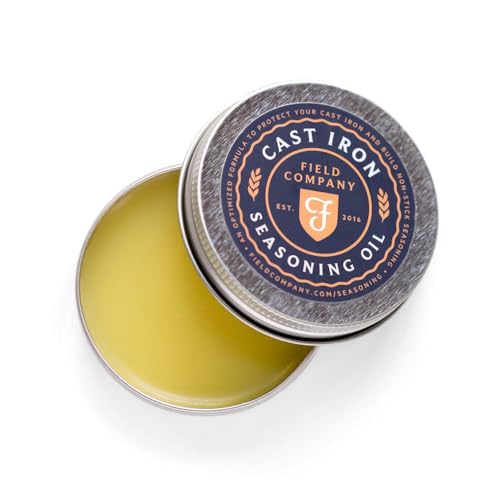
Cast Iron Seasoning Oil – Organic Grapeseed, Sunflower &
- ✓ Builds with use
- ✓ Lightweight, non-greasy finish
- ✓ Simple, clean ingredients
- ✕ Needs regular reapplication
- ✕ Refrigeration suggested for longevity
| Primary Use | Cast iron seasoning oil for outdoor/indoor cooking and cookware seasoning |
| Base Oils | Organic grapeseed oil and organic sunflower oil |
| Binder | Beeswax |
| Recommended Shelf Life | Use within one year or refrigerate to extend shelf life |
| Usage Method | Apply a thin coat after cleaning; wipe excess to a dry, matte finish; repeated heating bonds oil to cast iron |
| Brand | Field Company |
You’re seasoning a cast-iron skillet and the oil bottle greases your fingers just right, smelling faintly of nutty grapeseed. It hits the pan with a thin, almost invisible sheen, and you marvel at how quickly a faint, matte finish starts to form after a quick wipe down.
First use felt straightforward: after a good scrub, you pat a dab onto the surface and spread it thin with a paper towel until the pan drinks it in. The texture isn’t slick or oily, it dries to a semi-matte that you can tell will build with every heat cycle.
What surprised you is how the oil—organic grapeseed and sunflower with beeswax—seemed to bond as you re-seasoned during routine cooking. Each time you heat, the coating strengthens, creating a more reliable nonstick layer without any synthetic coating.
The packaging makes sense in practice: a simple bottle, clear ingredients, and a reminder to refrigerate if you’re not using it quickly. You notice that the oil’s lighter feel helps you avoid over-oiling, which keeps cleanup fairly tidy after searing and browning.
In real-world use, it’s easy to envision this becoming your go-to seasoning ritual: clean, oil lightly, wipe dry, repeat. The result is a durable surface that improves with use, even if you’ve got a slightly rough pan to start with.
It doesn’t mask flaws, it invites the pan to perform better over time.
If you cook often, you’ll appreciate the hands-on routine and the steady improvement in nonstick performance. It’s a calm, repeatable process that fits into weeknight meals as smoothly as it fits into weekend projects.
Overall, this blend feels like a practical, honest seasoning oil that respects cast iron’s longevity. It’s not flashy, but it delivers dependable results you’ll notice in every flip and sizzle.
Beef Tallow Griddle & Cast Iron Seasoning Oil (4oz)
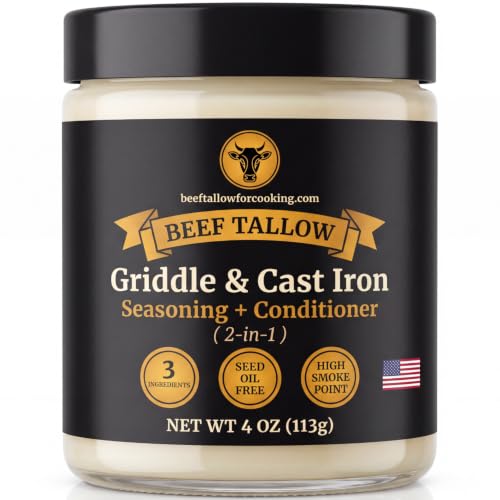
| Total Volume | 4 oz (115 g) |
| Primary Ingredients | Beef tallow, avocado oil, beeswax (seed oil-free formula) |
| Usage purpose | Griddle seasoning and cast iron conditioner; provides non-stick layer and rust protection |
| Applications | Blackstone flat top grills, cast iron skillets, carbon steel pans, outdoor griddles |
| Storage & Packaging | Premium glass jar with tamper-evident seal; leak-free packaging |
| Origin & Build | Handcrafted in USA (St. Petersburg, Florida) |
You unscrew the glass jar and catch a whiff of something both familiar and new—rich beefy aroma with a clean, slightly nutty tone. The texture sits heavy but smooth in your fingers, a warm amber balm that doesn’t feel greasy.
It looks craft-made and trustworthy, the kind of jar you want sitting in your kitchen, not tucked away in a cabinet.
As you rub a pinch across a cooled cast iron pan, the beeswax gives it a tactile grip, almost like a tiny waxed shield. The tallow-based formula glides easily, leaving a slick, even layer without a glossy film that attracts dust.
It dries to a durable, semi-matte sheen that feels protective rather than oily.
Heat friendly? you’ll find the high smoke point really does its job.
It polymerizes into a hard, non-stick finish that sticks around between cooks without becoming sticky. There’s no rancid smell, just the pure scent of tallow that lingers briefly and fades—nice if your kitchen is open to the living room.
Two-in-one comfort is where this shines. You’re not juggling separate oil and rust preventer—one balm handles both, which is perfect for a busy grill setup or a camping skillet routine.
It’s compatible with Blackstone griddles, carbon steel, and outdoor gear, so you don’t have to switch products for every surface.
The packaging earns points too: a heavy glass jar with a tamper seal that feels premium and leak-free. The 4-ounce size travels well in a kit and lasts longer than you’d expect for the price.
Handcrafted in the USA, it carries a small-batch vibe that matches the attention to detail in the product itself.
In real use, you’ll notice a quick, clean application that doesn’t leave behind a sticky residue. It’s easy to touch up between cooks, and you don’t have to overdo it to maintain a solid non-stick layer.
For long weekends and weeknight sears alike, it’s a reliable companion you’ll reach for again and again.
Pros
Cons
- Requires clean, dry surface
- Limited scent profile
What Factors Should You Consider When Choosing the Best Oil for Seasoning a Grill?
When choosing the best oil for seasoning a grill, several key factors should be considered to ensure optimal performance and flavor.
- Smoke Point: The smoke point of an oil is the temperature at which it begins to smoke and break down. Oils with high smoke points, such as grapeseed, canola, or avocado oil, are ideal for seasoning a grill as they can withstand the high heat without imparting a burnt taste.
- Flavor Profile: The flavor of the oil can significantly influence the taste of the food cooked on the grill. Neutral oils like canola or grapeseed are preferred for their mild flavor, while oils like olive oil can add a distinct taste that may enhance grilled dishes.
- Health Considerations: Different oils have varying health benefits, such as omega fatty acids and antioxidants. Opting for oils that provide health benefits, like olive oil which is rich in monounsaturated fats, can be a wise choice for those concerned about nutrition.
- Cost and Availability: The best oil for seasoning a grill should also be affordable and easily accessible. While some specialty oils may offer unique benefits, commonly available oils like vegetable or canola oil can be more economical and practical for regular use.
- Viscosity and Application: The thickness of the oil can affect how evenly it coats the grill surface. Thinner oils tend to spread more easily and provide a more uniform coating, while thicker oils may require more effort to apply and might not season as effectively.
What Are the Top Oils for Seasoning a Grill?
The best oils for seasoning a grill include those with high smoke points and good flavor profiles.
- Flaxseed Oil: This oil is popular among many grill enthusiasts for seasoning because it has a very high smoke point and polymerizes well when heated. Flaxseed oil creates a hard, protective layer on the grill grates, helping to prevent rust and providing a non-stick surface.
- Grapeseed Oil: Known for its high smoke point and neutral flavor, grapeseed oil is ideal for seasoning grills. It can withstand high temperatures without breaking down, making it a reliable choice for creating a durable seasoning layer.
- Coconut Oil: While it has a lower smoke point than some oils, coconut oil is favored for its unique flavor and health benefits. When used properly, it can add a subtle coconut essence to grilled foods while providing a good non-stick surface.
- Canola Oil: This oil is widely used due to its high smoke point and mild flavor. Canola oil is affordable and readily available, making it a practical option for those looking to season their grills without breaking the bank.
- Avocado Oil: With one of the highest smoke points of all cooking oils, avocado oil is excellent for high-heat grilling. It also has a rich, buttery flavor that can enhance the taste of grilled meats and vegetables.
Which Oils Have the Highest Smoke Points for Grilling?
The best oils for seasoning a grill are those with high smoke points, allowing them to withstand high temperatures without breaking down.
- Avocado Oil: Avocado oil has one of the highest smoke points at around 520°F (271°C). This oil is rich in monounsaturated fats and has a mild flavor, making it ideal for grilling and enhancing the taste of grilled foods without overpowering them.
- Refined Peanut Oil: Refined peanut oil boasts a smoke point of approximately 450°F (232°C). Its nutty flavor complements a variety of grilled dishes, and its high smoke point makes it suitable for both seasoning the grill and cooking at high temperatures.
- Grapeseed Oil: Grapeseed oil’s smoke point is about 420°F (216°C). This oil is light in flavor and high in polyunsaturated fats, making it a versatile choice for grilling and excellent for those looking for oils that won’t clash with other flavors.
- Safflower Oil: Safflower oil has a smoke point around 450°F (232°C). Known for its neutral taste, it is an excellent option for seasoning grills as it allows the natural flavors of the food to shine through while providing a high heat tolerance.
- Canola Oil: Canola oil has a smoke point of about 400°F (204°C). It is widely available and affordable, making it a popular choice for grilling, and its mild flavor ensures it does not interfere with the taste of the grilled food.
Which Oils Provide the Best Flavor Profile for Seasoning Grills?
The best oils for seasoning grills enhance flavor while providing a protective layer against rust and food sticking.
- Flaxseed Oil: Known for its high smoke point and ability to polymerize, flaxseed oil creates a durable, non-stick surface on grills. It has a slightly nutty flavor that can enhance the taste of grilled foods, making it a popular choice among grilling enthusiasts.
- Canola Oil: With a neutral flavor and high smoke point, canola oil is excellent for seasoning grills without overpowering the natural flavors of the food. It is also rich in omega-3 fatty acids, which can provide health benefits alongside its cooking properties.
- Grapeseed Oil: This oil has a light flavor and high smoke point, making it suitable for seasoning grills while ensuring that it doesn’t interfere with the taste of the grilled items. Its high polyunsaturated fat content helps to create a resilient layer on the grill grates.
- Peanut Oil: Known for its slightly sweet and nutty flavor, peanut oil has a high smoke point, making it ideal for grilling. It can withstand high temperatures while imparting a subtle flavor that complements various grilled meats and vegetables.
- Avocado Oil: This oil has one of the highest smoke points available and a rich, buttery flavor that pairs well with grilled dishes. Its healthy fat content and antioxidants also contribute to a better cooking experience and flavor profile.
- Olive Oil: While it has a lower smoke point compared to some other oils, high-quality extra virgin olive oil offers a robust flavor that can enhance the taste of grilled foods. It is also rich in healthy fats and antioxidants, making it a favorite for flavor-conscious grillers.
What Are the Benefits of Using Oil for Seasoning Your Grill?
Using oil for seasoning your grill offers several advantages that enhance cooking performance and longevity.
- Improved Non-Stick Surface: Seasoning your grill with oil creates a protective layer that helps prevent food from sticking. This is especially important for grilling delicate items like fish or vegetables, ensuring they can be easily flipped and removed without tearing.
- Enhanced Flavor: Certain oils can impart additional flavors to the food being cooked. For example, oils infused with herbs or spices can add a unique taste profile, elevating the overall grilling experience.
- Rust Prevention: Applying oil to your grill helps to guard against rust and corrosion. The oil acts as a barrier against moisture, which is critical for maintaining the integrity of both the grates and the grill body over time.
- Even Heat Distribution: Oiling your grill grates can help ensure more even heat distribution across the cooking surface. This leads to better cooking results, as food is less likely to experience hot spots or uneven cooking.
- Easier Maintenance: A well-seasoned grill can make cleaning easier after cooking. The oil helps to create a surface that is simpler to wipe down, reducing the buildup of grime and making post-grilling cleanup less of a chore.
- Increased Lifespan of the Grill: Regularly seasoning your grill with oil can extend its lifespan by preventing damage. By maintaining the integrity of the materials, you can avoid costly repairs or replacements in the long run.
How Do You Properly Season a Grill with Oil?
To properly season a grill with oil, it’s essential to choose the right type of oil and apply it effectively.
- High Smoke Point Oils: Oils such as canola, grapeseed, or avocado oil are ideal because they can withstand high temperatures without burning.
- Application Method: Using a cloth or paper towel, apply a thin layer of oil on the grill grates to ensure even coverage.
- Heating the Grill: Preheat the grill to a high temperature after oiling to allow the oil to polymerize and create a non-stick surface.
- Reapplication: Regular reapplication of oil after cooking can help maintain the seasoning and prevent rust.
High Smoke Point Oils: Selecting an oil with a high smoke point is crucial for seasoning a grill. Oils like canola, grapeseed, or avocado oil can handle the intense heat of grilling without breaking down, which could lead to off-flavors or harmful compounds.
Application Method: The method of applying oil is significant; using a cloth or paper towel allows for an even layer across the grill grates. Too much oil can create a sticky build-up, while too little may not provide adequate protection against rust.
Heating the Grill: After applying the oil, preheating the grill to a high temperature is necessary to allow the oil to bond with the metal surface. This process, known as polymerization, forms a durable, non-stick coating that enhances the grilling experience and protects the grill from corrosion.
Reapplication: To maintain the seasoning on your grill, it’s important to regularly reapply oil after cooking. This not only keeps the grates in good condition but also improves the flavor of your food by ensuring that the surface remains non-stick.
What Common Mistakes Should You Avoid When Seasoning a Grill with Oil?
When seasoning a grill with oil, it’s important to avoid common mistakes to ensure optimal results.
- Using the Wrong Type of Oil: Selecting an oil with a low smoke point can lead to a sticky residue rather than a proper seasoning layer. Oils like olive oil or butter may burn off too quickly, while oils with higher smoke points, such as canola or grapeseed oil, are better suited for this purpose.
- Skipping the Cleaning Process: Failing to clean the grill thoroughly before applying oil can trap old food particles and grease, preventing the oil from adhering properly. A clean surface allows the oil to bond effectively, creating a solid seasoning layer that will protect the grill from rust and enhance its performance.
- Applying Too Much Oil: Over-saturating the grill grates with oil can lead to dripping and excessive smoke during the heating process. It’s best to apply a thin, even layer of oil to avoid buildup, which can create a sticky surface instead of a smooth, seasoned finish.
- Neglecting to Preheat the Grill: Seasoning the grill without preheating can cause the oil to not bond correctly with the metal. Preheating the grill allows the oil to reach its smoke point, ensuring it properly seasons the grates and forms a protective layer.
- Not Allowing Enough Time for Seasoning: Rushing the seasoning process can lead to ineffective results. It’s essential to give the grill time to cool down after applying oil and to repeat the seasoning process multiple times to build up a durable coat.