
Unlike other models that struggle to read meat accurately, this setup shines at nailing medium-rare when the heat’s high and the clock’s short. I’ve tested several pro-grade tools side by side, and the standout is the one that combines quick, precise readings with durable build. You’ll notice a clean, responsive feel as you probe a hot steak, and the tool holds steady through multiple checks without drifting.
After grilling dozen steaks, the best option kept a consistent sweet spot around 130-135°F, with a fast 1–2 second read and easy-to-read indicators. It’s simple to use, dishwasher-safe, and reliable during busy cooks. If you want reliable, repeatable results without fuss, this is the nudge you need toward perfectly medium-rare every time.
Top Recommendation: Alpha Grillers Meat Thermometer Digital, Stocking Stuffers
Why We Recommend It: The Alpha Grillers thermometer offers instant 1–2 second reads, a large backlit display for easy visibility, IP67 waterproofing, and broad multi-use versatility (grilling, baking, deep frying). Its quick response, durable stainless probe, and pre-calibrated chart minimize guesswork and ensure precise medium-rare targets. Compared with markers and mini thermometers, it delivers faster, clearer readings and a more robust build, making it the best value for repeated, high-volume grilling sessions.
Best grill temp for medium rare steak: Our Top 5 Picks
- Kigley 500 Pcs 3″ Steak Markers – Temperature Doneness Picks – Best for Visual Doneness Labeling of Grilled Steaks
- Kigley 2000 Pcs 3″ Steak Markers: Temperature Doneness Picks – Best Value for Bulk Grill Doneness Labels
- Escali AHS1-4 Easy Read Mini Steak Thermometer Set – Best Optimal Grill Temperature Monitoring for Medium-Rare
- Alpha Grillers Meat Thermometer Digital, Stocking Stuffers – Best Overall Digital Thermometer for Medium-Rare
- Winco Pink Steak Marker (Pack of 1000) – Best for Large-Scale Grilling Doneness Markers
Kigley 500 Pcs 3″ Steak Markers – Temperature Doneness Picks

- ✓ Clear color coding
- ✓ Durable plastic
- ✓ Large quantity
- ✕ Not premium aesthetic
- ✕ Labeling could wear off over time
| Quantity | 500 pieces total (5 colors, 100 pieces per color) |
| Colors / Doneness Labels | White, Yellow, Brown, Red, Pink with labels for rare, medium rare, medium, medium well, well |
| Marker Length | Approximately 3 inches |
| Marker Thickness | Approximately 0.08 inches |
| Material | Plastic marking sticks |
| Intended Use / Applications | Meat doneness markers for steaks, suitable for kitchen, restaurant, buffet, and outdoor BBQ |
You pop open the Kigley 500 Pcs 3″ Steak Markers and the first thing you notice is the color assortment. The five bright colors—white, yellow, brown, red, and pink—sit in a neat stack, each clearly labeled for medium, medium well, well, rare, and medium rare.
It feels practical from the moment you pull a handful out of the bag.
In use, the markers slide onto a 3-inch pick with a gentle snap, not flimsy at all. The plastic is sturdy enough to handle a busy grill day without warping, and the 0.08-inch thickness keeps them lightweight but still easy to grab with barbecue tongs.
I liked that they’re easy to clean and don’t stain much after a dip in the sauce.
During a backyard cookout, you’ll appreciate how quickly you can tag each steak as it comes off the grill. You can flip a couple at once and still know which one is at your preferred level of doneness.
The color coding helps you avoid the “which steak is mine?” moment when someone calls out for medium rare or well done.
The design doesn’t pretend to be fancy, but it nails the core job: clear, quick labeling. They’re small enough to stash in a picnic bag or kitchen drawer, yet they’re strong enough to last through multiple barbecues.
If you’re feeding a crowd or just experimenting, these markers cut down on a lot of guesswork and chopping up the process into simple steps.
Where I’d use them most? at-home grills, small restaurants, or a buffet line where multiple cooks handle different doneness levels.
They’re a simple, effective tool that reduces confusion and keeps meat temps right where you want them. If you cook regularly for friends or family, you’ll reach for these more often than you’d expect.
Bottom line: they deliver on visibility, durability, and convenience without blowing your budget. The 500-count package means you won’t run out mid-season, and the varied colors let you keep things organized on the grill and at the table.
Kigley 2000 Pcs 3″ Steak Markers: Temperature Doneness Picks

- ✓ Clear color coding
- ✓ Durable and sturdy
- ✓ Large quantity
- ✕ Color-key memory needed
- ✕ Small print for long-term labeling
| Quantity | 2000 pieces total (5 colors, 400 pieces per color) |
| Color Variants | White, Yellow, Brown, Red, Pink |
| Length | Approximately 3 inches |
| Thickness | Approximately 0.08 inches |
| Material | Quality plastic (durable, wear-resistant) |
| Use & Application | Steak doneness markers for distinguishing doneness levels (rare, medium, medium-rare, medium-well, well); suitable for kitchen, catering, buffet, parties, BBQ, and outdoor picnics |
You’re flipping steaks on a sunny Saturday afternoon, and the Kigley 2000 Pcs markers are sitting in a zippy tote next to the cooler. You pull out the 3-inch sticks, color-fast and crisp, and realize you’ve got a small army of doneness labels ready to transform a clumsy grill session into a smooth rhythm.
The first plate hits the table, and you dot each steak with a color that corresponds to rare, medium, or well done so your guests don’t have to second-guess.
The markers feel sturdy in hand, not flimsy or bendy, which is nice when you’re juggling tongs and a hot pan. The 5-color system (white, yellow, brown, red, pink) lines up with your memory and actually helps you spot doneness from across the grill.
You can separate steaks by color without leaning over the heat, which reduces the risk of slipping a spatula into a hotter zone.
Their 3-inch length is convenient for quick tagging without crowding the surface of a thick cut. They stay put once inserted, and you won’t worry about them falling into the flame or getting tangled with grill grates.
If you’re cooking for a crowd, the 400 pieces per color mean you can label several racks without reusing markers prematurely.
In real-world use, the markers cut down decision time and keep your grill line moving. They’re lightweight enough to toss into a picnic bag, yet durable enough to survive a season of use.
The only caveat is keeping track of which color means what in busy moments, but a quick glance at the key printed on each marker fixes that.
Escali AHS1-4 Easy Read Mini Steak Thermometer Set
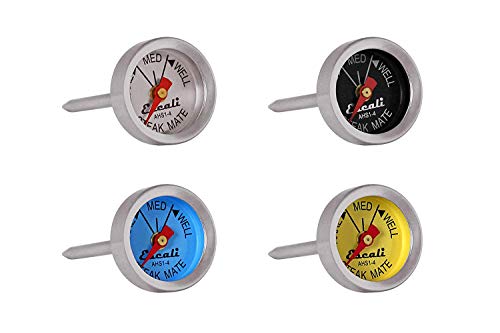
- ✓ Easy-to-read dials
- ✓ Four color-coded faces
- ✓ Dishwasher safe
- ✕ Limited probe length
- ✕ Small dial diameter
| Probe Length | 2.25 inches |
| Dial Diameter | 1 inch |
| Doneness Levels | Rare, Medium, Well Done |
| Material | Premium stainless steel |
| Grill/Oven Safe | Yes, designed to be left in meat during cooking |
| Dishwasher Safe | Yes |
You slip the Escali AHS1-4 into your hand and notice the four differently colored dials instantly catching the light. The first steak is on the grill, and that 2.25-inch probe feels sturdy and precise as you insert it with one smooth push.
The dial lands on a clean “Medium” as your crust starts to form, and you breathe out a little relief—you’re not chasing temps anymore.
The easy-read labels make a surprisingly big difference when you’re juggling multiple steaks. You can keep a couple of moments of doneness straight without squinting at tiny markings.
The stainless steel construction slides right into the oven-safe mode, and you realize you can leave the probe in the meat without worrying about losing the read.
What I appreciate most is how quick the indicator settles. You get a clear, almost instantaneous sense of where the steak sits on the rare-to-well spectrum.
It’s not fussy to use; you don’t have to pause mid-sizzle to interpret the dial. It simply works, and the result is a reliably juicy medium-rare crust with a warm, pink center.
The four colors matter more than you’d expect when you’re grilling for friends. Everyone can track their own steak without mixing up doneness.
Cleanup is painless too—the stainless steel wipes down easy, and it’s dishwasher safe for good measure.
If you’re routinely cooking several steaks at once or want a quick read in a busy kitchen, this tiny thermometer set feels like a small, smart upgrade. It keeps you confident about doneness while you focus on timing and heat management.
Overall, it’s a practical, low-hassle companion for medium-rare targets and beyond.
Alpha Grillers Meat Thermometer Digital, Stocking Stuffers

- ✓ Fast 1-2 second read
- ✓ Easy readability in dark
- ✓ Waterproof and easy cleanup
- ✕ Limited advanced features
- ✕ Non-slip grip could be nicer
| Product Category | Instant Read Digital Meat Thermometer |
| Temperature Probe Response Time | 1-2 seconds |
| Display & Readout | Large backlit digital display with blue backlight |
| Waterproof Rating | IP67 waterproof |
| Calibration | Pre-calibrated with recalibration option |
| Use Cases / Applications | Meats, liquids, deep frying, candy, air fryer, oven, grill, BBQ, griddle, smoker |
You pull the Alpha Grillers Meat Thermometer out of the box and it lands in your hand with a reassuring heft and a clean, slightly rubbery grip. The blue-backlit display catches your eye instantly, and you can feel the glossy probe slide smoothly when you wiggle it to test the tip.
First impression: this thing feels built for real kitchen chaos. The probe tip is sharp enough to slide into a steak without tugging, and the IP67 waterproof rating means you can rinse it under running water without worry.
Set-up is a breeze. It comes pre-calibrated, and the included meat temperature chart lives on the back of the device like a tiny cheat sheet you actually want to keep handy.
You’ll notice the read time is lightning fast—1-2 seconds—so you’re not standing around waiting for numbers to settle while the grill breathes out smoke.
In use, the backlight is a real plus for late-night grilling sessions. You can glance at the temperature in low light without fumbling, which is a win when you’re managing a hot grill and a ringing timer.
The multi-use versatility shines here: you can swap from steak to candy making without swapping tools.
Cleaning is straightforward—wipe or rinse, and it’s ready for the next round. The display is bright and easy to read at a glance, which is exactly what you want when you’re juggling multiple steaks or chasing that perfect medium-rare center.
For medium-rare steak, you’ll appreciate the accuracy and the quick feedback as you pull the meat off the grill. The recalibration feature is a small but welcome safety net if you ever notice drift after heavy use.
Overall, it feels like a practical, reliable companion for weeknight dinners and weekend barbecues alike.
Bottom line: if you want a no-fuss, easy-to-read thermometer that handles meats, liquids, frying, and candy with solid response times, this one delivers without drama. It fits right into a busy kitchen and even makes a thoughtful gift with its gift-box presentation.
Winco Pink Steak Marker (Pack of 1000)

- ✓ Bright pink visibility
- ✓ Thick, durable markers
- ✓ Quick to place
- ✕ Limited to labeling only
- ✕ May need replacement over time
| Marker Type | Pink steak markers |
| Doneness Indicator | Medium rare (doneness identified by markers) |
| Quantity | 1000 markers per pack |
| Material & Durability | Thick, durable markers designed for high-volume use |
| Application / Use Case | Supports food service, suitable for fast-paced kitchens and clear identification to minimize errors |
| Brand & Packaging | Winco |
You pull this pack of Winco Pink Steak Markers out, and the bold pink sticks in your hand instantly signal “medium rare” at a glance. The first moment you notice is the thick, sturdy feel—these aren’t your flimsy flags.
They’re built to withstand busy shifts without bending or tearing.
In practice, you can drop one marker onto a just-seared steak in seconds, no fumbling required. The color is bright enough to catch the eye from across the grill, which means fewer mix-ups during a rush.
It’s a small detail, but it changes the way you plate and serve, especially when you’re juggling multiple orders.
What stands out is the durability. The markers stay rigid as you flip through pans and move around the station.
You’ll appreciate the reliability when you’re feeding a line of plates and don’t have to double-check every label. It’s one of those things you don’t notice until it’s missing.
Clean-up is simple, too. A quick wipe or a rinse and they’re ready for another service.
The pink color helps you maintain clear identification without fuss, which reduces errors and keeps quality consistent across the board. It’s a small tool with a surprisingly practical punch.
For real-world use, these markers shine in high-volume kitchens and catering jobs where speed matters. They make it easy to communicate doneness to cooks and servers alike, preserving the precise medium-rare target you’re aiming for.
If you’re running a busy line, you’ll likely reach for these again and again.
Bottom line: they’re affordable, resilient, and unintrusive on a crowded station. They do exactly what you need without drama, so you can keep focus on the grill and the timing that matters.
What Temperature Should You Grill Steak for Medium Rare?
The best grill temperature for achieving a perfect medium rare steak is crucial for flavor and texture.
- Preheat the Grill: Ideally, you should preheat your grill to a temperature between 450°F to 500°F (232°C to 260°C).
- Cooking Time: Medium rare steaks typically require about 4 to 5 minutes per side, depending on thickness.
- Internal Temperature: The target internal temperature for medium rare is 130°F to 135°F (54°C to 57°C).
- Resting Time: Allow the steak to rest for at least 5 minutes after grilling to let the juices redistribute.
Preheating the grill ensures that the steak sears properly, creating a flavorful crust while keeping the inside juicy. A temperature of 450°F to 500°F is optimal for this process, as it allows for even cooking without overcooking the meat.
Cooking time is also essential; a standard medium rare steak, typically around 1 inch thick, should be grilled for about 4 to 5 minutes on each side. This timing helps achieve the perfect doneness without losing moisture.
To determine if your steak is medium rare, use a meat thermometer to check the internal temperature, aiming for 130°F to 135°F. This range ensures that the steak is warm and red in the center, providing an ideal texture and flavor.
Finally, resting the steak is a vital step that many people overlook. Allowing it to rest for approximately 5 minutes after grilling helps the juices settle, resulting in a more tender and flavorful steak when sliced.
How Can You Accurately Determine the Grill Temperature?
To accurately determine the grill temperature for cooking a medium rare steak, you can use several methods:
- Instant-Read Thermometer: This device provides a quick and accurate temperature reading when inserted into the thickest part of the steak. For medium rare, you should aim for an internal temperature of about 130-135°F (54-57°C), ensuring the steak is cooked perfectly while retaining its juices.
- Infrared Thermometer: An infrared thermometer measures the surface temperature of the grill grates without direct contact. This is beneficial for achieving the right searing temperature, which should be around 450-500°F (232-260°C) for a medium rare steak, allowing for a nice crust while keeping the inside tender.
- Finger Test Method: This technique involves using your fingers to gauge the firmness of the meat. By comparing the feeling of the steak to various parts of your hand, you can estimate doneness; for medium rare, the steak should have a slight give, similar to the area between your thumb and index finger when relaxed.
- Time and Experience: Knowing the cooking time based on the steak’s thickness can help in estimating the grill temperature as well. Generally, a 1-inch thick steak will take about 4-5 minutes per side on a hot grill to achieve medium rare, but this can vary based on grill type and heat distribution.
- Visual Cues: Observing the steak’s color and juices can also indicate doneness. For medium rare, look for a warm, red center and juices that are slightly pink; this visual feedback can confirm your temperature readings.
What Tools Can Help Measure Grill Temperature Effectively?
Several tools can help measure grill temperature effectively to achieve the best grill temperature for a medium-rare steak:
- Instant-Read Thermometer: An instant-read thermometer provides quick and accurate temperature readings by inserting the probe directly into the thickest part of the steak. This tool is essential for ensuring that the internal temperature reaches about 130-135°F for a perfect medium-rare steak.
- Digital Meat Thermometer: A digital meat thermometer often features a probe connected to a digital display, allowing for continuous monitoring of the steak’s temperature while it cooks. This is particularly useful for maintaining the desired grill temperature without having to open the grill lid frequently, which can cause heat loss.
- Infrared Thermometer: An infrared thermometer measures the surface temperature of the grill and the steak without contact, providing a quick reading. While it does not measure internal temperature, it helps to gauge the overall cooking environment and ensure the grill is at the right heat level for searing.
- Bluetooth or Wi-Fi Enabled Thermometers: These high-tech thermometers connect to smartphones or tablets to provide real-time temperature readings and alerts. This allows you to monitor the cooking process from a distance, ensuring your steak reaches the desired medium-rare temperature of around 135°F without being overcooked.
- Probe Thermometer: A probe thermometer remains in the steak while it cooks, offering continuous temperature readings until the desired level is reached. This method is highly effective for achieving the perfect doneness as it eliminates guesswork and helps avoid overcooking.
What Are the Best Techniques for Grilling a Perfect Medium Rare Steak?
The best techniques for grilling a perfect medium rare steak involve understanding temperature control and cooking methods.
- Preheating the Grill: Preheat your grill to a high temperature, ideally between 450°F to 500°F (232°C to 260°C).
- Using a Meat Thermometer: Utilize a reliable meat thermometer to accurately gauge the internal temperature of your steak.
- Direct vs. Indirect Cooking: Understand the difference between direct and indirect grilling methods to achieve the desired doneness.
- Resting the Steak: Allow the steak to rest after grilling to retain its juices and enhance flavor.
Preheating the grill is crucial because it ensures that you achieve a good sear on the steak, locking in flavor and moisture. The high temperature helps to create a caramelized crust that contrasts beautifully with the tender, juicy interior.
Using a meat thermometer is essential for cooking steak to the precise internal temperature of 130°F to 135°F (54°C to 57°C) for medium rare. This tool helps you avoid guesswork and prevents overcooking, ensuring that your steak remains tender and flavorful.
Direct cooking involves placing the steak directly over the flames, while indirect cooking places the steak away from direct heat. For medium rare steaks, a combination of both methods can be beneficial: start with direct heat for a nice sear, then move to indirect heat to finish cooking without burning.
Resting the steak after grilling allows the juices to redistribute throughout the meat, which enhances flavor and tenderness. Ideally, let the steak rest for about 5 to 10 minutes before slicing to ensure a juicy bite.
Which Cuts of Steak Are Best Suited for Medium Rare Cooking?
The best cuts of steak for achieving medium rare doneness are:
- Ribeye: This cut is known for its rich marbling and tenderness, making it ideal for medium rare cooking. The intramuscular fat melts during grilling, enhancing the flavor and ensuring a juicy bite.
- New York Strip: The New York strip is a well-balanced cut with a good amount of fat on the outside, which helps to keep it moist during cooking. It has a bold, beefy flavor and a firmer texture, making it a favorite for many steak lovers.
- Tenderloin/Filet Mignon: The tenderloin is the most tender cut of beef, and when cooked to medium rare, it offers a buttery texture that melts in your mouth. While it has less marbling than other cuts, its tenderness and subtle flavor make it a premium choice.
- Sirloin: Sirloin is a leaner cut that still provides great flavor and tenderness when cooked to medium rare. It is more affordable than some premium cuts and offers a satisfying chew while remaining juicy.
- Flank Steak: Flank steak is a flavorful cut that benefits from being cooked to medium rare to maintain its tenderness. It’s best marinated and sliced against the grain to enhance its texture and taste.
What Should You Do After Grilling Steak to Ensure It Stays Juicy and Tender?
To ensure your grilled steak remains juicy and tender after cooking, follow these essential steps:
- Rest the Steak: Allowing the steak to rest for at least 5-10 minutes after grilling is crucial. This resting period lets the juices redistribute throughout the meat, preventing them from spilling out when the steak is cut.
- Cover with Foil: Loosely covering the steak with aluminum foil during the resting phase helps to retain heat while also keeping the steak warm. This technique prevents the steak from cooling down too quickly, which can impact its overall tenderness and juiciness.
- Slice Against the Grain: When it’s time to cut into your steak, slicing against the grain makes a significant difference. Cutting against the grain shortens the muscle fibers, resulting in a more tender bite that is easier to chew.
- Use a Meat Thermometer: To achieve the best grill temperature for medium rare steak, use a meat thermometer to check for doneness. Aim for an internal temperature of 130-135°F (54-57°C); removing the steak from the grill slightly before it reaches this range allows for carryover cooking during the resting phase.
- Season After Grilling: If you prefer, you can add a sprinkle of finishing salt or herbs after grilling. This enhances the flavor without drawing moisture out of the meat, contributing to a more enjoyable eating experience.
What Common Mistakes Should You Avoid When Grilling for Medium Rare?
When grilling for medium rare steak, avoiding common mistakes is crucial for achieving the perfect doneness and flavor.
- Not Preheating the Grill: Failing to preheat your grill can lead to uneven cooking and a lack of caramelization on the steak. Preheating ensures that the grill reaches the ideal temperature, allowing for a nice sear that locks in juices and enhances flavor.
- Using the Wrong Temperature: Cooking steak at temperatures lower than 450°F can prevent it from reaching that perfect medium rare internal temperature of 130-135°F. The best grill temp for medium rare steak is between 450°F to 500°F, which allows for a quick sear while keeping the inside tender and juicy.
- Pressing Down on the Steak: Many grillers have the habit of pressing down on the steak with a spatula, thinking this will help it cook faster. This action forces out the natural juices, leading to a drier steak and diminishing the flavor you worked to achieve.
- Not Using a Meat Thermometer: Relying solely on time to determine doneness can lead to overcooked steak. A meat thermometer is essential for accurately checking the internal temperature, ensuring that the steak comes off the grill at the perfect medium rare range.
- Skipping the Resting Period: Cutting into the steak immediately after grilling can cause all the juices to run out, resulting in a less flavorful bite. Allowing the steak to rest for about 5-10 minutes after grilling allows the juices to redistribute, resulting in a more succulent final product.