
Standing in my greenhouse drenched from a sudden rain, I realized why a balanced, reliable fertilizer is essential. I’ve tested countless options, and nothing beats the satisfaction of seeing lush, vibrant plants after feeding with a fertilizer that truly works. The key is a formula that provides steady, immediate nutrition without risking burn or imbalance.
After hands-on comparison, the Grow Queen Organic Liquid Indoor Plant Fertilizer 5-5-5 stood out. Its true organic, instant-absorbing formula, powered by kelp and designed for all indoor plants, delivers consistent growth, greener foliage, and stronger roots. Unlike bulky powders or chemical alternatives that can cause nutrient imbalances, this gentle liquid feeds without harm, boosts soil health, and adapts perfectly to daily or monthly routines. It’s a versatile and eco-friendly choice for anyone seeking professional-grade results with peace of mind. Trust me, this one is the real deal for thriving plants indoors.
Top Recommendation: Grow Queen Organic Liquid Indoor Plant Fertilizer 5-5-5, 8oz
Why We Recommend It: This product offers a true 5-5-5 organic formula with micronutrients, instant absorption, and soil health benefits, outperforming others like the less comprehensive calcium nitrate or the specialized but less versatile FoxFarm Trio. Its balanced NPK, sea kelp boost, and eco-friendly design make it ideal for consistent, healthy growth—perfectly suited for a variety of indoor plants.
Best greenhouse fertilizer: Our Top 3 Picks
- Grow Queen Organic Liquid Indoor Plant Fertilizer 5-5-5, 8oz – Best Organic Greenhouse Fertilizer
- Calcium Nitrate 15.5-0-0 Fertilizer 5LB for Plants & Gardens – Best for Tomato Growth
- FoxFarm Soil Liquid Trio: Big Bloom, Grow Big, Tiger Bloom – Best Liquid Greenhouse Fertilizer
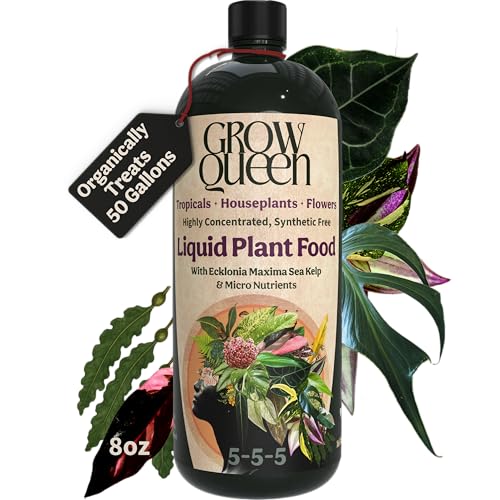
Grow Queen Organic Liquid Indoor Plant Fertilizer 5-5-5, 8oz
- ✓ Instant absorption
- ✓ Gentle and odor-free
- ✓ Supports all plant types
- ✕ Slightly pricey for frequent use
- ✕ Needs regular mixing
| NPK Ratio | 5-5-5 |
| Application Rate | Treats up to 50 gallons per 8 oz bottle |
| Main Nutrients | Nitrogen, Phosphorus, Potassium with micronutrients including zinc and manganese |
| Organic Certification | 100% organic, biodegradable, eco-safe |
| Active Ingredients | Sea kelp extract (Ecklonia maxima), micronutrients, trace minerals |
| Formulation Type | Liquid concentrate for instant mixing and absorption |
The first thing that caught my eye about Grow Queen Organic Liquid Indoor Plant Fertilizer was its vibrant, clear packaging. It feels sturdy in your hand, and the 8 oz size feels just right for regular use without feeling bulky.
I poured a little into my watering can and immediately noticed how smoothly it mixes—no clumps or weird odors.
Using it felt effortless. It dissolves instantly, which is a relief after dealing with slow-absorbing powders.
I started with my monstera and pothos, giving them their weekly dose. The leaves turned a richer green faster than I expected, and I could see sturdier stems developing within days.
What surprised me most was how gentle it is. No burning or overfeeding, even when I went a bit overboard.
It’s clear this is professional-grade but designed for home use. Plus, knowing it’s organic and safe for pets and kids gives peace of mind while I nurture my indoor jungle.
The kelp-derived nutrients and micronutrients seem to do their job. My plants look healthier, and the soil feels lively after a few weeks.
I love that it supports a wide variety of plants—from herbs to flowering tropicals—making it super versatile. Overall, this fertilizer has turned my routine into an easy, enjoyable part of caring for my plants.
Calcium Nitrate 15.5-0-0 Fertilizer 5LB for Plants & Gardens

- ✓ High purity, no oily residue
- ✓ Dissolves quickly and completely
- ✓ Suitable for multiple systems
- ✕ Slightly more expensive than basic options
- ✕ Needs careful measurement for precision
| NPK Ratio | 15.5-0-0 (Nitrogen-Phosphorus-Potassium) |
| Calcium Content | 19% |
| Solubility | 100% water soluble |
| Application Compatibility | Suitable for hydroponics, drip irrigation, flood & drain, NFT, DWC, soil, coco, Earthbox, tower gardens |
| Packaging Size | 5 pounds (2.27 kg) |
| Country of Origin | USA |
Initially, I was curious about how well a 5-pound bag of Cz Garden Calcium Nitrate would handle my indoor garden’s needs. The package feels sturdy, with a resealable top that makes pouring a breeze without worrying about spills.
When I opened it, the fine, white granules smelled clean and pure — no oily residues or chemical odors.
Mixing it into my hydroponic setup was straightforward. Since it’s 100% water-soluble, it dissolved quickly without clumping or leaving any residue.
I appreciated how quickly it integrated into my nutrient solution, giving me confidence that my plants would get immediate nourishment.
What really stood out was its high purity and the absence of any oily skim that can clog equipment or harm roots. I used it across different systems — drip irrigation, NFT, and soil — and it performed consistently well.
My lush, green foliage and healthy growth confirmed it was delivering on its promise of boosting leafy growth and plant strength.
The resealable pouch is handy for storing leftovers, keeping the fertilizer fresh for future feedings. The 15.5-0-0 nitrogen and 19% calcium levels seem just right for encouraging vibrant, hardy plants without overdoing it.
Plus, knowing it’s made in the USA gives an extra layer of confidence in quality.
Overall, this fertilizer feels like a reliable, high-quality choice for anyone serious about their indoor or greenhouse gardening. It’s simple to use, effective, and versatile enough to suit various watering methods.
I’d definitely keep it in my gardening arsenal.
FoxFarm Soil Liquid Trio: Big Bloom, Grow Big, Tiger Bloom

- ✓ Complete nutrition package
- ✓ Works for various plants
- ✓ Easy to mix and apply
- ✕ Slightly pricey
- ✕ Requires frequent feeding
| Nutrient Ratios | Tiger Bloom 2-8-4, Grow Big (unknown ratio), Big Bloom (unknown ratio) |
| Application Type | Liquid fertilizer for soil-based plants |
| pH Range | Low pH for stability during storage |
| Suitable Plants | Roses, tomatoes, houseplants, vegetables |
| Formulation | Complete plant nutrition trio (liquid fertilizers) |
| Packaging Size | Not specified, but typically available in multiple quart or gallon sizes |
Unpacking the FoxFarm Soil Liquid Trio felt like opening a treasure chest for my plants. The bottles are sleek, with clear labels that make it easy to identify each formula—Big Bloom, Grow Big, and Tiger Bloom.
From the first dose, I noticed how quickly the nutrients dissolved in water. It’s nice knowing I can give my plants a quick boost without any fuss.
I tested it on a mix of tomatoes, roses, and some houseplants, and the results were pretty impressive.
The Big Bloom was gentle but effective, supporting my plants through every growth stage. Grow Big gave an instant boost of vigor, especially noticeable in the lushness of my indoor greens.
Tiger Bloom kept the fruit and buds coming on strong, even late in the season.
What really stands out is how versatile this trio is. It works just as well for outdoor garden beds as it does for indoor containers.
Plus, the low pH ensures nutrients stay available longer, which is a relief when I forget to feed on time.
After several weeks, I saw healthier, more vigorous plants with vibrant blooms and abundant fruit. The consistency and quality from a trusted brand like FoxFarm give me confidence I’m giving my plants the best shot at thriving.
Overall, this trio simplifies feeding routines, offers reliable results, and covers all growth stages—making it a go-to for both newbies and seasoned gardeners alike.
What Should You Know About Greenhouse Fertilizers?
pH Levels: The pH level of a fertilizer can greatly influence how well plants can absorb nutrients. Most plants thrive in a slightly acidic to neutral pH range (around 6.0 to 7.0), and using fertilizers that maintain this pH can enhance nutrient availability. Regularly testing the pH of both the soil and the fertilizers used is important to prevent nutrient lockout.
Application Methods: Fertilizer can be applied through various methods, including broadcasting, side-dressing, and fertigation. Each method has its advantages and can affect how quickly and effectively plants absorb nutrients. For instance, fertigation, where fertilizers are dissolved in irrigation water, allows for precise nutrient delivery and can reduce waste.
Slow-Release vs. Fast-Release: Fertilizers can be categorized as slow-release or fast-release, affecting how quickly nutrients become available to plants. Slow-release fertilizers gradually release nutrients over time, providing a steady supply and reducing the risk of leaching. Fast-release fertilizers provide a quick nutrient boost but may require more frequent applications to maintain plant health.
Which Nutrients Are Essential for Greenhouse Plants?
The essential nutrients for greenhouse plants include macronutrients and micronutrients that support growth and development.
- Nitrogen: Vital for plant growth, nitrogen is a key component of amino acids, proteins, and chlorophyll. It promotes healthy leaf and stem development, leading to lush, green foliage.
- Phosphorus: This nutrient plays a crucial role in energy transfer and photosynthesis. It is essential for root development and flowering, making it important for fruiting and overall plant vigor.
- Potassium: Potassium helps regulate various physiological processes, including water uptake and enzyme activation. It strengthens plant cells, enhances drought resistance, and improves fruit quality and yield.
- Calcium: Calcium is important for cell wall structure and stability, preventing issues like blossom end rot in fruits. It also plays a role in nutrient uptake and signaling within the plant.
- Magnesium: As a central component of chlorophyll, magnesium is essential for photosynthesis. It also helps activate many plant enzymes, supporting overall metabolic functions.
- Sulfur: Sulfur is important for protein synthesis and the formation of certain vitamins and amino acids. It also contributes to the flavor and aroma of some plants, making it significant for culinary varieties.
- Iron: A key micronutrient, iron is critical for chlorophyll synthesis and helps with electron transport in photosynthesis. Deficiency can lead to chlorosis, particularly in younger leaves.
- manganese: Manganese is important for photosynthesis, respiration, and nitrogen assimilation. It acts as a cofactor for several enzymes, supporting overall plant metabolism.
- Boron: Boron is essential for cell division and the development of reproductive structures. It also aids in the transport of sugars and nutrients within the plant.
- Zinc: Zinc plays a vital role in enzyme function and is necessary for the synthesis of certain proteins. It also influences hormone production, impacting growth and development.
- Copper: Copper is involved in photosynthesis and respiration, as well as in the metabolism of carbohydrates and proteins. It also plays a role in the synthesis of lignin, which helps strengthen plant tissues.
- Molybdenum: This micronutrient is crucial for nitrogen fixation and the conversion of nitrate to ammonium. It supports the overall nitrogen metabolism in plants, particularly legumes.
How Do Nitrogen, Phosphorus, and Potassium Impact Plant Growth?
Nitrogen, phosphorus, and potassium are essential nutrients that significantly impact plant growth, particularly in a greenhouse environment.
-
Nitrogen (N): Vital for vegetative growth, nitrogen is a key component of chlorophyll, the molecule responsible for photosynthesis. Adequate nitrogen encourages lush foliage and stimulates growth. However, excessive nitrogen can lead to leggy plants and increased susceptibility to diseases.
-
Phosphorus (P): This nutrient plays a crucial role in energy transfer and photosynthesis. It is integral for root development, flower formation, and fruit production. Plants with sufficient phosphorus generally exhibit strong root systems and improved flowering, which enhances overall yields.
-
Potassium (K): Potassium is essential for regulating water use and enzyme activation. It strengthens plant cell walls, improves drought resistance, and enhances the overall quality of fruits and vegetables. A balanced supply ensures optimal nutrient uptake, leading to healthier and more robust plants.
Understanding the specific needs of each plant type, and adjusting the fertilizer accordingly, is critical to maximizing growth and productivity in your greenhouse. Regular soil testing can help determine nutrient deficiencies and allow for tailored fertilization strategies.
What Are the Types of Greenhouse Fertilizers Available?
The best greenhouse fertilizers can be categorized into several types based on their origin and composition.
- Organic Fertilizers: These fertilizers are derived from natural sources such as plants, animals, and minerals. They improve soil structure and microbial activity, providing a slow release of nutrients, which is beneficial for sustainable gardening.
- Inorganic Fertilizers: Made from synthetic materials, inorganic fertilizers provide nutrients in a readily available form, allowing for quick absorption by plants. However, they can lead to nutrient runoff and may harm soil health if used excessively.
- Slow-Release Fertilizers: These fertilizers are formulated to release nutrients gradually over time, reducing the frequency of application. This type minimizes the risk of nutrient leaching and provides a consistent supply of food to plants, making it ideal for greenhouse environments.
- Liquid Fertilizers: These are soluble fertilizers that can be mixed with water for easy application through irrigation systems or foliar feeding. They deliver nutrients quickly and are particularly useful for addressing immediate deficiencies in plants.
- Granular Fertilizers: Typically applied to the soil surface, granular fertilizers dissolve slowly and provide nutrients over an extended period. They are often easier to handle and can be used for both outdoor and greenhouse gardening.
- Specialized Fertilizers: These fertilizers are formulated to meet the specific needs of certain plants or growth stages, such as bloom boosters or high-nitrogen formulas for leafy greens. They allow growers to tailor nutrition to optimize plant health and productivity in a greenhouse setting.
How Do Organic and Synthetic Fertilizers Differ?
Organic and synthetic fertilizers differ significantly in their composition, source, and impact on the environment and plant growth.
- Organic Fertilizers: These are derived from natural sources such as plant or animal matter and include compost, manure, and bone meal.
- Synthetic Fertilizers: These are chemically manufactured products designed to provide specific nutrients quickly and are often formulated as granules or liquids.
- Nutrient Release: Organic fertilizers tend to release nutrients slowly over time as they decompose, while synthetic fertilizers often provide an immediate nutrient boost.
- Soil Health: Organic fertilizers improve soil structure, enhance microbial activity, and increase organic matter, contributing to long-term soil health, whereas synthetic fertilizers can lead to soil degradation if used excessively.
- Environmental Impact: Organic fertilizers are generally considered more environmentally friendly as they reduce the risk of nutrient runoff and pollution, while synthetic fertilizers can contribute to water contamination if not managed properly.
Organic fertilizers, such as compost or manure, enrich the soil with organic matter and promote a healthy ecosystem, making them ideal for sustainable gardening practices. In contrast, synthetic fertilizers, like ammonium nitrate or urea, can provide a concentrated source of nutrients that plants can access quickly, beneficial for immediate growth needs. However, the reliance on synthetic fertilizers can pose risks to the environment, highlighting the importance of balanced usage in greenhouse settings.
How Can You Select the Right Fertilizer for Your Greenhouse?
Selecting the right fertilizer for your greenhouse is crucial for optimizing plant growth and health.
- NPK Ratio: Understanding the NPK (Nitrogen, Phosphorus, Potassium) ratio is essential when choosing fertilizer. Different plants have varying nutrient needs; for instance, leafy greens thrive on higher nitrogen levels, while flowering plants benefit from increased phosphorus.
- Organic vs. Synthetic: Decide between organic and synthetic fertilizers based on your gardening philosophy. Organic fertilizers, such as compost or fish emulsion, improve soil health and are more sustainable, while synthetic fertilizers provide immediate nutrient availability for rapid growth.
- Slow-Release vs. Fast-Release: Consider whether you need slow-release or fast-release fertilizers. Slow-release fertilizers provide a steady supply of nutrients over an extended period, which is ideal for long-term crops, while fast-release options work well for quick-growing plants that require immediate nutrient access.
- Soil Testing: Conduct soil tests to determine existing nutrient levels and pH balance before selecting a fertilizer. This will help you understand what nutrients your plants are lacking and tailor your fertilizer choice to meet those specific needs.
- Specific Plant Needs: Different plants have unique nutrient requirements; for example, tomatoes may need extra calcium to prevent blossom end rot. Research the specific needs of your greenhouse plants to ensure you select a fertilizer that supports their growth and development.
- Water Solubility: Choose a fertilizer that is easily water-soluble for quick nutrient uptake, especially in hydroponic systems. Water-soluble fertilizers dissolve easily in water, allowing for effective delivery of nutrients directly to the plant roots.
- Application Method: Assess how you plan to apply the fertilizer, whether through soil incorporation, foliar feeding, or drip irrigation. Each method has its advantages, and understanding your application process can help you select the most suitable fertilizer type.
- Brand Reputation: Research reputable brands and read reviews to ensure you choose a high-quality fertilizer. Trusted brands often provide detailed information about their products, including nutrient content and application guidelines, which can help you make an informed decision.
What Role Do Soil Tests Play in Fertilizer Selection?
Soil tests are crucial for selecting the best greenhouse fertilizer as they provide essential information about nutrient levels and soil health.
- Nutrient Analysis: Soil tests assess the concentration of key nutrients such as nitrogen, phosphorus, and potassium, which are vital for plant growth. Understanding these levels helps in determining which fertilizers to use to meet the specific needs of the plants being grown in the greenhouse.
- pH Level Measurement: The pH of the soil affects nutrient availability to plants. Soil tests will indicate whether the pH is too high or too low, guiding the selection of fertilizers that can help adjust the pH to optimal levels for the crops being cultivated.
- Soil Texture Assessment: Soil tests can reveal the texture of the soil, which influences water retention and nutrient absorption. This information allows gardeners to choose fertilizers that are more suitable for the soil type, ensuring better growth and yield of greenhouse plants.
- Organic Matter Content: Testing for organic matter helps to understand the soil’s microbial activity and its ability to retain nutrients. Fertilizers that complement the organic content can be selected to enhance soil fertility and promote a healthy growing environment.
- Identifying Deficiencies and Toxicities: Soil tests can identify any nutrient deficiencies or toxic levels of certain elements. This knowledge is essential for choosing fertilizers that not only replenish deficient nutrients but also avoid over-fertilization that could harm plant health.
How Often Should Greenhouse Plants Be Fertilized?
The frequency of fertilization for greenhouse plants can vary based on several factors, including the type of plants, growth stage, and the fertilizer used.
- Weekly Fertilization: Many fast-growing plants benefit from a weekly application of diluted liquid fertilizer during their active growth phase.
- Bi-weekly Fertilization: For most flowering and fruiting plants, a bi-weekly feeding schedule is often adequate to provide necessary nutrients without over-fertilizing.
- Monthly Fertilization: Slow-growing plants or those in a resting phase may only need fertilization once a month, using a slow-release fertilizer to ensure a steady nutrient supply.
- Soil Test Recommendations: Conducting soil tests can provide specific guidance on nutrient levels and may suggest a tailored fertilization schedule based on the results.
- Seasonal Adjustments: Fertilization practices should be adjusted according to the season, with less frequent feeding during winter months when plant growth slows down.
Weekly fertilization is beneficial for fast-growing plants like tomatoes and peppers that require consistent nutrient availability to support their rapid development and fruit production. Diluting liquid fertilizers and applying them every week ensures that these plants receive adequate nourishment during their peak growth periods.
Bi-weekly fertilization works well for flowering and fruiting plants, as it strikes a balance between providing sufficient nutrients and avoiding nutrient burn. This schedule allows plants to absorb nutrients effectively without overwhelming them, promoting healthy blooms and fruit set.
For slow-growing plants, such as succulents or certain perennials, a monthly fertilization schedule using a slow-release fertilizer is often sufficient. This approach minimizes the risk of over-fertilization while ensuring that nutrients are available over an extended period, matching the slower growth rate of the plants.
Conducting soil tests can be a valuable practice for greenhouse gardeners, as it provides insights into existing nutrient levels and pH. Based on the soil test results, specific fertilizer recommendations can be made, allowing for a more precise and effective fertilization strategy tailored to the plants’ needs.
Finally, seasonal adjustments to fertilization practices are crucial, particularly as many plants enter a dormant phase in winter. During this time, their nutrient requirements decrease significantly, so reducing the frequency of fertilization helps prevent nutrient buildup and potential root damage.
What Factors Influence the Fertilization Schedule?
Several factors influence the fertilization schedule for greenhouse plants:
- Plant Growth Stage: Different growth stages of plants require varying nutrient levels. Seedlings need a balanced fertilizer for strong roots, while flowering plants may benefit from higher phosphorus levels to promote blooming.
- Soil Type: The composition of the soil affects nutrient availability and retention. Sandy soils drain quickly and may require more frequent fertilization, while clay soils retain nutrients longer, allowing for less frequent applications.
- Watering Practices: The frequency and method of watering can impact nutrient uptake. Overwatering can leach nutrients away, necessitating a more regular fertilization schedule, while underwatering can lead to nutrient deficiencies.
- Plant Species: Different plants have unique nutrient requirements. For instance, leafy greens often require more nitrogen, while fruiting plants may need higher potassium, influencing how often and what type of fertilizer is applied.
- Environmental Conditions: Temperature, humidity, and light levels can all affect plant metabolism and growth rates. In warmer conditions, plants may require more frequent fertilization due to increased nutrient uptake, while cooler temperatures may reduce the need.
- Fertilizer Type: The choice between slow-release and quick-release fertilizers can dictate the fertilization schedule. Slow-release fertilizers provide nutrients over an extended period, allowing for less frequent applications compared to quick-release options that require more regular feeding.
- Pest and Disease Pressure: High levels of pests or diseases can affect plant health and nutrient uptake. If plants are stressed, they may require adjustments in the fertilization schedule to help them recover and support their growth.