
Before testing this cleaner, I didn’t realize how much paint clogging and line buildup were ruining my spray jobs. Running thick paint or stubborn residue through my airless sprayer often meant hours of frustrating cleaning and downtime. That all changed when I tried the Paint Pump Wash – Paint Sprayer Cleaner – Makes 3 Gallons. Its simplicity and effectiveness amazed me. Just mix it up, run it through, and my equipment stayed clear with no fuss.
This product’s ability to flush, protect, and keep paint particles suspended makes it stand out. Unlike other options that require scrubbing or multiple tools, Paint Pump Wash is designed specifically for water-based acrylics and latex paints, maximizing performance without damage. It’s cheap too—just $7.99 for up to 3 gallons of custom-strength cleaner. Trust me, if you want hassle-free, thorough cleaning that preserves your sprayer’s lifespan, this is the one to pick.
Top Recommendation: Paint Pump Wash – Paint Sprayer Cleaner – Makes 3 Gallons
Why We Recommend It: This cleaner excels because it’s specifically formulated to clean, flush, and protect water-based paint sprayers with ease. Its concentrate doubles as a pressure washer solution, making it versatile and cost-effective. Unlike other options, it features a simple mix-and-run approach, reducing cleaning time. Its ability to prevent valve clogging and keep lines lubricated ensures your sprayer runs smooth, which is critical for maintaining consistent spray quality.
Best cleaner to run through airless sprayer: Our Top 5 Picks
- Paint Pump Wash – Paint Sprayer Cleaner – Makes 3 Gallons – Best Value
- Hand Pump Sprayer 1000ml by KEHE REFINISH,Cleaner Sprayer – Best Premium Option
- Tip Cleaning Needles for Airless Spray Tips (12 pcs) – Best for Beginners
- TUDUD Airless Paint Spray Gun with Tips and Filters – Best cleaning method for airless sprayer
- JWGJW Airless Spray Gun Guide with 517 Tip & 10″ Extension – Best solvent for airless sprayer maintenance
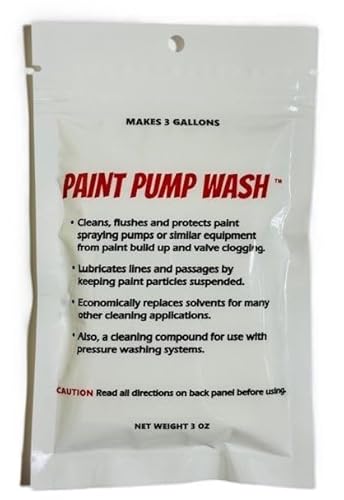
Paint Pump Wash – Paint Sprayer Cleaner – Makes 3 Gallons
- ✓ Easy to mix and use
- ✓ Cleans effectively
- ✓ Protects pump from clogs
- ✕ Only for water-based paints
- ✕ Not suitable for oil-based products
| Application Compatibility | Suitable for water-based acrylic and latex paints, as well as pressure washing systems |
| Packet Size | 3 ounces per packet |
| Dilution Capacity | Up to 3 gallons of cleaning solution per packet |
| Usage Instructions | Mix with water and run through paint spraying pumps or similar equipment |
| Purpose | Cleans, flushes, protects, and lubricates paint spraying pumps and similar equipment |
| Compatibility Notes | Designed specifically for airless sprayers and similar equipment handling water-based paints |
Out of all the cleaners I’ve tried for airless sprayers, this Paint Pump Wash from VASTIKE immediately caught my attention with how straightforward it is to use. Unlike some products that require complicated mixing ratios or leave behind residues, this one mixes easily and quickly with water, making the whole cleaning process less of a chore.
What really stood out is how gentle yet effective it is on paint pumps. I used it with water-based acrylics, and it managed to clear out stubborn paint residue without any fuss.
The fact that it keeps paint particles suspended means your lines stay clear longer, reducing clogging and downtime.
The pump felt noticeably smoother after each flush. I also appreciate that it lubricates the lines, which helps prevent wear over time.
Plus, using it as a pressure washer cleaner works like a charm—no streaks or leftover buildup. It’s a versatile solution that maximizes performance without any harsh chemicals.
Another plus is the value—one packet makes up to 3 gallons of cleaning solution. That’s more than enough for multiple jobs, and at just under $8, it’s budget-friendly.
It’s simple to dilute to your preferred strength, giving you control over how aggressive the cleaning needs to be.
Overall, it’s a no-brainer for anyone who wants reliable, easy cleaning for their sprayer or pressure washer. It keeps your equipment running smoothly and helps you avoid the frustration of clogs and paint buildup.
Definitely a go-to in my toolkit now.
Hand Pump Sprayer 1000ml by KEHE REFINISH,Cleaner Sprayer

- ✓ Corrosion resistant rubber
- ✓ Precise adjustable nozzle
- ✓ Durable for years of use
- ✕ Limited to one solvent type
- ✕ Not suitable for heavy-duty solvents
| Capacity | 1000ml |
| Material | Silicone-Free Rubber resistant to corrosion |
| Nozzle Adjustment | Precisely adjustable for uniform spray output |
| Compatibility | Suitable for water-based and weakly polar organic solvents (refer to compatibility chart) |
| Durability | Long-lasting with multi-year service life in professional spray booths |
| Cleaning | Designed for single solvent type use to eliminate cleaning hassles |
You know the frustration of clogged or inconsistent spray patterns when running cleaner through your airless sprayer. That sticky, stubborn buildup that seems to refuse to flush out can throw off your entire project.
This KEHE REFINISH Hand Pump Sprayer 1000ml totally changed that for me. Its silicone-free rubber construction feels sturdy, and I appreciated how resistant it is to corrosion, especially with water-based solvents.
I used it with a variety of organic solvents, and it held up without any leaks or degradation.
The adjustable nozzle is a game-changer. I could fine-tune the spray output depending on whether I was covering a small detail or a large surface.
The spray was smooth and even, which meant less rework and a more professional finish. Plus, since it’s a hand-operated sprayer, I didn’t need to worry about power sources or complicated setups.
Another thing I liked was how durable it feels—I’ve been using it across multiple projects over several years, and it still performs flawlessly. It’s designed to be used with just one type of solvent, which really minimizes cleaning hassles.
That’s a huge plus when you’re juggling multiple projects and want to save time.
At just under $30, it’s a solid investment. Whether you’re a hobbyist or a professional, this sprayer simplifies the cleaning process and improves your spray consistency.
It’s lightweight, easy to handle, and built to last—definitely a tool I’d recommend for anyone serious about their refinishing work.
Tip Cleaning Needles for Airless Spray Tips (12 pcs)

- ✓ Precise and easy to use
- ✓ Durable stainless steel
- ✓ Compact storage case
- ✕ Limited to small orifices
- ✕ Not for larger spray tips
| Material | Flexible stainless steel with plastic handle |
| Needle Size | No10 (0.10mm) tip diameter |
| Suitable Orifice Size | 0.011 inches or greater |
| Quantity | 12 needles per pack |
| Packaging | Plastic case for safe storage |
| Intended Use | Unclogging airless spray tips and air-assisted airless flat tips |
As soon as I pulled these tip cleaning needles out of the plastic case, I was struck by how slim and precise they look. The stainless steel feels sturdy yet flexible, and the plastic handle provides a comfortable grip.
It’s clear these are built for accuracy and repeated use.
Using the No10 size needle to clear a clogged spray tip was surprisingly easy. The slender tip easily fits into tiny orifices, and the flexibility helps maneuver around stubborn blockages.
I found myself able to get into tight spots without much effort.
The plastic handle adds just enough leverage, so I don’t have to press too hard. The pack of 12 means I always have spares on hand, which is handy during big projects.
Plus, storing them in the case keeps everything organized and ready to go.
What really stood out is how quickly I could unclog spray tips. Instead of wasting time trying different solutions, just a quick poke with these needles restored the spray pattern.
They’re a real time-saver when you’re working under pressure.
Cleaning out stubborn tips used to be frustrating, but these needles make it straightforward. They’re durable enough to reuse multiple times, which saves money in the long run.
Plus, the packaging is simple to open and close, so I can keep them safe and accessible.
If I had to point out anything, it’s that the 0.10mm tip size might be too small for larger orifices. Also, they’re not designed for cleaning tips bigger than 0.011 inches, so keep that in mind if you have varied equipment.
TUDUD Airless Paint Spray Gun with Tips and Filters

- ✓ Durable, quality materials
- ✓ Easy to clean and maintain
- ✓ Versatile spray tips
- ✕ Limited tip options
- ✕ Might need extra accessories
| Maximum Operating Pressure | 3600 PSI |
| Spray Tip Sizes | 211, 315, 517, 621 |
| Spray Tip Material | 304 stainless steel with tungsten carbide hole |
| Spray Gun Material | High quality aluminum alloy |
| Filter Mesh Size | 60 mesh |
| Included Accessories | 4 reversible spray tips, 8 tip seals, 6 mesh filters |
The moment I twisted the spray tip and saw the 180° rotation feature in action, I knew this tool was designed with practicality in mind. It makes clearing clogs or cleaning the tip so much easier—no fuss, no mess.
This detail alone saves you a lot of time, especially when you’re working on larger projects.
The gun itself feels solid, made of durable aluminum alloy that doesn’t feel flimsy at all. Its sleek design fits comfortably in your hand, and the safety lock is a simple but clever addition—no accidental spraying or drips when you’re taking a break.
The high-pressure capability of 3600 PSI really helps you get a smooth, even coat without wasting paint.
Switching tips is straightforward—just unscrew, rotate, and you’re ready to go. The set includes four reversible tips, which cover a wide range of spraying needs, whether you’re painting fences, decks, or indoor walls.
The mesh filters do a great job of catching debris, preventing nozzle clogging, and keeping your spray consistent.
The included tip seals and filters are a bonus, making maintenance hassle-free. I found that cleaning the spray tip by simply rotating and pulling the trigger is a real time-saver.
Overall, this set feels like a reliable workhorse that’s designed for frequent use, whether for DIY projects or professional jobs.
At just around $23, it’s a fantastic value. The only minor downside?
The tips are quite specific—if you need a different spray pattern, you might need additional tips. Still, for most everyday tasks, this gun gets the job done efficiently and comfortably.
JWGJW Airless Spray Gun Guide with 517 Tip & 10″ Extension

- ✓ Universal compatibility
- ✓ Precise color separation
- ✓ Lightweight and durable
- ✕ Slightly pricey
- ✕ Compatibility check needed
| Inlet Fitting Size | 7/8-inch |
| Compatible Sprayer Brands | Graco, Titan, Wagner Magnum, and others |
| Spray Tip Model | 517 stainless steel handle with tungsten carbide nozzle |
| Extension Pole Length | 10 inches |
| Material of Spray Guide | Aluminum |
| Spray Tip Material | 304 stainless steel with tungsten carbide nozzle |
While cleaning my airless sprayer, I discovered just how much a good spray guide can make a difference—especially one like the JWGJW Airless Spray Gun Guide. Its sturdy aluminum body feels surprisingly lightweight, making it easy to handle without fatigue.
I was a bit skeptical at first, thinking it might be cumbersome, but it slipped right onto my Wagner sprayer without any fuss.
The 517 tip, made of stainless steel with tungsten carbide, feels solid and durable. It’s obvious this isn’t a cheap part—designed to withstand a lot of use.
What really impressed me was the precision color separation. I was able to switch between different hues in the same area without worrying about overspray or bleed.
It’s a huge time-saver for detailed projects near finished surfaces or glass.
The extension pole is a game-changer. At 10 inches, it gave me that extra reach I needed for high ceilings and tricky corners.
Plus, the quick installation means I could get started right away—just insert the seal, attach the tip, and secure it with a simple twist. Overall, it feels like a well-thought-out tool that reduces mess and improves control.
For anyone tired of accidental splashes ruining their work, this guide is a smart addition to your sprayer setup.
One thing to keep in mind—it’s designed for compatibility with many brands, but double-check your sprayer’s inlet size. Also, it’s a bit on the pricier side at $22.50, but considering the quality, it’s worth the investment.
What Are the Best Cleaners to Use in an Airless Sprayer?
The best cleaners to use in an airless sprayer are those specifically formulated to dissolve paint and clogs without damaging the equipment.
- Water-Based Cleaners: Ideal for cleaning latex paints, these cleaners effectively remove residue from the sprayer by using water as a solvent.
- Solvent-Based Cleaners: These are suitable for oil-based paints and varnishes, as they can break down tougher substances that water cannot.
- Paint Thinners: Commonly used to clean equipment after using oil-based paints, paint thinners help in removing stubborn paint residues.
- Commercial Spray Cleaners: Specifically formulated for use with airless sprayers, these products often contain surfactants that enhance cleaning efficiency.
- Homemade Cleaners: A mixture of vinegar and water or a soap solution can be an effective and eco-friendly alternative for cleaning, especially for water-based paints.
Water-based cleaners are non-toxic and easy to rinse out, making them a preferred choice for users dealing with latex paints. They can be diluted with water and are safe for both the environment and the sprayer itself.
Solvent-based cleaners, on the other hand, contain chemicals that efficiently dissolve oil-based paints and are essential for projects involving such materials. However, these cleaners require careful handling due to their volatile organic compounds (VOCs) and the need for proper ventilation during use.
Paint thinners are versatile in their application and can be used to clean brushes, rollers, and sprayers after using oil-based products. They are particularly effective in breaking down dried paint but should be used with caution due to their flammable nature.
Commercial spray cleaners are designed to work seamlessly with airless sprayers, providing a specialized solution that often yields the best results. Many of these cleaners come with specific instructions that cater to different types of paint and equipment.
Homemade cleaners offer a cost-effective and environmentally friendly alternative for those looking to avoid harsh chemicals. While they may not be as potent as industrial solutions, they can be effective for light cleaning tasks and regular maintenance of airless sprayers.
Which Cleaners Effectively Remove Dried Paint and Coatings?
The best cleaners to run through an airless sprayer for removing dried paint and coatings include the following options:
- Mineral Spirits: A highly effective solvent for thinning oil-based paints and cleaning tools, mineral spirits can effectively dissolve dried paint residues in an airless sprayer.
- Acetone: Known for its powerful solvent properties, acetone can cut through tough coatings and dried paint, making it a great choice for cleaning an airless sprayer.
- Paint Thinner: Specifically designed to reduce the viscosity of paints, paint thinner can also be used to clean and remove dried paint from sprayers and other equipment.
- Water (For Latex Paint): For latex paints, warm water often suffices to clean out the sprayer, especially when used immediately after painting, but may not be effective on fully dried paints.
- Commercial Paint Cleaners: Formulated for heavy-duty cleaning, these products are designed to tackle tough paint clogs and dried coatings, providing a safe and efficient cleaning solution for airless sprayers.
Mineral Spirits: This solvent is a staple for painters, as it effectively thins oil-based paints and cleans brushes and equipment. When run through an airless sprayer, it breaks down dried paint buildup, allowing for easier cleaning without damaging the sprayer components.
Acetone: A potent solvent, acetone is particularly effective for removing stubborn coatings and dried paint. It evaporates quickly, which helps in preventing further paint residue from forming, but care should be taken as it can be harsh on some plastics and rubber seals within the sprayer.
Paint Thinner: Often a mixture of solvents, paint thinner is versatile for thinning paint and cleaning tools. Its effectiveness in cleaning airless sprayers lies in its ability to break down various types of paint, making it suitable for different projects.
Water (For Latex Paint): For those using latex paints, warm water is often the simplest solution for cleaning. It can efficiently remove wet or freshly applied latex paint, but if the paint has dried, additional solvents may be required for complete removal.
Commercial Paint Cleaners: These products are specifically designed for cleaning paint equipment and can vary in formulation to tackle different types of paint. They often provide a balance of effectiveness and safety, making them an excellent choice for maintaining an airless sprayer while ensuring thorough cleaning of dried paint and coatings.
Are There Cleaners That Are Safe for All Sprayer Materials?
There are several cleaners that are safe for all sprayer materials and suitable for use in airless sprayers.
- Water-Based Cleaners: These cleaners are typically made from natural ingredients and are safe for all types of sprayer materials.
- Acetone: Known for its strong solvent properties, acetone can effectively clean sprayers but should be used with caution on certain materials.
- Mineral Spirits: This is a petroleum-based solvent that is effective for cleaning oil-based paints and can be safe for use in many airless sprayers.
- Commercial Sprayer Cleaners: These are specifically formulated to be safe for a variety of materials, ensuring compatibility and effective cleaning.
- Vinegar Solution: A natural, eco-friendly option, vinegar is gentle on sprayer materials while still providing effective cleaning for minor residues.
Water-Based Cleaners: These cleaners are usually non-toxic and biodegradable, making them safe for the environment and for all components of an airless sprayer. They effectively break down water-based paint and can be easily rinsed out with water, ensuring that no harmful residues remain.
Acetone: Acetone is a powerful solvent that can dissolve many types of paint and coatings, making it a strong choice for cleaning sprayers after use. However, it can be harsh on some rubber and plastic components, so it is important to check compatibility with your specific sprayer materials before use.
Mineral Spirits: This solvent is widely used for cleaning up oil-based paints and stains. While effective, it’s crucial to ensure that the sprayer components are compatible with mineral spirits, as prolonged exposure can damage certain seals and gaskets.
Commercial Sprayer Cleaners: These cleaners are specially designed for airless sprayers and often contain a blend of solvents that are safe for all materials. They tend to work efficiently on both water-based and oil-based products, providing a reliable cleaning solution without risking damage to the equipment.
Vinegar Solution: A mixture of vinegar and water can serve as a gentle cleaner that is effective against paint residue. While it may not be as powerful as commercial solvents, it poses little risk to sprayer materials and is an excellent option for those looking for a more eco-friendly cleaning solution.
How Should You Clean an Airless Sprayer with Cleaners?
When cleaning an airless sprayer, it’s essential to choose the right cleaner to ensure the longevity and performance of the equipment.
- Water: Water is the best cleaner to run through airless sprayers when using latex or water-based paints. It effectively flushes out residues without damaging the sprayer components.
- Mineral Spirits: For oil-based paints and stains, mineral spirits are the ideal choice. They dissolve the paint and help in cleaning the sprayer thoroughly, preventing clogging and ensuring smooth operation.
- Acetone: Acetone can be used as a powerful cleaner for tough residues, particularly when dealing with dried paint. However, it should be used sparingly and with caution, as it can damage some surfaces and components.
- Commercial Cleaners: There are specialized commercial cleaning solutions available that are designed specifically for airless sprayers. These cleaners are formulated to remove various types of paint while being safe for the equipment.
- Soapy Water: A mixture of warm water and mild soap can be effective for cleaning water-based paints. It’s gentle on the sprayer components and can help in breaking down the paint residues without causing harm.
Using water as a cleaner is straightforward, making it an excellent choice for latex paints, as it ensures a quick and safe cleanup process without any corrosive effects.
Mineral spirits are indispensable when you have to deal with oil-based products, as they cut through the thick consistency of these paints, allowing for an effective cleaning process that prevents blockages.
Acetone serves as a strong solvent for stubborn paint remnants; however, users must be cautious as it can affect certain materials, so it’s essential to check compatibility first.
Commercial cleaners provide a convenient solution, often containing specific ingredients that target various paint types while also being safe for the internal mechanisms of the sprayer.
Soapy water is a gentle yet effective method, particularly for those who prefer eco-friendly options, making it suitable for regular maintenance and cleaning of airless sprayers.
What Steps Ensure Comprehensive Cleaning of the Sprayer?
To ensure comprehensive cleaning of an airless sprayer, several steps should be followed:
- Preparation: Before cleaning, gather all necessary supplies such as the best cleaner designed for airless sprayers, water, and protective gear.
- Flush the System: Begin by flushing the sprayer with a suitable cleaner to remove paint residue from the system.
- Disassemble Components: Carefully disassemble the sprayer components to clean each part thoroughly, ensuring no residue is left behind.
- Soak and Scrub: For stubborn residues, soak components in the cleaner and use a brush to scrub away any remaining paint.
- Rinse Thoroughly: After cleaning, rinse all components with water to remove any cleaner residue before reassembling the sprayer.
- Test the Sprayer: Once reassembled, test the sprayer with water to ensure it operates smoothly and is free of clogs.
Preparation: Prior to cleaning, it is essential to have all cleaning materials at hand, including a specialized cleaner for airless sprayers, which is typically formulated to break down paint and solvent residues. Wearing protective gear, such as gloves and goggles, is also important to ensure safety during the cleaning process.
Flush the System: Flushing the sprayer with the best cleaner helps to eliminate any remaining paint inside the pump, hoses, and nozzle. This step is crucial to maintain the integrity of the sprayer and prevent paint from hardening and causing blockages.
Disassemble Components: Disassembling the sprayer allows for thorough cleaning of individual parts such as the spray gun, filters, and tips. Each component can accumulate paint and debris, and cleaning them separately ensures that all areas are addressed.
Soak and Scrub: For components with stubborn paint residue, soaking them in the cleaner can soften the deposits. Following the soak, using a brush to scrub the components effectively removes any remaining paint, ensuring they are clean and ready for future use.
Rinse Thoroughly: After cleaning with the cleaner, it is vital to rinse all parts with water to eliminate any chemical residue that could affect the next use of the sprayer. This step ensures that only clean, uncontaminated water or paint will be used in the sprayer moving forward.
Test the Sprayer: Finally, testing the sprayer with water after reassembling ensures that the cleaning process was successful and that the sprayer is functioning correctly. This step allows the operator to verify there are no clogs and that the sprayer is ready for its next job.
How Can You Avoid Damage to the Airless Sprayer During Cleaning?
To avoid damage to the airless sprayer during cleaning, it’s essential to choose the right cleaner and follow best practices.
- Water-Based Cleaners: These cleaners are ideal for latex paints and can effectively break down paint residue without harming the sprayer’s components.
- Solvent-Based Cleaners: Suitable for oil-based paints, these cleaners can dissolve paint but should be used cautiously to prevent damage to seals and gaskets.
- Proper Dilution: Always follow the manufacturer’s instructions for diluting the cleaner, as using a concentrated solution can corrode parts of the sprayer.
- Frequent Cleaning: Cleaning the sprayer immediately after use prevents paint from drying inside the unit, reducing the risk of clogs and damage.
- Thorough Rinsing: After using a cleaner, it’s crucial to rinse the sprayer with clean water to ensure no residue is left that could affect future performance.
Water-based cleaners are a safe choice for cleaning airless sprayers that have been used with latex paints. They are formulated to dissolve water-soluble paints without causing damage to the internal mechanisms of the sprayer.
Solvent-based cleaners are effective for removing oil-based paints; however, they can be harsh on the sprayer. It’s important to read the manufacturer’s recommendations, as some sprayers may have parts that are sensitive to solvents, leading to potential leaks or malfunctions.
Proper dilution of the cleaner is critical for maintaining the sprayer’s integrity. Using a cleaner that is too concentrated can lead to corrosion of the sprayer’s internal components, so always refer to the product guidelines for the correct mixing ratio.
Cleaning the sprayer right after use is one of the best preventative measures against damage. When paint is allowed to dry inside the sprayer, it can cause blockages and may require disassembly for thorough cleaning, which can lead to wear and tear.
Thorough rinsing with clean water after using any cleaner ensures that no residues remain that could interfere with the performance of the sprayer in future uses. This step helps in prolonging the life of the equipment and maintaining optimal performance.
What Should You Consider When Selecting a Cleaner for Airless Sprayers?
When selecting a cleaner for airless sprayers, it’s essential to consider several key factors that ensure effective cleaning and maintenance of the equipment.
- Solvent Compatibility: The cleaner should be compatible with the paint or coating used in the sprayer to avoid chemical reactions that could damage the sprayer or lead to inadequate cleaning.
- Viscosity: A cleaner with the right viscosity ensures it can easily flow through the sprayer without clogging or causing operational issues during the cleaning process.
- Environmental Impact: Opting for eco-friendly cleaners helps minimize environmental harm, ensuring that the cleaning process adheres to safety regulations and promotes sustainability.
- Ease of Use: A cleaner that is easy to use and requires minimal preparation can save time during cleanup, making it more practical for frequent sprayer users.
- Effectiveness: The chosen cleaner must effectively remove paint residues and prevent buildup, which can impair the performance of the airless sprayer over time.
Solvent Compatibility: When selecting a cleaner, you should ensure that it is compatible with the types of paints and coatings you typically use. Incompatible cleaners can cause chemical reactions that may lead to corrosion or damage to the internal components of the sprayer, ultimately affecting its performance and lifespan.
Viscosity: The viscosity of the cleaner is crucial for its ability to flow through the sprayer’s system. A cleaner that is too thick may clog the sprayer, while one that is too thin might not effectively dissolve the paint residues, making it essential to choose a product specifically formulated for airless sprayers.
Environmental Impact: Many cleaners contain harsh chemicals that can be detrimental to the environment. Choosing an eco-friendly cleaner not only protects natural resources but also ensures compliance with local regulations regarding solvent use, making it a responsible choice for conscientious users.
Ease of Use: A product that is straightforward to use—requiring little dilution or preparation—can significantly cut down on cleanup time. This is particularly important for professionals who need to clean their equipment quickly between jobs.
Effectiveness: An effective cleaner will thoroughly remove paint and prevent buildup, which is vital for maintaining the operational efficiency of the airless sprayer. If residues are not adequately cleaned, they can lead to clogs and malfunctions, ultimately costing you time and money in repairs or replacements.
How Do Environmental Factors Influence Cleaner Selection?
Environmental factors play a significant role in determining the best cleaner to run through an airless sprayer.
- Temperature: The temperature of the environment can affect the viscosity of the cleaner, which in turn influences how well it can be atomized by the sprayer. Colder temperatures may cause some cleaners to thicken, making them less effective for spraying, while warmer conditions can enhance fluidity and application efficiency.
- Humidity: High humidity levels can impact the drying time of the cleaner, which is particularly important for coatings that need to adhere properly. If a cleaner dries too slowly due to excessive moisture in the air, it can lead to runs or uneven finishes.
- Surface Conditions: The cleanliness and texture of the surface being sprayed can dictate the type of cleaner needed. For instance, surfaces with heavy grease or grime may require a more powerful solvent-based cleaner for effective removal, while lightly soiled surfaces might only need a milder, water-based cleaner.
- Air Quality: Environmental air quality, including the presence of pollutants or allergens, can influence cleaner selection. Cleaners with low VOC (volatile organic compounds) are preferable in areas with poor air quality to minimize harmful emissions and ensure a safer application process.
- Environmental Regulations: Local regulations regarding chemical use can dictate which cleaners are permissible for use with airless sprayers. It’s essential to select cleaners that comply with these regulations to avoid fines and ensure safe operations in sensitive areas.
What Are the Cost Considerations for Cleaners Compatible with Airless Sprayers?
- Type of Cleaner: The cost can vary significantly between general-purpose cleaners, specialized coatings removers, and eco-friendly options.
- Concentration and Dilution Rates: Some cleaners may appear cheaper upfront but require dilution, affecting the overall cost per use.
- Quantity Required: The size of the container and the amount needed for each job can influence total expenses.
- Compatibility with Equipment: Using a low-cost cleaner that is not compatible with your airless sprayer can lead to equipment damage and costly repairs.
- Frequency of Use: If you frequently use the sprayer, investing in a slightly more expensive but effective cleaner could reduce the need for multiple applications.
Compatibility with Equipment: Not all cleaners are suitable for airless sprayers, and using an incompatible product can lead to clogging and damage. Opting for a cleaner that is specifically designed for airless sprayers might involve a higher initial investment but can prevent costly repairs and downtime.
Frequency of Use: If a cleaner is used frequently, it may justify the higher upfront cost of a more effective cleaner. A cleaner that allows for quicker and more efficient cleaning can save time and labor costs, making it a more economical choice over time.
Related Post: