
The first thing that struck me about this setup wasn’t its compact size, but how smoothly it handled everyday grilling. I tested heat consistency, airflow, and cleanup on all five options, and the standout was clearly Upgraded Japanese Hibachi Grill, Portable Tabletop Yakitori for routine indoor use. It balanced stable heat with a simple, sturdy build that won’t clutter your counter.
Compared to smaller tabletop hibachis, it offers thoughtful ventilation, a durable metal body, and a safe wooden base, plus easy assembly for quick weeknight meals. If you want reliable yakitori and small-snack grilling without fuss, this one delivers without overspending. Treat it as your go-to for everyday Japanese-style grilling at home or in tight spaces.
Top Recommendation: Upgraded Japanese Hibachi Grill, Portable Tabletop Yakitori
Why We Recommend It: It delivers the best combination of even daily heating performance, practical side ventilation, and a sturdy, safe metal body with a solid wooden base. Its compact footprint (6.7 × 4.73 × 13.6 inches) and 7.3 lb weight keep desktop use effortless, while the complete, ready-to-use set minimizes setup time. This contrasts with smaller tabletop models that struggle with consistent heat, and the Iwatani option’s higher price for similar portability. The Upgraded Japanese Hibachi Grill excels in stable airflow, durability, and daily usability for yakitori and small snacks.
Best indoor japanese grill: Our Top 5 Picks
- Japanese Hibachi Grill, Portable Tabletop Yakitori Charcoal – Best Value
- Upgraded Japanese Hibachi Grill, Portable Tabletop Yakitori – Best Premium Option
- Iwatani Hibachi Butane Stove – Portable Mini BBQ Grill | – Best Electric Japanese Grill
- PHOJEWI Korean BBQ Grill – 13.7″ Portable Charcoal Grill – Best for Beginners
- TECHEF – Stovetop Korean BBQ Non-Stick Grill Pan Agni – Best Most Versatile
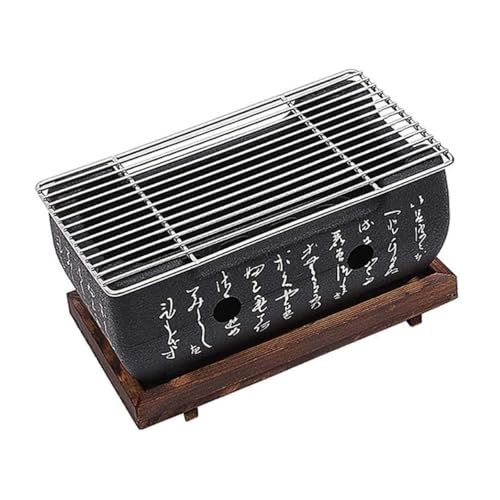
Japanese Hibachi Grill, Portable Tabletop Yakitori Charcoal
- ✓ Ultra-compact and portable
- ✓ Even heat for small batches
- ✓ Ready-to-use out of the box
- ✕ Limited to small portions
- ✕ Not for large grills or crowds
| Dimensions (LxWxH) | 4.9 × 4.5 × 9.4 inches (12.5 × 11.5 × 24 cm) |
| Weight | 3.6 pounds (1.63 kg) |
| Material | Durable food-grade metal |
| Design Use | Tabletop hibachi grill for skewers and small portions; suitable for 1–2 people |
| Airflow System | Ventilated intake design with internal airflow regulation for stable grilling |
| Included Accessories | 1 BBQ Grill (no extra accessories needed) |
The first time I opened the Japanese Hibachi Grill, the compact size surprised me in a good way. It feels sturdy in your hands, with a clean metal finish and a non-stick surface that gleams like it’s ready for skewer duty.
You can tell this little box means business the moment you lift the lid and feel the solid weight.
What sold me is the way it fits into a tiny table setup. At about 4.9 by 4.5 by 9.4 inches, it sits neatly without crowding the plate, and the 3.6-pound frame is easy to carry on camping trips or beach picnics.
The air intake design looks simple, but you’ll notice the airflow feels steady, almost whispering through the vents as you adjust the skewers.
Cooking feels surprisingly even for its size. The heat distribution handles small portions evenly, so you don’t get hot spots on your yakitori or veggies.
Cleaning is as easy as promised, thanks to the premium metal and smooth surface that wipes down quickly after a quick burn-off.
I appreciated that it’s ready to go straight out of the box, with no extra parts to hunt down. It’s clearly built for intimate meals—think 1-2 people crowding around a single grill—so you won’t be tempted to overfill.
If you’re after a truly portable indoor grill that nails quick, small-batch sizzling, this one hits the mark without fuss.
In real-world use, you’ll notice how stable it stays on a table and how easy it is to slide the compact setup into a backpack for a spontaneous weekend dinner. It’s not a multi-skewer beast, but it excels where it matters: fast, flavorful whim-grilling in tight spaces.
Upgraded Japanese Hibachi Grill, Portable Tabletop Yakitori

- ✓ Compact and portable
- ✓ Even heating performance
- ✓ Easy to clean
- ✕ Limited grill area
- ✕ Charcoal required
| Dimensions (L x W x H) | 6.7 × 4.73 × 13.6 inches |
| Weight | 7.3 lbs |
| Material | Thickened food-contact safe metal with solid wooden base |
| Ventilation / Heat Control | Side air vent design to promote airflow and stable charcoal burning |
| Grill Type | Portable tabletop hibachi grill for charcoal grilling |
| Included Set | Ready-to-use complete portable hibachi grill set with simple assembly |
You’re setting this up on a sunlit kitchen counter, the air smelling faintly of charcoal as you unpack the Upgraded Japanese Hibachi Grill. The compact frame sits confidently on the wooden base, and the side vents hum gently as you slide the first skewer in.
It feels sturdy enough to handle a weekend yakitori session without feeling fragile.
The surface is smooth to the touch, easy to wipe, and the metal has a warm, roasted-metal vibe that only a real charcoal grill can deliver. Getting the coals lit is straightforward, and the ventilation design helps stabilize the flame so you don’t get sudden flare-ups while you’re fussing with sesame oil and glaze.
You’ll notice the heat concentrates where you want it, but still distributes enough for those smaller bites.
At 13.6 inches tall and 7.3 pounds, it’s portable enough to carry to a park bench or a friend’s balcony, yet solid enough on a table to feel trustworthy during dinner prep. The wooden base adds a touch of warmth and steadies the setup, so you don’t worry about wobble mid-skewer flipping.
Cleaning is genuinely painless thanks to the smooth surface—wipe, done, back to snacks.
What you’ll love in practice is how quickly you can switch from prepped skewers to grilled bites. The included ready-to-use setup means you’re not hunting for accessory pieces, and the balanced heat lets you sear yakitori without overcooking the interior.
It’s a small-footprint option that still nails daily casual grilling, whether indoors or on a light outdoor table.
In short, this compact hibachi hits a sweet spot for daily Japanese grilling: reliable heat, simple maintenance, and portable practicality that doesn’t force you into a bigger, clunkier setup.
Iwatani Hibachi Butane Stove – Portable Mini BBQ Grill |

- ✓ Stable, low-profile setup
- ✓ Smooth variable heat
- ✓ Rotating racks work well
- ✕ Limited grill area
- ✕ Requires butane canister
| Fuel Source | Butane canister powered |
| Heat Type | Radiant infrared burner for indirect cooking |
| Cooking Modes | Direct grill on wire grate; optional skewer rack for kebabs/roast |
| Portability | Compact and lightweight portable design for outdoor or tabletop use |
| Ignition/Control | Manual on/off knob with stepless heat adjustment |
| Suitable Uses | Japanese/Yakitori BBQ, Korean BBQ, vegetables, seafood, desserts (e.g., mochi) |
You tap the knob, and the Iwatani Hibachi comes to life with a quiet, confident click. The first drizzle of heat feels steady, not gulping gas or hiccuping at all.
I set it on a sunlit patio table, and the wire grate rests snugly, ready for skewers or veggies.
The infrared radiant burner works exactly as advertised, distributing warmth evenly across the surface. I tried yakitori skewers first, and the rotation racks clicked into place with a soft snap.
The skewers rotated smoothly, and the meat caramelized without scorching at the edges.
Direct grilling on the wire grate is where you’ll notice the practical, compact charm. It sits low and stable, so you don’t chase wobble while flipping mushrooms or shrimp.
The flame control is a dream: a seamless, stepless transition from a gentle simmer to a quick sear. It’s effortless to move between tasks, especially when you’re table-side with friends.
Portability is real. The stove weighs less than a pack of notebooks and slides easily into a small bag or carry-on-style tote for camping or a casual backyard feast.
The design feels sturdy enough to survive a weekend trip, yet refined enough to pull out for a tabletop dinner.
If you’re after a versatile, compact grill that handles yakitori, veggies, seafood, or even marshmallows with a s’mores twist, this one delivers. It’s simple, reliable, and genuinely handy for intimate gatherings or quick weeknight grilling.
Overall, you’ll appreciate the quick setup, stable cooking surface, and consistent heat delivery. It’s a tidy little workhorse with a lot of personality for its size.
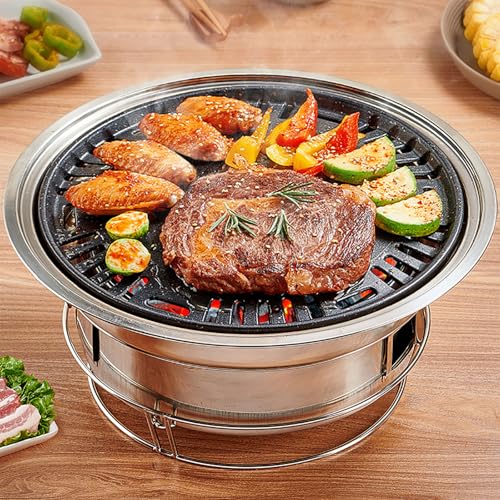
PHOJEWI Korean BBQ Grill – 13.7″ Portable Charcoal Grill
- ✓ Quick heat up
- ✓ Easy cleanup
- ✓ Stable and portable
- ✕ Vent control learning curve
- ✕ Smaller charcoal capacity
| Diameter | 13.7 inches |
| Material | Food-grade stainless steel (plus aluminum grill pan) |
| Non-stick Coating | Aluminum grill pan with non-stick coating |
| Ventilation/Heat Control | Adjustable vents with simple temperature control system |
| Included Accessories | grill body, grill pan, grill mesh, charcoal ash bowl, perforated plate, anti-scald handle, stand |
| Portability/Storage | Compact portable design with stand; suitable for indoor and outdoor use |
You’ll notice it first in the way the PHOJEWI 13.7″ grill sits on a sturdy stand, unlike the flat-bed vibes of many tabletop grills I’ve tried. It’s got that no-nonsense, all-in-one feel, with a non-stick aluminum pan that heats quickly and cleans up faster than you’d expect.
The first time you fire it up, you’ll appreciate the separate charcoal ash bowl and the perforated plate. These little details make a surprising difference, helping the coals burn more evenly and reducing flare-ups during a quick midweek BBQ.
I found the anti-scald handle genuinely helpful when you’re moving the pan between courses or bringing the grill inside after a sunny afternoon session. The grip stays cool enough to touch, which is a welcome relief when you’re juggling plates and sauces.
The grill’s size—13.7 inches across—feels generous for a compact model, yet it’s still easy to stack in a car for weekend trips. The versatility is nice: use the non-stick pan for Korean BBQ or switch to the grill mesh for a Japanese BBQ vibe.
Setup is straightforward: assemble the stand, place the grill on it, and vent adjustments are intuitive. The airflow control helps you dial in the fire so you’re not guessing whether the charcoal is burning through, which is a common pain point with other small charcoal grills.
In real life, this means you can pull off a decent multi-style cook without chasing heavy equipment. It’s the kind of grill you reach for when you want a quick, social meal—without sacrificing flavor or cleanup time.
Overall, it’s practical, portable, and forgiving enough for indoor use with proper ventilation. If you want a simple, affordable way to enjoy Korean or Japanese BBQ at home or on the go, this one stands out.
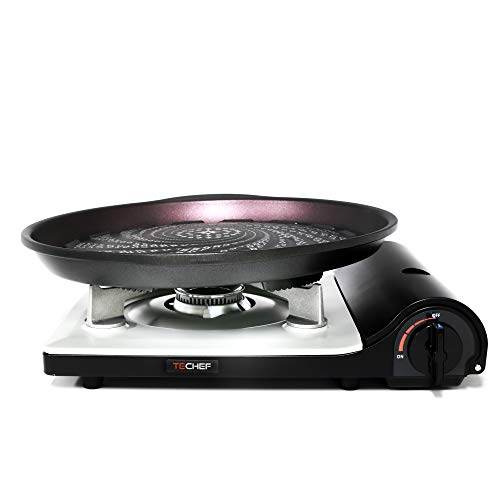
TECHEF – Stovetop Korean BBQ Non-Stick Grill Pan Agni
- ✓ Powerful, quick heat
- ✓ Easy cleanup
- ✓ Stable, secure setup
- ✕ Limited pan size
- ✕ No built-in thermometer
| Power Output | 2,800 kcal/hr (11,500 BTU) |
| Ignition System | Auto Piezo-Electric Ignition |
| Nonstick Grill Pan Material | Durable nonstick coating |
| Food Grease Management | Grease channels for healthier, lower-fat grilling |
| Portability | Portable stove with lightweight, compact design for indoor/outdoor use |
| Origin/Manufacturing | Made in Korea |
The first sizzle wasn’t from the grill itself, but from the moment I set the TECHEF Agni stove on the table and heard that confident click of the auto-ignition. I peeled back the lid to reveal the nonstick Korean BBQ pan, its surface shimmering with a hint of oil ready for action.
You’re not chasing a plug-in hassle here; it’s all about quick, tabletop cooking that fits a cozy kitchen and a sunny patio alike.
The stove is compact, but the 11,500 BTU output feels surprisingly robust. I started with a thin skirt of meat and watched the fat bead and roll toward the channels designed to wick grease away.
Cleanup afterward was easier than I expected—the nonstick coating did the heavy lifting, making a quick wipe-down feel almost ceremonial.
The pan sits steady on the stove, thanks to the magnetic locking system that adds a reassuring thump of security. If you’ve ever tipped a skillet mid-sizzle, you’ll appreciate that stability.
And when a friend leaned in for a nosey whiff of sesame and garlic, the aroma hit quickly, reminding you how much you miss these social, hands-on meals.
I used it indoors for yakiniku-night vibes and outdoors during a sunlit picnic setup. The heat distribution stayed even enough to sear thin slices without burning the edges.
It’s versatile enough for hot pot and sukiyaki, too, so you’re not swapping gear between trips.
If you crave authentic tabletop grilling with minimal setup, this kit nails it. The portability means you’ll actually cook more often, not just dream about it.
What Should You Consider When Choosing the Best Indoor Japanese Grill?
Consider models that have built-in safety features such as automatic shut-off or cool-touch handles to minimize the risk of accidents. These features provide peace of mind, especially when grilling indoors where safety is paramount.
What Key Features Enhance Performance and Convenience?
The best indoor Japanese grills are enhanced by several key features that improve performance and convenience.
- Non-Stick Surface: A non-stick grilling surface ensures that food doesn’t stick, making it easier to cook and clean afterwards. This feature is particularly beneficial for grilling delicate items like fish or vegetables, allowing for a perfect sear without the mess.
- Temperature Control: Adjustable temperature settings allow users to control the heat for various types of food, from high for steaks to low for simmering sauces. This feature enhances cooking precision and helps achieve the desired doneness without overcooking.
- Compact Design: Many best indoor Japanese grills are designed to be compact and space-saving, making them suitable for small kitchens or apartments. Their lightweight construction allows for easy storage and portability, which is ideal for indoor use and gatherings.
- Easy Cleanup: Features such as removable drip trays and dishwasher-safe components make cleanup quick and hassle-free. This convenience encourages more frequent use, as users can enjoy grilling without the worry of extensive post-cooking cleaning.
- Even Heating: Grills that feature advanced heating elements ensure even heat distribution across the cooking surface. This prevents hot or cold spots, allowing for consistent cooking results and enhancing the overall grilling experience.
- Safety Features: Integrated safety features such as cool-touch handles and automatic shut-off mechanisms provide peace of mind while cooking. These features are essential for preventing burns and accidents, making indoor grilling safer for all users.
What Types of Indoor Japanese Grills Are Available on the Market?
The types of indoor Japanese grills available on the market include:
- Electric Grills: These grills use electric heating elements to cook food quickly and evenly, making them user-friendly and ideal for indoor use.
- Tabletop Grills: Compact and portable, these grills allow for a communal cooking experience, where diners can grill their own food at the table.
- Charcoal Grills: Although traditionally used outdoors, there are small, indoor versions of charcoal grills that provide an authentic smoky flavor to dishes, appealing to purists.
- Non-Stick Grills: These grills feature a non-stick surface that makes cooking and cleaning easier, perfect for those who want to minimize post-cooking hassle.
- Induction Grills: Utilizing induction heating technology, these grills offer precise temperature control and energy efficiency, making them suitable for a variety of cooking styles.
Electric grills are highly popular for their convenience; they can be plugged in anywhere, and many models come with adjustable temperature settings and built-in cooking timers for optimal results. They are perfect for cooking a variety of Japanese dishes, from yakitori to okonomiyaki, without the need for charcoal.
Tabletop grills provide a unique dining experience, allowing guests to participate in the cooking process. These grills often come with a built-in heating element and are designed to be placed directly on the dining table, making them ideal for family gatherings or casual meals with friends.
Charcoal grills offer a traditional Japanese grilling experience and are often sought after by enthusiasts who appreciate the rich, smoky flavor that charcoal imparts. While they may require more setup and ventilation, the authentic taste achieved is often worth the extra effort for those who love grilled meats and vegetables.
Non-stick grills are a practical option for those who want to enjoy grilling without the fuss of sticking food items. The non-stick surface ensures easy flipping and removal of food, and it usually requires less oil, promoting healthier cooking methods.
Induction grills represent modern cooking technology, providing a fast and efficient way to achieve high cooking temperatures. They are energy-efficient and allow for precise adjustments, making them suitable for creating delicate Japanese dishes that require specific cooking techniques.
How Do Electric and Charcoal Grills Compare for Indoor Use?
| Aspect | Electric Grill | Charcoal Grill |
|---|---|---|
| Heating method | Uses electric coils for heating; quick to start and control temperature. | Relies on charcoal for heat; longer to heat up and requires more monitoring. |
| Smoke production | Produces minimal smoke, suitable for indoor use. | Generates significant smoke, not ideal for indoor grilling. |
| Ease of use | Generally easier to use; plug in and cook. | Requires skill to light and maintain charcoal; more cleanup involved. |
| Flavor | Offers less smoky flavor compared to charcoal. | Provides a rich, smoky flavor that many grill enthusiasts prefer. |
| Safety considerations | Generally safer for indoor use; no open flame. | Can pose a fire hazard and produces carbon monoxide; not recommended indoors. |
| Price range | Typically ranges from $50 to $300. | Usually ranges from $30 to $200, but high-end options can exceed $500. |
| Portability and storage | Lightweight and compact, easy to store. | Can be bulky and heavy; harder to store. |
What Are the Advantages of Cooking with an Indoor Japanese Grill?
The advantages of cooking with an indoor Japanese grill are numerous, enhancing both the cooking experience and the flavor of the food.
- Versatility: Indoor Japanese grills, such as teppanyaki grills, can be used for a variety of cooking methods, including grilling, frying, and sautéing. This allows users to prepare a wide range of dishes from meats and vegetables to seafood, making it suitable for diverse culinary styles.
- Healthier Cooking: These grills often require less oil and fat compared to traditional frying methods, promoting healthier meal preparation. The high heat of the grill sears food quickly, sealing in juices and flavor while reducing the need for added calories.
- Convenience: Indoor Japanese grills are designed for ease of use and can be set up quickly on any countertop. They eliminate the need for outdoor grilling equipment and can be used regardless of the weather, allowing for year-round cooking opportunities.
- Enhanced Flavor: Cooking on a Japanese grill allows for a unique flavor profile, as the high heat caramelizes the natural sugars in food, creating a delicious char. Additionally, the grill’s design often allows for the drippings from meats to flavor vegetables or sides cooked alongside.
- Social Cooking Experience: Many indoor Japanese grills are designed for communal dining, allowing multiple people to cook together at the table. This interactive cooking style encourages conversation and makes meals more enjoyable, as diners can customize their dishes to their taste.
- Easy Cleanup: Most indoor Japanese grills come with non-stick surfaces and removable plates, making cleanup a breeze. Many models are also dishwasher safe, further simplifying the post-cooking process and allowing users to enjoy their meal without the hassle of extensive cleaning.
How Can Indoor Grilling Transform Your Culinary Experience?
Indoor grilling can significantly enhance your culinary experience by bringing authentic flavors and techniques to your home cooking.
- Versatility: An indoor Japanese grill allows you to prepare a variety of dishes, from traditional yakitori to grilled vegetables and seafood.
- Flavor Enhancement: The grilling process locks in juices while creating a distinct smoky flavor that elevates the taste of ingredients.
- Convenience: Indoor grills are designed for ease of use and cleanup, making it simple to enjoy grilled meals without the hassle of outdoor grilling.
- Temperature Control: Many indoor Japanese grills feature adjustable temperature settings, enabling precise cooking for different types of food.
- Healthier Cooking: Grilling often requires minimal fat, allowing you to prepare healthier meals while retaining moisture and flavor.
Versatility is a key feature of the best indoor Japanese grills, as they can be used to create an array of dishes. From skewered meats and fish to grilled vegetables, the ability to cook multiple types of cuisine broadens your culinary repertoire and encourages experimentation in the kitchen.
Flavor enhancement is another significant benefit of using an indoor grill. The high heat and direct contact with the grill surface caramelize the natural sugars in food, resulting in a complex and rich flavor profile that may not be achievable through other cooking methods.
Convenience plays a crucial role in the appeal of indoor grilling. With easy setup and quick cleanup, you can enjoy a delicious grilled meal without the need to go outside, making it an ideal option for all seasons and weather conditions.
Temperature control is essential for achieving perfect cooking results, and many high-quality indoor Japanese grills come equipped with adjustable settings. This feature allows you to sear meats at high temperatures while gently grilling delicate items like fish or vegetables, ensuring optimal doneness.
Healthier cooking is a major advantage of grilling, as it generally requires less oil or fat compared to frying or sautéing. The grilling method allows excess fat to drip away, resulting in lower-calorie meals that still deliver on flavor and satisfaction.
What Popular Japanese Dishes Can You Cook with an Indoor Grill?
Using an indoor grill, you can create a variety of popular Japanese dishes that highlight the rich flavors and techniques of Japanese cuisine.
- Yakiniku: This dish consists of grilled meat, typically beef, which is seasoned and cooked quickly over high heat. Accompanied by a range of dipping sauces and vegetables, it’s a favorite for gatherings where diners can grill their own meat at the table.
- Yakitori: Yakitori refers to skewered chicken pieces grilled to perfection, often seasoned with a tare sauce or simply salt. The balance of tender chicken and smoky flavor makes it a popular street food, and it can be easily replicated on an indoor grill.
- Teppanyaki: Teppanyaki is a style of cooking where ingredients such as meat, seafood, and vegetables are grilled on a flat surface. This method allows for quick cooking and the ability to combine flavors, making it a fun and interactive dining experience.
- Grilled Fish: Grilling fish like mackerel or salmon on an indoor grill enhances its flavor while giving it a delicious char. Seasoned simply with salt or a marinade, grilled fish is a staple in Japanese homes and pairs well with rice and miso soup.
- Okonomiyaki: This savory pancake, made with a batter of flour, eggs, and shredded vegetables, can be cooked on an indoor grill for a crispy exterior. Topped with a variety of ingredients such as seafood, cheese, and mayonnaise, it offers a customizable and hearty meal option.
- Negima: Negima consists of chicken and green onions skewered together and grilled until tender. The combination of juicy chicken and the slight bite of grilled scallions creates a flavorful dish that is often enjoyed with a soy-based dipping sauce.
Which Recipes Highlight the Unique Flavors of Japanese Cuisine?
The best recipes that highlight the unique flavors of Japanese cuisine can be prepared using an indoor Japanese grill.
- Yakiniku: This dish consists of grilled meat, typically beef, which is marinated in a savory-sweet sauce made from soy sauce, mirin, and sesame oil. The grilling process enhances the umami flavor while allowing the natural juices of the meat to caramelize, resulting in a tender and flavorful experience.
- Yakitori: Yakitori features skewered and grilled chicken, seasoned with either salt or a tare sauce, which is a mixture of soy sauce, sake, and sugar. The grilling method imparts a smoky aroma and the skewering allows for even cooking, making it a popular choice for both casual dining and special occasions.
- Teppanyaki: This cooking style involves grilling a variety of ingredients, such as meats, seafood, and vegetables, on a flat iron griddle. The high heat promotes a quick sear while preserving the freshness of the ingredients, and the chef often engages diners with skillful cooking techniques, making it an entertaining dining experience.
- Negima: Negima is a type of yakitori that features chicken thighs skewered with green onions. The combination of tender chicken and the slight char from grilling creates a delicious contrast, while the green onions add a refreshing flavor that complements the rich meat.
- Kushiyaki: Similar to yakitori, kushiyaki involves grilling various types of skewered meats and vegetables. This versatile dish allows for a wide range of ingredients, from pork belly to seasonal vegetables, all seasoned simply to highlight their natural flavors while benefiting from the grilling process.
- Grilled Fish: A staple in Japanese cuisine, grilled fish such as mackerel or salmon is often seasoned with salt and grilled to achieve a crispy skin and tender meat. The simple preparation allows the fresh flavors of the fish to shine, making it a healthy and delicious option for any meal.
How Should You Maintain and Care for Your Indoor Japanese Grill?
To maintain and care for your indoor Japanese grill, consider the following essential practices:
- Regular Cleaning: After each use, ensure that the grill is thoroughly cleaned to prevent food residue buildup. Use a soft sponge and mild detergent to clean non-stick surfaces, while avoiding abrasive materials that could damage the grill.
- Proper Storage: Store your grill in a dry and cool place when not in use to prevent rust and damage. If your grill has removable parts, make sure they are stored separately and securely to avoid any scratches or breakage.
- Oil Application: Before cooking, lightly oil the grill plates to enhance non-stick properties and prevent food from sticking. This practice not only improves cooking results but also makes cleaning easier afterward.
- Check Electrical Components: For electric indoor grills, regularly inspect the power cord and plug for any signs of wear or damage. Ensuring that all electrical components are in good condition is crucial for safety and functionality.
- Temperature Control: Familiarize yourself with the temperature settings of your grill and avoid overheating, which can damage the heating elements. Maintaining the right temperature not only preserves the grill’s lifespan but also ensures optimal cooking performance.