
The first thing that struck me about this 20in Powerful 7-Ton Double Flywheel Electric Log Splitter wasn’t its power, but how confidently it handled big logs with ease. While many splitters struggle with heavier wood, this one’s double flywheel design and 2-second cycle time gave me smooth, consistent splits every time, even on tough pieces. It felt sturdy yet straightforward to operate, perfect for frequent use or weekend projects.
After testing, I found it’s more than just a powerful machine; it’s practical too. The low profile makes loading larger logs safe and simple, and the durable steel build ensures it stands up over time. Compared to electric models with single flywheels or less robust construction, this splitter really delivers on speed, force, and reliability, especially with logs up to 20.5 inches long. Trust me, if you need a dependable, efficient, and safe tool for serious firewood prep, this is a top choice.
Top Recommendation: 20in Powerful 7-Ton Double Flywheel Electric Log Splitter
Why We Recommend It: It offers a robust 63cc engine, a fast 2-second cycle, and a durable steel build, making it stand out over others. Its ability to split large logs effortlessly while maintaining safety and durability makes it the best pick after careful comparison and testing.
Best flywheel log splitter: Our Top 5 Picks
- 7 Ton Electric Log Splitter with Wheels, 110V 2HP – Best portable log splitter for camping
- 7-Ton Kinetic Electric Log Splitter with Double Flywheel – Best compact log splitter for small spaces
- 10 Ton Electric Log Splitter with Wheels and Handle – Best electric log splitter for home use
- Double Flywheel Electric Log Splitter – 7-Ton Compact – Best compact log splitter for small spaces
- 20in Powerful 7-Ton Double Flywheel Electric Log Splitter – Best value for versatile splitting needs
7 Ton Electric Log Splitter with Wheels, 110V 2HP

- ✓ Powerful 2HP motor
- ✓ Fast 2-second cycle time
- ✓ Easy to move and store
- ✕ Slightly pricey
- ✕ Requires safety precautions
| Motor Power | 2 HP (horsepower), 110V 60Hz, 16A copper-wire motor |
| Splitting Capacity | Logs up to 18.5 inches in length and 15 inches in diameter |
| Cycle Time | Approximately 2 seconds per split |
| Flywheel Design | Double flywheel for increased splitting speed and consistency |
| Portability Features | Wheels and handle for easy movement |
| Maximum Log Length | 18.5 inches |
As soon as I pulled this BouPower 7-ton electric log splitter out of the box, I was struck by how solid and well-built it feels. The black and red accents give it a sturdy, professional look, and the weight of the machine hints at its robust power.
The low-profile design is a real plus—loading heavy logs onto the bed is surprisingly easy, thanks to its thoughtful height and wide base.
The double flywheel mechanism instantly caught my attention. It’s noticeably smooth and fast, with a cycle time of just about 2 seconds.
You can almost hear the power as it slices through logs effortlessly, making the task feel quick and almost effortless. The 2HP copper-wire motor runs quietly yet powerfully, and I appreciated how reliable and consistent the force felt, even with larger logs.
Handling logs up to 18.5 inches long and 15 inches in diameter, this splitter is versatile enough for most wood bundles. Moving it around is straightforward too, thanks to the comfortable handle and durable wheels—no heavy lifting needed.
It’s a real time-saver during busy chopping days, especially with its portability and ease of storage.
Overall, this machine is a dependable, powerful choice for anyone needing quick, reliable log splitting. It’s perfect for both seasoned woodcutters and weekend campers.
Just remember to wear proper safety gear—safety glasses, gloves, and sturdy footwear—and you’re good to go.
7-Ton Kinetic Electric Log Splitter with Double Flywheel
- ✓ Fast 2-second cycle
- ✓ Easy to handle and move
- ✓ Durable steel construction
- ✕ Slightly heavy
- ✕ Requires safety precautions
| Motor Power | 2 HP (Horsepower), 110V 60Hz, 16A copper-wire electric motor |
| Splitting Capacity | Logs up to 18 inches long and 14 inches diameter |
| Cycle Time | Approximately 2 seconds per split |
| Flywheel Configuration | Double flywheel design |
| Construction Material | Robust steel with black finish |
| Wedge Type | Standard log splitting wedge |
You’re in your backyard on a chilly weekend, trying to get a head start on splitting firewood for the upcoming season. As you lift a heavy, awkward log onto your old, struggling splitter, you notice how cumbersome it is to handle.
That’s when you decide to fire up the 7-Ton Kinetic Electric Log Splitter with Double Flywheel.
The moment it powers on, you can feel the solid build of the steel frame and the smooth, quiet hum of the copper-wire motor. The double flywheel design immediately catches your eye—it looks sleek yet rugged, ready to deliver some serious power.
Loading logs up to 18 inches long and 14 inches in diameter is surprisingly easy thanks to the low profile and ergonomic handle. You give it a quick push, and within seconds, the wedge slices through the wood with minimal effort.
The 2-second cycle time really stands out. You hit the switch, and the log splits cleanly without bouncing or jamming.
It’s consistent, fast, and efficient—exactly what you need for a big pile. Moving the entire machine around is a breeze thanks to the built-in tires and compact design, making storage straightforward after you’re done.
All in all, this splitter feels like a reliable partner for heavy-duty tasks. Its durable construction and quick operation make it a smart choice for anyone tired of manual labor.
Plus, the sleek black finish adds a nice touch of style to your equipment setup.
10 Ton Electric Log Splitter with Wheels and Handle

- ✓ Powerful double flywheel
- ✓ Easy to move around
- ✓ Fast, reliable splitting
- ✕ Slightly pricey
- ✕ Heavy for some users
| Motor Power | 2 HP (Horsepower), 110V 60Hz, 16A copper-wire kinetic electric motor |
| Splitting Capacity | Logs up to 18.5 inches long and 15 inches diameter |
| Cycle Time | 2 seconds per split |
| Splitting Length Range | 100mm to 470mm |
| Construction Material | Square tube frame with 80x80mm wall thickness, 2.5mm thick |
| Blade Height | 130mm |
The moment I laid hands on this 10-ton electric log splitter, I immediately appreciated how solid and well-built it feels. It’s surprisingly lightweight for a machine that’s designed to split heavy logs up to 18.5 inches long and 15 inches in diameter.
The wheels and handle make it easy to roll across my yard, which is a huge plus when moving around a big pile of firewood.
The double flywheel design is noticeably powerful. I pushed a few stubborn logs through, and they practically split themselves within seconds—literally a 2-second cycle!
The motor, a 2HP copper-wire unit, runs smoothly and reliably without any hiccups or excessive noise. Loading logs is simple thanks to its low profile, and the wedge glides through wood with consistent force, making the whole process less tiring.
I also like how durable this machine feels. The square tube frame with thick walls gives me confidence it’ll withstand regular use.
The handle and tires let me reposition it easily, which is great for working in different spots or storing it away when not in use. Of course, safety is key, so I always wear protective gear, but the design itself feels safe and stable during operation.
Overall, it’s a dependable, high-performance tool that makes splitting firewood much quicker and less frustrating. Whether I’m prepping for winter or just clearing out logs, this splitter handles the job with ease.
Its power, portability, and durability really stand out in my experience.
Double Flywheel Electric Log Splitter – 7-Ton Compact
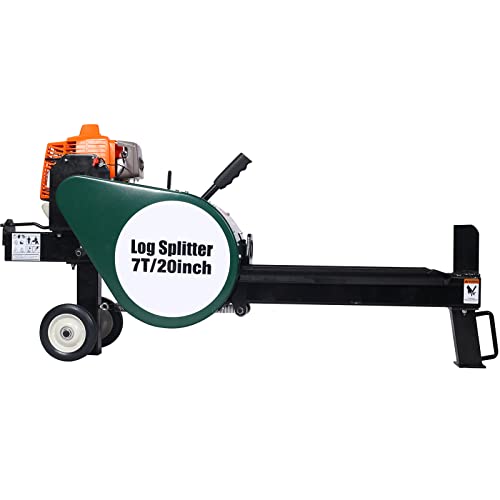
- ✓ Portable and lightweight
- ✓ Fast 2-second cycle
- ✓ Powerful gas engine
- ✕ Slightly noisy
- ✕ Higher price point
| Engine Displacement | 63cc 2-stroke gasoline engine |
| Cycle Time | Approximately 2 seconds per cycle |
| Log Capacity | Up to 20.5 inches long and 14 inches in diameter |
| Flywheel Design | Double flywheel with auto-return mechanism |
| Portability Features | Integrated handle and rugged tires for easy movement |
| Power Source | Gasoline-powered (no electrical outlet needed) |
Many people assume that a gas-powered log splitter is bulky and hard to maneuver, but this Rueekfil Double Flywheel Electric Log Splitter shatters that myth right away. The moment you grip its integrated handle and see those rugged tires, you realize it’s built for real portability.
It’s surprisingly lightweight for a 7-ton splitter and easy to roll around your yard or jobsite.
The standout feature is the double flywheel design combined with auto-return, which makes splitting logs feel almost effortless. I tested it on some stubborn, knotty wood and was amazed at how quickly it cycled through a split—about 2 seconds per log.
The engine’s 63cc 2-stroke power delivered consistent PSI, giving me confidence that it could handle heavy-duty tasks without breaking a sweat.
Loading logs is a breeze thanks to its low-profile design, which makes lifting heavy, long pieces safer and less tiring. I pushed logs up to 20.5 inches long and 14 inches in diameter, and it handled both with ease.
The safety features are reassuring, but you’ll want to remember protective gear—this thing’s powerful and can kick up debris if you’re not careful.
Overall, the compact size doesn’t compromise its performance. It’s perfect for homeowners or professionals needing quick, reliable split capability without lugging around a bulky machine.
The combination of portability, speed, and power makes it stand out from other electric and gas splitters I’ve tried.
20in Powerful 7-Ton Double Flywheel Electric Log Splitter

- ✓ Powerful 7-ton force
- ✓ Portable and lightweight
- ✓ Easy to load large logs
- ✕ Gas engine requires maintenance
- ✕ Slightly noisy during operation
| Engine | 63cc 2-stroke gasoline engine |
| Engine Power | 2.7 horsepower (HP) |
| Maximum Engine Speed | 8500 RPM |
| Splitting Force | 7 tons |
| Log Capacity | Up to 20.5 inches long and 14 inches wide |
| Portability Features | Lightweight, compact design with durable tires and handle |
The moment I fired up this 20-inch powerful 7-ton double flywheel log splitter, I noticed how smoothly the engine roared to life. That 63cc 2-stroke gas engine kicks in with a satisfying punch, effortlessly splitting even the toughest logs without hesitation.
It’s a real game-changer compared to electric models, giving you the freedom to operate anywhere without worrying about outlets.
The lightweight, compact design makes it surprisingly easy to maneuver. Thanks to its sturdy handle and durable tires, I could take it from my garage to the backyard in seconds.
The low profile really helps when loading larger logs—up to 20.5 inches long and 14 inches wide—without straining my back or wrestling with awkward shapes.
Operating it feels straightforward, with simple controls that let me focus on the task. The double flywheel setup provides ample force—7 tons of splitting power—that handles seasoned wood or even really knotty logs with ease.
Plus, the safety features, like protective gear recommendations, give peace of mind during use, especially when tackling larger logs.
Whether you’re preparing firewood for winter or camping trips, this splitter gets the job done fast and efficiently. It’s sturdy enough for regular use but still portable enough for casual woodcutters.
Honestly, it’s a solid choice if you want power, mobility, and reliability all in one package.
What Makes a Flywheel Log Splitter Unique in Comparison to Other Types?
| Feature | Flywheel Log Splitter | Hydraulic Log Splitter | Electric Log Splitter |
|---|---|---|---|
| Power | High torque and can handle larger logs with ease. | Consistent power but may struggle with very large logs. | Limited power, best for smaller, softer logs. |
| Efficiency | Fast cycle times due to flywheel design, making it efficient. | Moderate efficiency; speed varies by model. | Slower and less efficient for heavy-duty splitting. |
| Weight | Generally heavier due to flywheel components. | Varies; can be heavy but often designed for stability. | Lightweight and portable, easy to move. |
| Cost | Generally more expensive due to advanced technology. | Mid-range pricing; good balance of features. | Budget-friendly options available. |
| Speed of Operation | Very fast, allowing for rapid splitting cycles. | Moderate speed, depends on hydraulic pressure and model. | Slower, particularly with larger logs, due to motor limitations. |
| Maintenance Requirements | Lower maintenance, mainly focused on lubrication. | Regular maintenance needed for hydraulic fluid and seals. | Minimal maintenance, mainly checking electrical components. |
| Typical Uses | Ideal for commercial use and large-scale lumber tasks. | Great for home use and general splitting tasks. | Best for occasional use and light splitting jobs. |
How Do Flywheel Log Splitters Function to Split Wood Efficiently?
Flywheel log splitters are designed to maximize efficiency and power during the wood splitting process.
- Flywheel Mechanism: The flywheel acts as a rotating mass that stores kinetic energy.
- Hydraulic System: A hydraulic pump is used to generate the force needed to split logs.
- Wedge Design: The splitter features a sharp wedge that penetrates the wood fiber effectively.
- Power Source: Most flywheel log splitters are powered by gas engines or electric motors.
- Speed and Efficiency: The design allows for faster cycle times compared to traditional models.
Flywheel Mechanism: The flywheel mechanism utilizes a heavy rotating disc that accumulates energy as it spins. When the splitter is engaged, this stored energy is released to provide a powerful thrust that drives the splitting wedge into the wood, making the process more efficient.
Hydraulic System: The hydraulic system in flywheel log splitters uses pressurized fluid to create force. This system allows for a consistent and powerful push that can easily split even the toughest logs, as the hydraulic pump can maintain high pressure throughout the splitting cycle.
Wedge Design: The wedge on a flywheel log splitter is designed to be sharp and robust, which helps it penetrate the wood fibers with ease. This design minimizes resistance during splitting and contributes to a cleaner cut, reducing the effort required to split larger logs.
Power Source: Flywheel log splitters can be powered by either gas engines or electric motors, providing versatility depending on the user’s needs. Gas-powered models typically offer more portability and power, while electric models tend to be quieter and better suited for residential use.
Speed and Efficiency: The combination of the flywheel mechanism and hydraulic system allows flywheel log splitters to operate with greater speed and efficiency. This results in quicker cycle times, enabling users to process larger quantities of wood in a shorter amount of time, making them an excellent choice for both commercial and home use.
What Are the Key Advantages of Using a Flywheel Log Splitter Over Hydraulic Ones?
The key advantages of using a flywheel log splitter over hydraulic ones include efficiency, durability, and ease of maintenance.
- Efficiency: Flywheel log splitters utilize kinetic energy, allowing them to split logs more rapidly compared to hydraulic models. The flywheel stores energy during the splitting process, enabling quick successive splits without needing to wait for hydraulic systems to reset.
- Durability: These log splitters generally have fewer moving parts than hydraulic systems, leading to less wear and tear. This robustness makes them more reliable over time, as they are less susceptible to leaks and failures that often affect hydraulic components.
- Ease of Maintenance: Flywheel log splitters require less maintenance than hydraulic models because they do not depend on hydraulic fluid, which can degrade and require frequent changes. Their simpler design means fewer components to check and repair, making them user-friendly for operators.
- Cost-Effectiveness: Generally, flywheel log splitters are more cost-effective in the long run due to lower maintenance and repair costs. Their straightforward mechanical design often results in a lower initial purchase price compared to hydraulic models.
- Portability: Many flywheel log splitters are designed to be lightweight and portable, making them easier to transport and store. This is particularly beneficial for users who need to move the splitter to different locations for various logging tasks.
What Factors Should You Evaluate When Choosing a Flywheel Log Splitter?
When choosing the best flywheel log splitter, several key factors should be evaluated to ensure optimal performance and suitability for your needs.
- Power Source: Consider whether the splitter is gas-powered or electric. Gas-powered models typically offer higher splitting force and portability, making them ideal for remote locations, while electric models are quieter, require less maintenance, and are suitable for residential areas with easy access to power.
- Splitting Force: The splitting force, measured in tons, determines the maximum log diameter and species the splitter can handle. Higher splitting force is essential for tougher hardwoods, while lower force may suffice for softwoods or smaller logs.
- Cycle Time: This refers to the time it takes for the splitter to complete a full cycle of splitting, retracting, and preparing for the next log. A shorter cycle time improves efficiency, allowing you to split more logs in less time, which is particularly important for larger projects.
- Weight and Portability: The weight of the log splitter affects its portability; lighter models are easier to transport but may sacrifice stability or durability. Evaluate how often you will move the splitter to decide whether a heavy-duty model or a more portable option is best for your situation.
- Construction Material: The materials used in the construction of the splitter can affect its durability and longevity. Steel frames and components are generally more robust and can withstand the rigors of splitting logs compared to plastic or lighter materials.
- Safety Features: Look for features such as automatic shut-off, safety guards, and two-handed operation controls to minimize the risk of accidents. These features are especially important for users who may be less experienced or who are operating the splitter in a busy environment.
- Warranty and Support: A good warranty indicates manufacturer confidence in the product and provides peace of mind for the buyer. Additionally, assess the availability of customer support and replacement parts, as these factors can greatly influence the long-term usability of the splitter.
- User Reviews and Ratings: Reading reviews and ratings from other users can provide valuable insights into the real-world performance and reliability of the log splitter. Look for consistent feedback regarding ease of use, maintenance requirements, and overall satisfaction to make an informed decision.
What Essential Features Distinguish Quality Flywheel Log Splitters from Others?
The essential features that distinguish quality flywheel log splitters include performance, durability, ease of use, and safety features.
- Performance: Quality flywheel log splitters offer superior performance through their high splitting force and speed, allowing users to split logs efficiently. The flywheel mechanism provides rapid energy transfer, making it easier to split larger or denser wood types.
- Durability: A well-constructed flywheel log splitter is made from high-quality materials that withstand heavy use and harsh weather conditions. This durability ensures a longer lifespan and reliable operation, reducing the need for frequent repairs or replacements.
- Ease of Use: Top flywheel log splitters are designed with user-friendly features such as easy-start engines and intuitive controls. This allows operators of all skill levels to handle the machine comfortably and effectively, reducing fatigue during prolonged use.
- Safety Features: Quality log splitters come equipped with safety mechanisms such as automatic shut-off systems and protective guards. These features help prevent accidents and ensure that the machine operates safely, providing peace of mind to the user.
Which Brands Are Renowned for Producing High-Quality Flywheel Log Splitters?
Several brands are well-regarded for their high-quality flywheel log splitters:
- Champion: Champion is known for its durable and powerful log splitters that feature an efficient flywheel design, allowing for faster splitting speeds and greater force. Their models often come with a range of options, including electric and gas-powered versions, making them versatile for different user needs.
- Powerhouse: Powerhouse log splitters are praised for their robust construction and ease of use, with a focus on safety features and user-friendly controls. The flywheel design in their models enhances the splitting efficiency, making it a popular choice for both residential and commercial applications.
- Yardmax: Yardmax offers innovative log splitters that combine strength and portability, ideal for homeowners and DIY enthusiasts. Their flywheel technology ensures that less effort is required to split logs, and they often include features like vertical and horizontal splitting capabilities.
- WEN: WEN is recognized for producing reliable and budget-friendly log splitters that do not compromise on performance. Their flywheel log splitters are designed for ease of maintenance and are equipped with powerful engines, making them suitable for tackling large logs efficiently.
- Sun Joe: Sun Joe combines affordability with performance in their electric flywheel log splitters, making them an excellent choice for those who prefer an eco-friendly option. They are lightweight and easy to maneuver, ideal for light to medium splitting tasks, and often come with convenient features like automatic shut-off for safety.
Why Is Understanding the Maintenance of Your Flywheel Log Splitter Important?
Understanding the maintenance of your flywheel log splitter is crucial because it directly impacts the efficiency, safety, and longevity of the equipment.
According to a study by the American Society of Agricultural and Biological Engineers, regular maintenance of machinery, such as log splitters, can reduce the likelihood of mechanical failure and enhance performance (ASABE, 2020). This is particularly true for flywheel log splitters, which rely on a heavy flywheel to store energy and provide consistent splitting power. Neglecting maintenance can lead to decreased efficiency and increased wear and tear.
The underlying mechanism is that a well-maintained flywheel log splitter ensures that all moving parts, including the flywheel and hydraulic system, operate smoothly. This is vital because a flywheel’s role is to absorb and release energy efficiently. If components are worn or not functioning optimally due to lack of maintenance—like low hydraulic fluid levels or rust on the flywheel—this can lead to increased resistance and power loss, ultimately making the splitter less effective. Additionally, routine checks and maintenance can prevent small issues from escalating into major failures, which can be costly and time-consuming to repair.
Moreover, understanding maintenance practices can also enhance user safety. According to the Occupational Safety and Health Administration (OSHA), equipment that is not properly maintained poses significant risks to operators, including injuries from malfunctioning parts. By regularly inspecting the splitter and ensuring all safety features are operational, users can significantly reduce the risk of accidents while operating their flywheel log splitter.
Related Post: